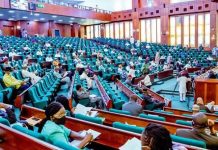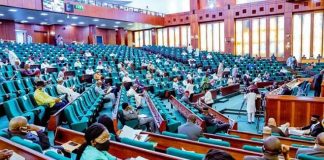
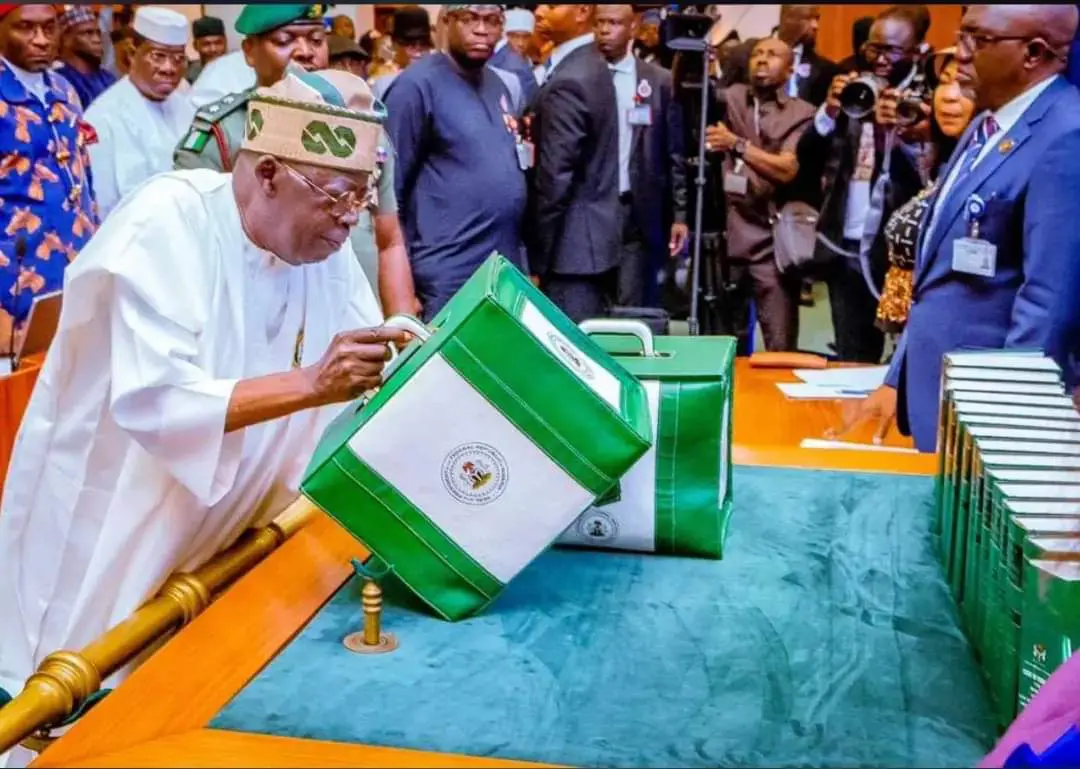
The House of Representatives started debating President Bola Ahmed Tinubu’s 2026 Appropriations Bill on Thursday, approving a projected budget of ₦58.18 trillion based on greater capital spending, improved security, and macroeconomic stability.
The 2026 budget, dubbed “The Budget of Consolidation, Renewed Resilience and Shared Prosperity,” was introduced to the National Assembly on December 19, 2025, and MPs have praised it as a turning point in Nigeria’s economic re-engineering.
House Leader Rep. Julius Ihonvbere stated that the Tinubu administration inherited “distorted and disarticulated institutions” and cautioned that significant improvements would be challenging but essential when discussing the broad principles of the appropriations bill.
Ihonvbere informed the House, “Development that is not sustainable is not development at all.”
He said that in order to achieve long-term progress, Nigerians must acknowledge the necessity of difficult but necessary economic changes.
In order to support the budget, Ihonvbere noted several important indications, such as an expected 3.98% economic growth rate through 2026, a decrease in inflation from almost 25% to 14.45%, increased foreign direct investment, enhanced government revenues, and an increase in exports.
The legislator cited increases in foreign reserves and the value of the naira as proof of the current administration’s fiscal restraint.
“Nigeria’s external reserves have increased to a seven-year high of approximately $47 billion, sufficient to cover more than ten months of imports, while the naira has stabilized around ₦1,400 to the dollar, down from over ₦1,800,” he stated.
“We have not printed a single naira since this government came into office,” he further emphasized. The economy has stabilized thanks to the fiscal restraint.
The 2026 budget projects ₦34.33 trillion in total revenue and ₦58.18 trillion in total spending, leaving a ₦23.85 trillion deficit.
Lawmakers claimed that this framework, which sets capital expenditure at ₦26.08 trillion and non-debt recurrent expenditure at ₦15.25 trillion, represents a shift toward development-driven spending.
This is different from the past, when capital investment was overshadowed by ongoing consumption. Real development is fueled by larger capital investment here, according to Ihonvbere.
An oil benchmark of $64.85 per barrel and daily oil production of 1.84 million barrels are among the budget’s presumptions.
Security and defense (5.41 trillion), infrastructure (3.56 trillion), education (3.54 trillion), and health (2.48 trillion) are the top priority according to sectoral appropriations.
In an effort to enhance the business climate and draw investment, lawmakers also emphasized the administration’s robust overseas contacts, including recent diplomatic and economic missions to nations like Turkey.
House members emphasized that the budget is more than just numbers; it reflects the executive branch’s pledges to maintain fiscal restraint, increase revenue through tax changes, seal leaks, strengthen macroeconomic stability, and build human capital.
Ihonvbere stated, “As representatives of 360 constituencies, it is our duty to guide the government to do the right things at all times. We are not saying the government is perfect.”
The Speaker of the House put the question to a voice vote following member contributions, and the “ayes” decisively won to approve the budget.
“This budget is a promise and a dream,” the legislator declared. Nigeria would be a better place for future generations as well as for ourselves if we cooperate.
Following a two-week adjournment for the planned budget defense, the House unanimously approved the budget on second reading.