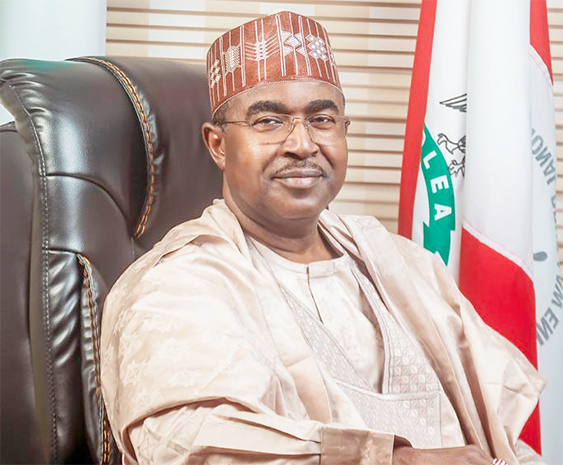
Brig. Gen. Buba Marwa (rtd), Chairman and Chief Executive Officer of the National Drug Law Enforcement Agency (NDLEA), has urged widespread support for Nigeria’s recently implemented alternative development program and called for a coordinated national response against illicit drug cultivation.
At a news conference in Abuja on Tuesday, Marwa made the plea and emphasized the necessity of ongoing cooperation between communities, government agencies, development partners, and the private sector in order to guarantee the initiative’s success.
The first-ever alternative development initiative in Africa was recently introduced as a pilot program in three cannabis-producing towns in Ondo State: Ilu Abo, Ifon, and Eleyewo.
By giving the impacted communities legal and sustainable economic possibilities, the program aims to address the underlying causes of illegal drug production, according to Marwa.
The head of the NDLEA explained that the program goes beyond simply substituting other crops for cannabis; it also enhances food security, boosts rural economic growth, fortifies agricultural value chains, and lessens the strain on the criminal justice system and law enforcement.
He pointed out that the strategy also promotes social stability and tranquility in regions that were previously associated with drug-related criminality.
“The level of acceptance by host communities and traditional leaders demonstrated the effectiveness of community-driven solutions,” Marwa added, describing the pilot phase as positive.
He clarified that locals have welcomed the program as a respectable route to better livelihoods, decreased poverty, and increased safety.
Marwa emphasized that Nigeria’s drug problem, especially cannabis usage and cultivation, required a change from enforcement-only tactics to UN-endorsed development-focused approaches.
He referenced data from the 2018 National Drug Use Survey, which showed that over 14 million Nigerians have used psychoactive substances in a single year, with cannabis being the most often used substance.
He went on to say that cannabis is still the most widely used illegal substance in Nigeria, with millions of users across the country and thousands of hectares of land under cultivation, especially in the Southwest’s forested regions.
He claims that these cultivation locations are frequently connected to networks of organized crime that feed both domestic and international markets.
The chairman of the NDLEA cautioned that extensive cannabis production and use present significant threats to public health, society, and security, particularly for youth.
He said that cannabis accounted for almost 75% of all illegal substances the agency had confiscated over the previous five years, highlighting the severity of the issue.
Marwa expressed hope that, with strong governmental will and ongoing stakeholder cooperation, the alternative development program might drastically reduce illicit cultivation despite the difficulties.
He underlined that the project is in line with President Bola Tinubu’s Renewed Hope Agenda, especially with regard to community development, agriculture, and security.
The United Nations Office on Drugs and Crime, agricultural research institutes, and development groups from several nations were among the local and international partners Marwa praised for their support of the pilot initiative.
Additionally, he thanked the Federal Ministry of Agriculture and Food Security as well as the Ondo State Government for their cooperation.
He urged communities impacted by illegal drug production to collaborate closely with the NDLEA in order to establish safe, secure, and productive livelihoods. He described the program as a people-focused solution that aims to protect Nigeria’s future.