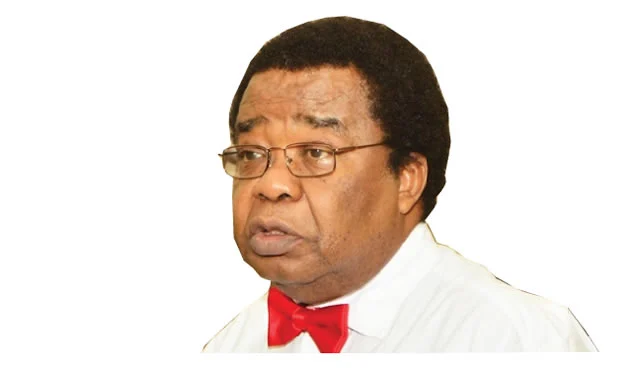
According to Bolaji Akinyemi, a former minister of external affairs, Nigeria might have been different if Gen. Murtala Muhammad, the country’s former head of state, had not been slain.
According to reports, Muhammad served as Nigeria’s head of state from July 29, 1975, until his killing in Lagos on February 13, 1976.
At a strategic policy workshop hosted by the Nigerian Institute of International Affairs, led by Eghosa Osaghae, and the Murtala Muhammed Foundation, led by Aisha Muhammed-Oyebode, Akinyemi stated that if Muhammad had not been killed, both his personal life and Nigeria’s history would have been different.
The focus of the program was “Has Africa reached adulthood? The event, “Murtala Muhammed’s pan-African vision 50 years after,” took place on Thursday at Victoria Island, Lagos’ NIIA auditorium.
“Dr. Aisha Muhammed-Oyebode said she misses her father very, extremely personally,” stated Akinyemi. Allow me to tell her that I personally miss him as well.
“I am certain that not only would Nigeria’s history have been different if the General had not been killed, but I also believe that my own life would have been different.”
According to Akinyemi, Muhammad was a public speaker and political analyst who was not afraid to express disagreement with opinions that did not align with his own.
He pointed out that Nigeria needs individuals like Muhammad, powerful leaders who wouldn’t think twice about publicly expressing their opinions on matters, even if they went against the consensus.
He continued to discuss Muhammad’s character by saying, “I had never met him, but one was aware of the positions he took and continued to take publicly on issues.” General Muhammad would frequently appear in newspaper articles arguing for or against the positions taken by military officials on various matters.
“We once invited military officers to a meeting. An incident involving General Murtala Muhammad caught my attention. At the time we were talking about the Middle East, I would say that the whole Nigerian university community supported the Palestinian cause.
We opposed Israel. We believed that the Israelis were acting quite terribly. General Muhammad stood up to offer afternoon prayers. He turned around and asked, “Why are we discussing this?” as he approached the door on his way out. What a bloody waste of time. Then he entered the hallway, laid out the prayer mat, prayed, and then returned.
That caught my attention because, in a normal situation, we would have expected a military official from the north to be pro-Palestinian and anti-Israel, and we would have expected Nigeria to adopt such a stance. However, he was completely different. That is how I first learned about General Muhammad’s values. He didn’t mind voicing his disagreement with authority figures, including those who invited him and their stance. And I reasoned that Nigeria needs this.
He pointed out that Muhammad was a Head of State who inspired pride in Nigerians and who was respected in both continental and foreign diplomatic circles.
For some reason, people still remember that there was a head of state who made Nigerians proud. They were aware of what he stood for. Nigerians were aware of his expectations, and he was not a Head of State who shied away from taking a stand on anything. “If he didn’t agree with you, he would explain why,” Akinyemi stated.