The Civil Society Legislative Advocacy Centre (CISLAC), a civil society organization, has voiced concerns about the Independent National Electoral Commission’s (INEC) readiness for the general elections in 2027.
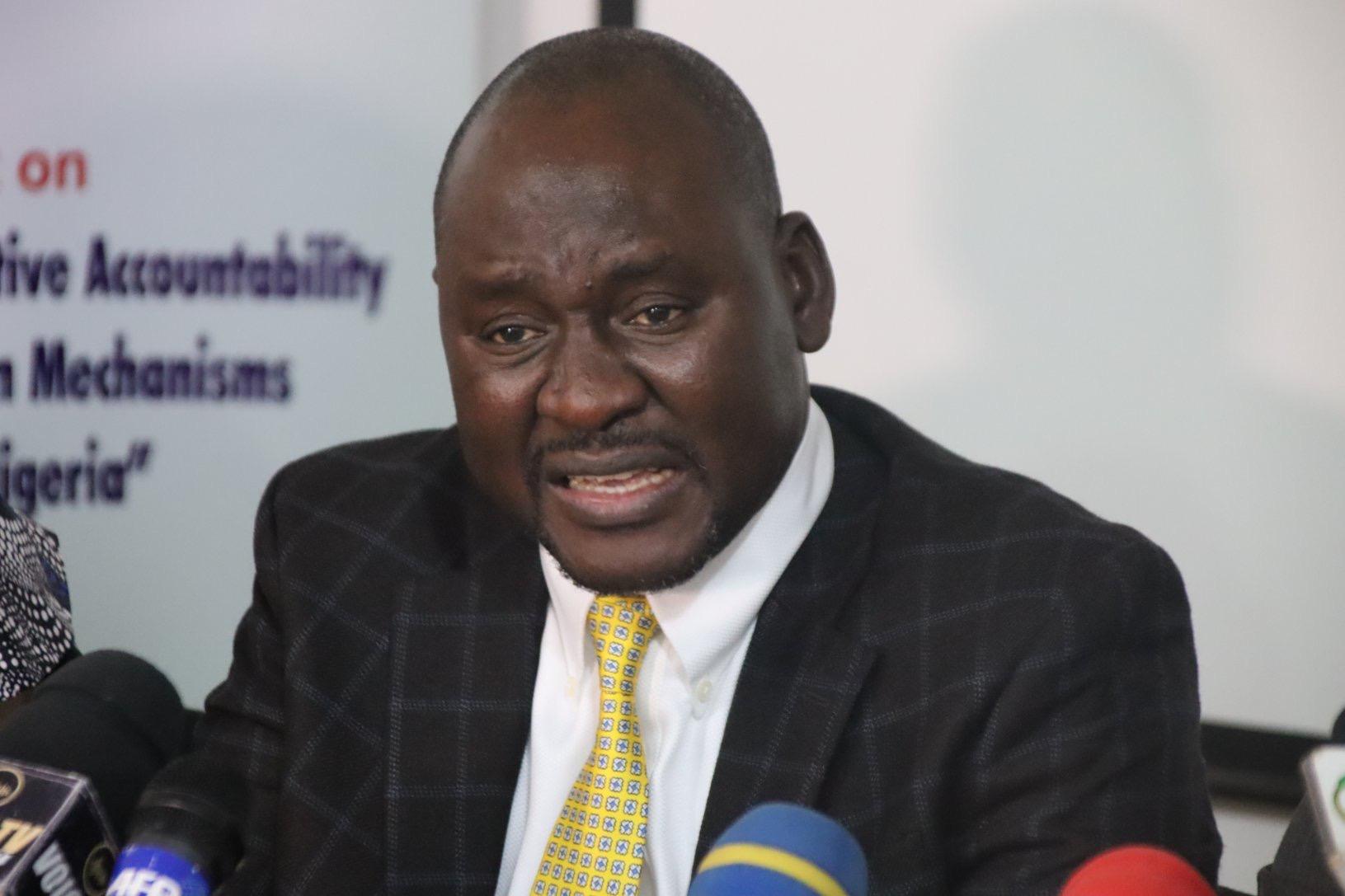
The concerns were voiced by Auwal Rafsanjani, the Executive Director of CISLAC and the Head of Transparency International Nigeria, during his appearance on Sunday in Abuja on the News Agency of Nigeria (NAN) Personality Interview Series.
Rafsanjani stated that he was skeptical of the commission’s competence to hold the poll because of the perceived shortcomings in the Federal Capital Territory (FCT) local council elections and the recent by-elections that were held in Rivers and Kano.”
If immediate reforms are not implemented, he claimed, the experiences have raised doubts about INEC’s ability to hold credible national elections.
We honestly don’t have complete confidence that INEC is ready for 2027, given what happened in Rivers and Kano States and even during the most recent council elections in Abuja.
He declared, “The commission will need to work seriously toward blocking the gaps and lapses that were evident.”
He cited the purported exclusion of significant opposition political parties from the ballot in certain areas, calling this a “costly mistake” that could jeopardize the legitimacy and equity of the election process.
Another significant issue he mentioned was the alleged mistreatment of people with disabilities (PWDs) during the elections.
People with disabilities have expressed strong dissatisfaction over their inability to receive assistance, access the polls, or take part in them during all three of these elections.
Since many Nigerians are still unfamiliar with the new eEectoral Act, INEC will need to perform a lot of public education and sensitization.
Although civil societies are trying their hardest, they are not the government and can only serve as a supplement to it. “INEC needs to be the driving force behind public education,” he stated.
Logistical issues were noted by Rafsanjani as persistent issues that, if not promptly resolved, could undermine public confidence.
He said other variables that could impact voter confidence include complaints about missing election materials, long wait times at voting stations, and issues with election staff training.
Nigerians will find it very difficult to trust INEC’s ability, he said, “if basic supplies intended for polling stations are not delivered, if voters continue to face challenges, or if personnel are not adequately trained to handle election processes.”
To satisfy national and international expectations for credible elections and to rebuild public trust, the head of Transparency International in Nigeria counseled the electoral authority to take decisive action.
He stated that the upcoming months will be critical for INEC to showcase reforms, bolster logistics, improve inclusivity, and restore confidence in Nigeria’s electoral process as preparations for the 2027 general elections gradually get underway.http://www.nannews.ng/ (NAN).While APC accepts INEC’s schedule, it rejects ADC’s claims.
The Independent National Electoral Commission’s (INEC) updated 2027 election schedule has garnered the support of the All Progressives Congress (APC) in Ondo State, which has described it as realistic, organized, and equitable to all political parties.
In an interview with reporters over the weekend in Akure, State Director of Media & Publicity Steve Otaloro stated that the schedule is a reflection of institutional balance and administrative anticipation.
“It is a progressive reform to require digital membership registers,” he said. Political parties’ internal democracy is strengthened, institutional discipline is reinforced, and transparency is improved. This finally strengthens the legitimacy of party primaries by lowering the number of complaints related to manipulated registers.
The dates were made public long in advance of the 2027 election cycle, he stressed, giving all major political parties enough time to meet the legal criteria.
Political groups that are properly set up shouldn’t have any trouble keeping their membership databases current or holding peaceful primaries. For any legitimate political party, these are fundamental duties. Otaloro continued, “The APC supports changes that advance electoral integrity and accountability.
The African Democratic Congress (ADC), in response to claims that the new schedule was crafted to benefit President Bola Tinubu and the APC, rejected the claim as hypothetical and devoid of supporting evidence.
The constitutional parameters within which INEC operates are well-defined. Its scheduling choices are made by the administration and the law, not by political parties. “Politizing the timelines of procedures only serves to erode public trust in democratic institutions,” he stated.
Further emphasizing that governance performance is still the primary factor in any democracy, Otaloro emphasized that President Tinubu does not need institutional manipulation to win the 2027 election.
The President’s track record is self-evident. Nigeria is moving toward efficiency, fiscal restraint, and compliance with international best practices as a result of ongoing reforms in its energy sector, financial architecture, and infrastructure development. In several important areas, structural changes intended to promote long-term economic stability are already yielding quantifiable results.
He emphasized revenue optimization, institutional reforms, macroeconomic restructuring, and the recalibration of the energy sector as significant accomplishments that will inevitably affect voting.
“Persuasive performances, not conspiracies, determine elections.” It is imperative that policies remain consistent if Nigerians are to unite and sustain the benefits of these reforms. Stability will be ensured, structural corrections will be strengthened, and reform cycles can reach their full potential with a second term.
Prior to 2027, the APC urged all political parties to uphold INEC’s constitutional independence, adhere to all election laws, fortify internal democratic processes, and offer policy options rather than spreading baseless accusations in order to guarantee fair play.
The APC in Ondo State expressed its belief that the party will strongly influence the 2027 election outcome in its favor through a transparent electoral process and verifiable governance performance.Reasons for NASS-approved manual and electronic transmission — Abbas
Prior to the general elections in 2027, Tajudeen Abbas, the Speaker of the House of Representatives, announced on Sunday that the National Assembly had approved a hybrid system of electronic and manual transmission of election results in the amended Electoral Act. This system aims to prevent voter disenfranchisement and reduce apathy.
Abbas clarified that relying exclusively on real-time electronic transmission throughout Nigeria was not feasible due to the country’s low internet penetration and erratic power supply.
During a courtesy visit to his office at the National Assembly compound in Abuja, the Speaker spoke to Ambassador Felix Costales, the Spanish ambassador to Nigeria.
His Special Advisor on Media and Publicity, Musa Krishi, said in a statement that Abbas received the envoy with Abubakar Bichi, the chairman of the House Committee on Appropriations; Wole Oke, the chairman of the House Committee on Foreign Affairs; and Jafaru Yakubu, the chairman of the Nigeria-China Parliamentary Friendship Group.
According to the statement, the Spanish envoy also mentioned that Spain had a system that permits election results to be manually transmitted.
According to Abbas’s interaction with the Independent National Electoral Commission’s leadership, the general elections in 2027 will be more inclusive and credible.
According to the Speaker, “sometimes people scream far beyond the exact level of the issue,” regarding the Electoral Act. Many people believe that Nigeria needs to adopt real-time electronic transmission, but in the short time you’ve been here, you ought to be able to comment on the state of our internet network. It is important to be aware that stable internet services are not always guaranteed, especially in developed cities like Abuja?
The NCC report, he added, “said that Nigeria is still underserved by nearly 40%, meaning that 40% of Nigeria’s total territory is not internet-connected.” For those who argue that we should proceed with that immediately, let me clarify that the number of registered voters in this nation is concerning.
Sadly, we are only able to collect 12–15% of registered voters who cast ballots every four years, even with the manual setup we are using. Voter indifference is that. Seldom do people cast ballots.
He asserted that only electronic communication might further stifle involvement. If we just use the electronic system, the number will likely drop even further, as 40% of the population is likely to be unable to cast a ballot due to inadequate internet access. It implies that we should anticipate having perhaps the fewest voters in the upcoming elections in addition to disenfranchising voters—denying access to the voting booth to some individuals.
“You can avoid all of these. This is the reason we, in our wisdom, suggested that the Electoral Act be a hybrid, combining the electronic and manual processes. It is not possible for one form, especially the electronic one, to be utilized completely throughout the nation for the elections, therefore when it is feasible, use the electronic transmission; if not, use the manual.
Even those who opposed the measure, the Speaker added, were conscious of the nation’s infrastructural shortcomings.
The opposition is aware that Nigeria’s internet penetration rate is low, despite the fact that they are Nigerians, live there, and travel throughout the country. A system that is insufficient will not allow for transparent elections, and the nation is experiencing a shortage of electricity due to its energy crisis.
“There is always energy behind the internet. How can enough electricity be provided to the entire nation on voting day to ensure that phones and the internet are operational? Any of those issues will prevent us from doing real-time internet transmission at this time.
Democracy is a slow process that gets better with time, according to Abbas. We will keep getting better year after year, election after election, throughout our entire democracy, he declared. I think Nigeria will perform better if nations like Spain help them.
Through cooperation between your nation and our parliament, we anticipate that you will continue to lead us, provide us with all the technical guidance, and assist us in succeeding, especially in the National Assembly. It will significantly improve our proficiency, especially in the areas of drafting legislation and other related fields. I think Nigeria stands to gain a great deal from what you have in Spain.
He continued by saying that despite current difficulties, Nigeria was making steady development. “You cannot claim to have everything you need. You are always learning. Despite the fact that it may not be progressing as quickly as the international community would like, we think Nigeria is doing okay overall.
Prior to his visit, Costales stated that his goal was to develop bilateral connections between Spain and Nigeria and to advance legislative diplomacy. He declared that Spain would back initiatives to fortify democratic institutions and keep a careful eye on Nigeria’s election process.
“We will do everything in our power to strengthen Nigerian democracy. You can rely on us. You can rely on us in any situation, even though there can be difficulties.
The ambassador added that political polarization was a worldwide occurrence. “When you look deeper, you sometimes find that the issues are not as big as they seem in the public discourse,” he remarked. In Spain, this occurs frequently. Ultimately, you must come to some sort of compromise if you wish to advance democracy. We must make an effort to rule and govern at the consensus level.