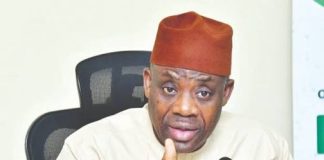

According to Linus Aleke, Inspector-General of Police Olatunji Disu has announced a new policy direction intended to improve the Nigeria Police Force’s professionalism, accountability, and operational performance.
In order to better position the Nigeria Police Force to handle the nation’s changing security issues, Inspector General of Police Olatunji Rilwan Disu has presented new operational methods and a clear policy direction.
The police chief says that improving professionalism, discipline, and intelligence-driven policing throughout the Force is essential to this vision. He emphasized that the police must stay steadfastly dedicated to their primary mission of safeguarding people and property while simultaneously adapting to contemporary security circumstances.
He pointed out that strengthening accountability and restoring public trust in law enforcement are equally crucial. Disu emphasized that a key component of the new policy framework for his administration will be better police-community ties.
In order to improve operational performance and guarantee that the Police Force continues to be responsive to the requirements of citizens nationwide, he believes that bolstering internal oversight systems, increasing officer welfare, and cultivating more public trust will be crucial.
During his first meeting with Senior Police Strategic Managers as the 23rd Indigenous Inspector-General of Police, Disu recently made these statements in Abuja. He declared, “This administration will act firmly, fairly, and transparently to deter misconduct, reinforce discipline, and restore public trust in Nigeria Police Force.” “At the same time, capacity building and discipline must go hand in hand.”
The IGP stated that in order to accomplish this goal, the Force will thoroughly examine its hiring procedures to guarantee that only people with strong moral character, aptitude, and dedication are accepted into the Nigeria Police Force. He continued, “Our training curricula across all police institutions will be modernized and continuously updated to reflect evolving criminal tactics, emerging security realities, and global best practices in law enforcement.”
In addition to entry-level training, Disu emphasized that his leadership will prioritize ongoing professional development, the acquisition of specialized skills, and recurring retraining to guarantee that officers continue to be competent, self-assured, and professional in the performance of their tasks. He stated, “A modern Police Force cannot be anchored on outdated methods.” “It needs to be flexible in approach, informed in methodology, technologically adept, and forward-thinking in perspective.”
He stated that the nationwide adoption of community policing is another essential part of the operational reform agenda.
According to Disu, “community policing will be a central pillar of our operational philosophy.” “The communities we serve are essential to the success of policing.”
As a result, he instructed Commissioners of Police in all commands and formations to give consistent interaction with established institutions, local authorities, youth organizations, and civil society organizations top priority.
“Partnership is our greatest force multiplier, and security is a shared responsibility,” he stated.
Disu stated that the Force continues to be the primary agency in the management of internal security while reiterating the strategic role of the Police in Nigeria’s security architecture.
He stated, “The Nigeria Police Force remains the lead agency in the internal security management of our nation,” adding that institutional discipline, strategic focus, and clarity of purpose are necessary to maintain and strengthen this primacy.
The IGP emphasized that the Force cannot afford reactive or dispersed approaches to policing in light of the growing complexity of security challenges. As a result, he declared, “we will re-engineer our operational strategies to fully embrace intelligence-led, evidence-based, and technology-driven policing models.”
The new strategy will prioritize boosting information sharing across commands and formations, strengthening intelligence architecture, and improving inter-unit coordination.
Additionally, Disu revealed that the Force will consciously invest in cutting-edge investigation techniques, including as data analytics, digital and cyber forensics, surveillance technologies, and scientific crime-scene management.
He clarified that by making such efforts, policing will become more proactive rather than reactive. “By doing this, we will disrupt transnational threats, stay ahead of evolving criminal networks, and reinforce Nigeria Police Force as a capable, modern, and credible lead agency in the nation’s internal security architecture,” he stated.
In addition to operational changes, the IGP prioritized upholding human rights and rebuilding public trust in the Nigeria Police Force. Above all, he reaffirmed, the police must continue to be the people’s police.
Under his leadership, Disu issued a warning that officers would not be allowed to abuse their positions and that any proven to be incompetent would face the proper repercussions.
He declared, “I stand before you fully conscious of the weight of this responsibility and the high expectations of our officers, our nation, and the Nigerian people.” “The Nigeria Police Force is there to protect the country, serve the people, and enforce the law.” These are everyday responsibilities rather than impersonal ideals.
He contends that the public’s level of trust in the police is just as much a source of authority as their statutory authorities. He stated, “Our authority derives not merely from statute but from public trust.” “Our efficacy is reduced once that trust is compromised.” He promised that under his direction, professionalism, responsibility, and transparency will become operational norms rather than just catchphrases.
The IGP recognized that modern policing is subject to close public scrutiny, especially in a time of instantaneous communication and increased civic consciousness.
“Every action of the Police reflects instantly on the entire Force and, indeed, on Nigeria itself in an era of heightened public scrutiny and instant communication,” he stated.
He cautioned that misconduct, power abuse, corruption, extortion, and wrongful arrest or detention—regardless of how minor—erode public trust and damage the institution’s reputation. “Let me be clear: such behavior will not be accepted,” Disu declared.
As a result, he exhorted top commanders to set a good example by maintaining the highest moral standards and imposing discipline.
He stated, “As leaders, we must constantly remind ourselves of an enduring truth: authority is strongest when it is exercised with restraint, fairness, and sound judgment.”
He emphasized that although the uniform bestows legal authority, the legitimacy of the police ultimately rests on the actions, choices, and demeanor of its officers.
He continued by saying that upholding human rights must continue to be essential to professional law enforcement and to maintaining public confidence.
“Every Nigerian must be treated with dignity, fairness, and respect, regardless of status, belief, or background,” he declared.
Disu cautioned that any behavior that goes against these values erodes institutional credibility and erodes public trust.
“Our internal accountability mechanisms will be strengthened, revitalized, and insulated from undue influence in order to restore and sustain public confidence in Nigeria Police Force,” he continued.
He revealed that important oversight organizations in the Force, such as the X-Squad, the Force Provost, and the Complaints Response Unit, will have the capacity to act decisively and independently when looking into allegations of wrongdoing, corruption, or abuse of power. He said, “The message must be clear: no officer is above the law.”
He contends that while officers must realize that their allegiance to the organization does not include covering up crime, individuals must feel protected and encouraged to expose malfeasance. He emphasized that rank, seniority, or position would not protect any officer from disciplinary action, saying, “Under this leadership, there will be no sacred cows.”
He added that officers who are found to be at fault will be subject to prompt and suitable punishments, such as termination and, if required, prosecution.
As Nigeria gets ready for the general elections in 2027, Disu also talked extensively about the police’s role in defending the country’s democratic process. “Our responsibility to the nation becomes both heightened and non-negotiable as we approach the 2027 General Elections,” he stated. He pointed out that as the primary agency in managing election security, the police’s actions will have a significant impact on the legitimacy of the electoral process, the stability of Nigeria’s democracy, and the trust of the Nigerian people.
“The Police must be firm in enforcing the law, impartial in its decisions, professional in its conduct, and strictly neutral in all electoral engagements in order to fulfill this duty,” he said. He stated that the Force will safeguard democratic institutions, electoral officials, voters, and vital infrastructure while securing the electoral process prior to, during, and following the elections.
He claims that the goal is to guarantee that every Nigerian can freely, peacefully, and without fear or intimidation exercise their civic rights.
Disu emphasized that crowd control and public order responsibilities must always be performed with moderation, proportionality, and rigorous commitment to the rule of law and human rights. “When necessary, the use of force must always be lawful, measured, and accountable,” he stated.
In order to provide a coordinated and seamless electoral security framework, he continued, the Police will collaborate closely with the Armed Forces, other security agencies, and the intelligence community.
However, he emphasized that the Nigeria Police Force will continue to play a leading role in election security with a clear chain of command and accountability.
The IGP issued a warning, saying, “Let me be clear: partisanship, misconduct, or abuse of authority will be zero tolerance.”
He stated that any officer found to have violated election laws, compromised impartiality, or operated outside of authorized norms of engagement would be subject to immediate disciplinary action, including prosecution if needed. He said, “There will be no excuses or exceptions.”
Disu addressed the topic of police welfare in addition to operational improvements and electoral obligations, seeing it as a crucial element of efficient policing.
He declared, “I am acutely aware that no Police Force can perform at its best if its officers are burdened by neglect.”
He clarified that his administration will continue to prioritize officer welfare.
Officers’ housing, pay, retirement, healthcare, and general well-being will all receive thoughtful, ongoing attention. According to Disu, the Force would work to improve living conditions for employees through partnerships and policies, and it will also offer psychological and emotional assistance when needed.
He observed that “when officers are cared for, morale improves; when morale improves, performance follows.”
Additionally, he gave staff members assurances that his leadership will strongly support officers who preserve the institution’s honor and integrity.
He declared, “This leadership will stand with officers who do right, who work diligently, and who uphold the honor of the Force.”
He made it plain that quality will be sought at all levels of command while also promising support for committed staff.
“Change is here, not on the horizon. And things will improve,” the IGP said.
As a result, he urged senior officers to support the reform goal and show strong leadership within their own commands. Disu declared, “History will judge us by our actions, not by our intentions.” “We must work together to create a police force that reflects the goals of our people and consistently gains their trust.”
All things considered, Disu’s policy orientation is a resolute attempt to restructure the Nigeria Police Force via increased public trust, professionalism, accountability, and intelligence-led policing.