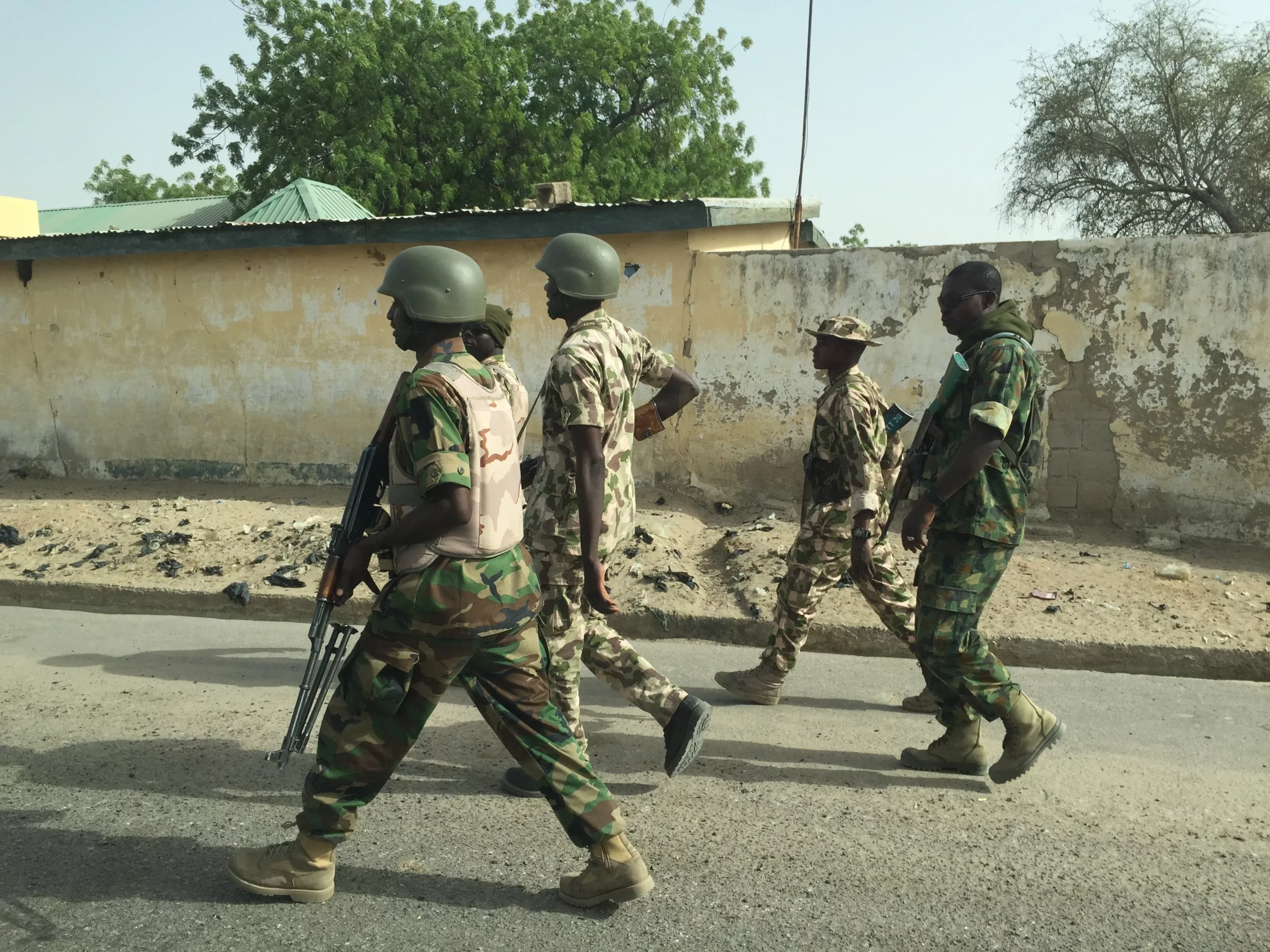
Between March 28 and 30, 2026, forces under Operation Hadin Kai prevented attacks, intercepted logistics supplies, and detained suspected collaborators, according to the Nigerian Army, which has declared a number of operational victories against militants in the Northeast.
The bulletin, which described actions conducted throughout Borno State, including Damboa, Gwoza, Askira Uba, and Maiduguri, was posted on the Nigerian Army’s official Facebook.
The Army claims that after discovering the movement of suspected Boko Haram and ISWAP fighters through surveillance, forces were able to successfully repel their planned strikes and force them to retreat.
It further stated that an improvised explosive device planted along the Goniri Ngamdu road was found and safely exploded, and that attempts to harm farmers and villages were also prevented.
The Army claimed to have made a significant breakthrough by intercepting vehicles carrying substantial amounts of suspected terrorist supplies.
“Medical medications, motorcycle parts, mosquito nets, and other materials believed to be heading towards terrorist enclaves were among the consignments, equivalent to two truckloads,” the statement stated.
Along with others in separate raids, troops also detained a number of suspects connected to logistics supply, including a 26-year-old named Mohammed Adamu.
Another suspect, Abubakar Ali, also known as Saina, was detained while purportedly on a reconnaissance mission, the Army revealed in a subsequent update.
The statement claims that drugs were found during search efforts and that a suspected kidnapper was also captured.
Although the Army emphasized these achievements, Nigerians’ reactions to the update have been divided, with some doubting the overall effect of such operations given the ongoing instability in certain areas of the nation.
In response, a user named King Olex remarked, “You people are failures in this country; we don’t have soldiers anymore remember you have families in those communities.”
Paul Yakubu, another commenter, suggested an alternative strategy, stating: “Go after the sponsors and financial backers.” They own the data that ties everything together.
“The Joint Task Force failed to stop the massacre in Jos… there’s still no clear update on what really happened,” SirGrey said in his presentation, casting doubt on the efficacy of security measures.
A different narrative by a kidnap survivor has further raised awareness of the human cost of instability, particularly outside the Northeast, while discussions continue.
The victim described how he was kidnapped by armed men while working on a farm and detained for 42 days in an internet post posted by a farm manager in Ekiti.
They had AK-47 rifles and were seven in number. He said, “They took me through the forest and tied my hands.”
He said that even after negotiating a lower ransom demand of N100 million, the kidnappers continued to use brutality on their victims.
He disclosed that after his employer refused to pay the ransom demands, one of the victims—a tractor operator—was shot and subsequently passed away.
“When the money didn’t arrive, they shot him once more. We were instructed to bring his body into the forest, but I was trembling and immobile,” he remarked.
The witness described how inmates were transferred between camps and fed inadequately, adding that he was not immediately released even after his family donated money several times.
At one point, I was the last one left. After paying between N1 million and N20 million, others were freed, he claimed.
Concerns about the extent of insecurity around the nation have grown as a result of the account, with many Nigerians pointing to a discrepancy between official assertions of military victories and the realities that residents confront.
The proliferation of violent crimes and kidnappings in other areas, according to observers, underscores the necessity for a more comprehensive and well-coordinated security response even as operations in the Northeast continue.
As of the time this story was filed, officials had not yet directly addressed the public’s mounting concerns or the responses that followed the Army’s post.