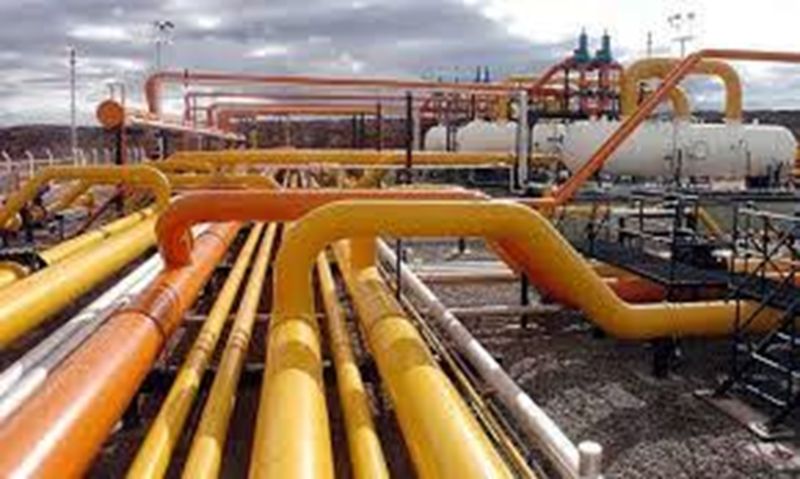
Amina Benkhadra, head of Morocco’s hydrocarbons and mining agency (ONHYM), says that this year an intergovernmental agreement (IGA) will be signed for a planned $25 billion gas pipeline between Nigeria and Morocco.
Benkhadra told Reuters on Monday that after the intergovernmental agreement, Nigeria will set up an authority for the pipeline made up of ministerial representatives from 13 participating countries to coordinate politics and regulations.
The African Atlantic Gas Pipeline project was agreed upon ten years ago. It would run 6,900 km on a mix of offshore and onshore routes and have a maximum capacity of 30 billion cubic meters (bcm), with 15 bcm going to Morocco and supporting exports to Europe.
The Economic Community of West African States (ECOWAS) supports the pipeline. It has finished its feasibility study and front-end engineering design (FEED) stages.
“After the agreement between governments, Nigeria will set up a high authority for the pipeline. This will bring together ministerial representatives from each of the 13 countries involved to coordinate politics and regulations.
“A project company will also be set up in Morocco as a joint venture between ONHYM and the Nigerian National Petroleum Company (NNPC) to oversee the planning, financing, and building of the project.
The pipeline would help Morocco become an energy bridge between Africa and Europe by increasing electricity generation and making it easier for industries and mines to grow. It would also help West Africa’s economies become more connected.
The first parts of the project would connect Morocco to gas fields in Mauritania and Senegal, and Ghana to Cote d’Ivoire further south. The last part would connect Ghana to Nigeria’s gas fields.
Benkhadra says that the first gas from the first phases is expected in 2031. He also says that “the project does not rely on a single global final investment decision; each segment is designed to be developed as a ‘standalone system’ to allow for early value build-up.”
She did say, though, that even though investors are still very interested in the project, no final funding commitments have been made. The project company is expected to raise money through a mix of equity and debt.
“The project is getting a lot of attention because of its size, its phased structure, and where it fits into the bigger picture.
Benkhadra said, “The project company will lead the financing structure and use a mix of equity and debt.”