Nigeria has had leaders, but it has had trouble with the cost of change and the impatience that comes with it.
History shows a pattern that keeps happening: important decisions are put off, problems get worse, and when they are finally fixed, the pain is mistaken for the problem itself.
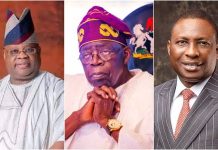
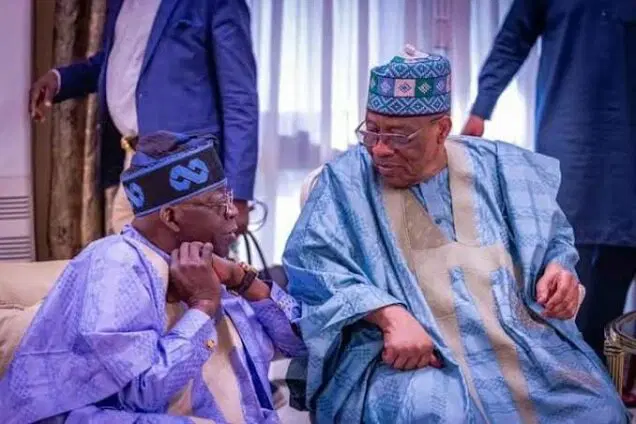
Sani Abacha and Ibrahim Babangida are two leaders who show this tension better than most. Today, President Bola Ahmed Tinubu is another.
Babangida and Abacha: Reform by Order
Nigeria went through one of its biggest structural adjustments under Ibrahim Babangida. Moving the federal capital to Abuja, building the Presidential Villa in Asokoro, creating the Federal Road Safety Corps (FRSC), and opening up important sectors to competition were all examples of a leadership style based on size, speed, and central authority. His government did more than just change institutions; it also built up the country’s infrastructure and made the financial sector stronger. These changes laid the groundwork for private-sector involvement that still shapes Nigeria’s economy today.
Sani Abacha then focused on discipline and financial control. Inflation went down, and foreign reserves went up quickly, from less than $500 million to several billion dollars. His government also tried to consolidate its finances without using IMF programs, which showed that it wanted to be economically independent. Through ECOMOG, Nigeria showed its power in the region, and infrastructure grew in important areas.
But both times had one thing in common: command governance. Decisions were made quickly, and actions were taken right away. However, there wasn’t much disagreement, and the institution’s depth was still weak.
Their legacies live on, not as simple successes or failures, but as examples of what centralized power can do and what it can stop.
Obasanjo and Buhari: From Command to Consensus
The return to democracy in Nigeria under Olusegun Obasanjo was a big change in the country’s structure. Obasanjo stabilized Nigeria’s place in the world by serving as both a military leader and later as a civilian president. He got debt relief, strengthened institutions, and opened up telecommunications, which led to one of the country’s biggest economic growth spurts.
Muhammadu Buhari came next, and his main goals were discipline and infrastructure. His government built the Second Niger Bridge and made the rail and road networks bigger, all while dealing with big security and economic problems.
But both governments show an important difference: democratic rule makes decisions take longer, but it also makes them more legitimate.
Reform without the protection of command, Tinubu
President Bola Ahmed Tinubu said on May 29, 2023, “Subsidy is gone.”
It wasn’t a small change in policy; it was a break.
Removing subsidies didn’t make things harder for Nigeria; it made them easier to see.
The government took more steps within days, signing into law the decentralization of electricity, which ended decades of centralized control. Three years later, 11 states have moved to regulatory transition frameworks for generating and distributing electricity. This is the first step toward a decentralized power economy.
These actions weren’t done in a vacuum. They were changes to the structure.
Nigeria’s position was weak at the time of the change. Paying off debt took up almost all of the federal government’s money. Oil production had dropped to about a million barrels a day. Most importantly, net usable foreign reserves were thought to be less than $4 billion, even though the gross numbers were higher (Source: Central Bank of Nigeria / Reuters, 2025–2026).
That truth has changed.
By the end of 2025, net reserves had grown to $34.8 billion, and by early 2026, gross reserves were close to $50 billion (Source: Central Bank of Nigeria; Reuters, March 2026).
The National Bureau of Statistics says that GDP growth rose to 3.4% in 2024 and 4.23% in the second quarter of 2025.
Fitch raised Nigeria’s sovereign rating to B with a Stable outlook, saying that the country’s policies were more credible (Source: Fitch Ratings, April 2025 & 2026).
These are not the final results, but they are strong signs of where things are going.
From Policy to Action
There must be clear progress as a result of reform.
The Kaduna–Kano rail corridor was only 15% finished in 2023, but by September 2025, it was 53% finished, and by 2026, it was about 60% finished (Source: Federal Ministry of Transportation).
According to reports from the Federal Ministry of Transportation in 2025, the Kano–Maradi rail line went from being about 5% finished to 61% finished.
Major highway projects that have been on hold for a long time are now moving forward. The Lagos–Calabar Coastal Highway is about 70% done with Section 1 (Source: Federal Ministry of Works, 2025 update), and the Sokoto–Badagry Superhighway is now in the execution phase.
These projects are not just one-off things; they are important for the economy.
When they are done, they will change the way trade flows, lower the cost of logistics, and make the country more unified, especially in Northern Nigeria.
People-Centered Governance and the Real World of Money
By 2025–2026, it was clear what the administration’s plan was: reform based on governance that puts people first.
President Tinubu said:
“The people of a country are what make it strong, especially at the grassroots level.”
This is shown in fiscal policy.
The Federal Ministry of Finance / FAAC communiqué from June 2025 said that N4.232 trillion was available for distribution across the federation. This improved liquidity at all levels of government and gave states more power to meet their obligations and fund social programs.
In the past, states had to rely on bailouts to pay their employees and pensioners, but that reliance has lessened.
The creation of development commissions in each of the six geopolitical zones is another sign of a planned move toward bottom-up, region-specific development.
About borrowing and the direction of the economy
People who say the government is “borrowing without clarity” are missing an important point.
Some of the money that is borrowed is used to pay off and refinance old debts, which is something that must be done. Without it, there is a chance of instability.
How resources are used is a more important question.
In infrastructure, education, healthcare, energy, and subnational support, spending is clear across all sectors. These are investments in people and things, not just money spent.
In a country with big structural problems, borrowing isn’t the problem; misallocation is.
A Professional Way to Run Things
Tinubu’s way of thinking is professional: a system that is out of balance cannot last; it needs to be fixed.
Subsidy removal, exchange-rate unification, tax reform, and fiscal redistribution are not arbitrary policies; they are systematic corrective actions.
He said:
“The changes we are making are hard, but they are necessary for Nigeria’s long-term stability and growth.”
The Next Phase of Reform: Security, Sovereignty, and
Reform of the economy is not enough. In the end, security is what keeps the country stable.
As the economy gets better, the next step must be to make Nigeria’s Armed Forces stronger through investment, restructuring, and capacity building. This will make them more effective and able to protect the country’s sovereignty without relying on outside forces.
We must protect economic growth.
It is important to uphold sovereignty.
The Argument for Continuity
The question is no longer if reform was needed.
The question is if it will last.
Nigeria’s history of policy is marked by changes that are never put into action.
What is coming out now is different.
The foundation has been laid, and in three years, the scale of structural intervention will be measured. The benefits are not enough, and the difficulties are real, but the path has changed.
Continuity is not a political issue; it is a policy need.
The National Patriots
The National Patriots say again that building a nation takes more than just opinions; it takes a different point of view, discipline, and a willingness to see how important leadership decisions are in their proper context.
Princess Gloria Adebajo-Fraser, MFR, says:
“A country that only judges its leaders by how hard it is to change runs the risk of missing out on the chance to change.” Being a true patriot doesn’t mean being blindly loyal. It means being mature enough to see sacrifice, having the discipline to go through change, and having the wisdom to support what keeps the future safe.
As the world changes and Nigeria’s economy adjusts, Nigerians need to be careful not to believe stories that make people more divided or weaken the country’s resolve. Progress is only possible through constructive engagement, not knee-jerk opposition.
The leaders must take action.
It is the duty of citizens to comprehend.
Nigeria’s long-term stability, progress, and sovereignty depend on that balance.
Conclusion: More than Comfort
Comfort doesn’t change countries.
They change when they are corrected long enough for the change to stick.
The true test of leadership is not being popular at the moment, but having the courage to act when it matters and the discipline to follow through with change.
Nigeria is at that point again.
Nigeria is not lost; it is in danger of losing its momentum. And in reform, speed is everything.