🌿 Ruzu Non-Alcoholic Herbal Bitters
Ruzu Non-Alcoholic Herbal Bitters is a natural health supplement specially formulated to:
- ✅ Promote general wellness
- ✅ Detoxify the body
- ✅ Support the treatment of various ailments
Made from a powerful blend of 100% organic and medicinal herbs, Ruzu is completely alcohol-free, making it ideal for:
- 👪 All age groups
- 🌱 Health-conscious individuals
- 🌿 Anyone seeking non-alcoholic herbal remedies
Whether you're looking to boost your vitality, cleanse your system, or support healing the natural way, Ruzu Bitters offers a trusted herbal solution.
Nigeria’s Senate was at the center of national crises during a turbulent and unpredictable year, dealing with pressing economic issues and growing insecurity. Every legislative session represented the pulse of a country demanding responsive governance as inflation skyrocketed and public dissatisfaction increased. Lawmakers had to balance upholding order with attending to the urgent issues of their constituents while dealing with the demands of constituency expectations and internal party dynamics. During a crucial year in Nigerian politics, SOLA SHITTU explores how the Senate handled these challenging times, exposing both its strengths and weaknesses.
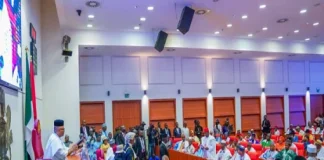
The gavel struck more forcefully than usual on a stressful afternoon in the crimson chamber. The country outside was noisy, but the galleries were. The morning news was dominated by inflation statistics, security briefings were popular on internet platforms, and senators’ phones were constantly ringing with messages from constituents who felt the impact of every policy move made in Abuja. It was evident that this was no typical sitting when the presiding officer called the chamber to order. It was simply another day in a year that kept pushing Nigeria’s Senate to the limit of institutional determination and public tolerance.
The Senate worked under the intense scrutiny of the country’s anxiety throughout the entire year. Lawmaking was no more a far-off process shielded by procedure; instead, it took place in the context of escalating costs, growing insecurity, and irate citizens. While confirmations, budget approvals, and policy endorsements were assessed according to their immediate impact on day-to-day living, motions discussed on the floor were immediately examined outside of the chamber. Tensions throughout the nation were essentially reflected in the Red Chamber.
According to Dr. Nkechi Onu, a governance specialist at the Center for Democracy and Development, “this was a perfect storm for the legislature.” Senators were required to enact laws not only according to protocol but also in accordance with the needs of the country. Each vote and motion had symbolic significance that went beyond simple adherence to the law.
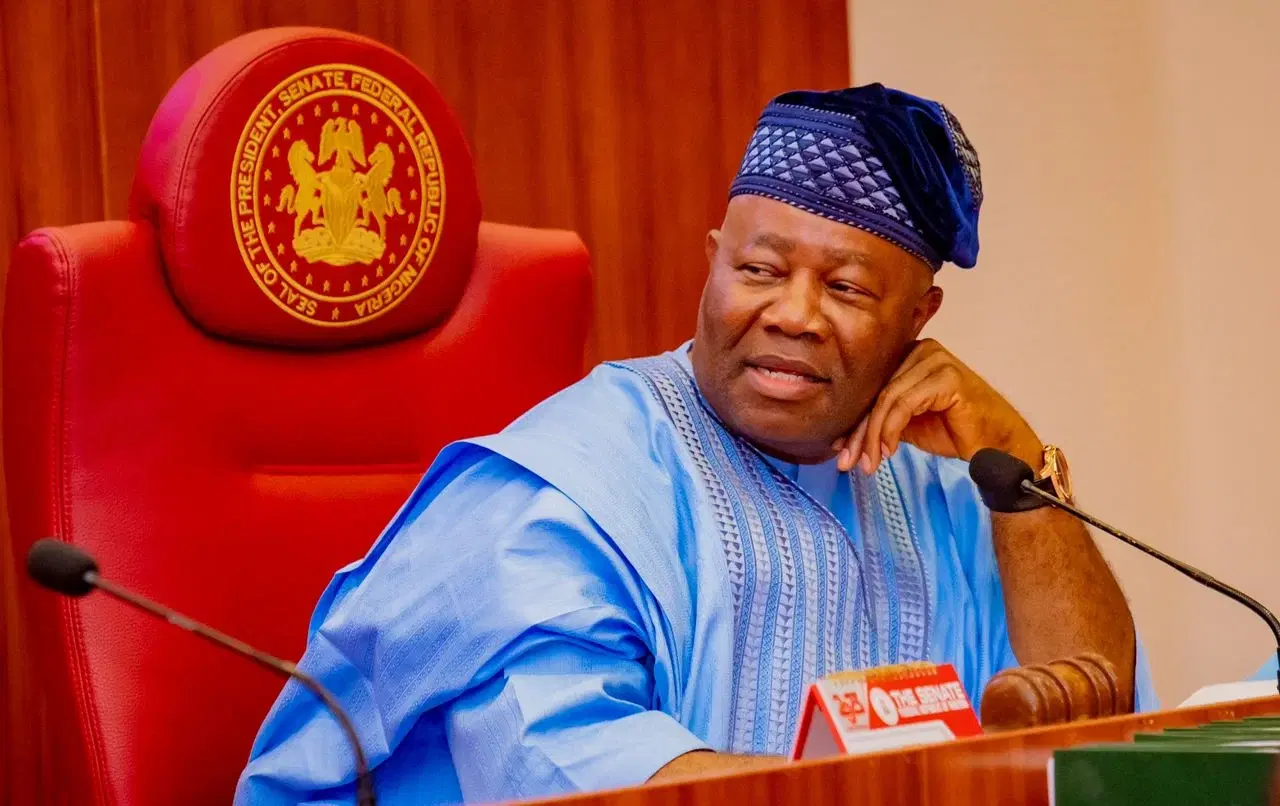
A leadership committed to maintaining control in unpredictable times presided over this precarious equilibrium. Godswill Akpabio, the president of the Senate, kept control of the proceedings by emphasizing discipline, speed, and order as stabilizing factors in a volatile political environment. A common perception that legislative paralysis might worsen economic hardship and security issues drove the Senate’s generally cooperative relationship with the executive branch. However, this cooperation was frequently put to the test, especially when measures sparked popular opposition and lawmakers had to balance party allegiance against demands from constituents.
The Senate’s agenda and public scrutiny were largely focused on economic issues. Discussions over budget benchmarks, taxation, income generation, and subsidy modifications became hot topics for criticism. With a keen awareness of the sentiment back home, senators spoke not just as legislators but also as political representatives. On the floor, a number of people publicly cautioned that policies viewed as hasty or insensitive could undermine confidence and stoke animosity.
Budget discussions, which are usually procedural, became unusually intense. In a period of widespread hardship, debates about borrowing plans, deficit finance, and oil benchmarks were portrayed as moral as well as financial judgments. Market participants, civil society organizations, and labor unions all kept a careful eye on the Senate’s approval procedures in search of clues on the government’s economic course. Every change or modification had symbolic significance that extended well beyond the chamber.
According to economic policy researcher Chinyere Uzo, “Senators weren’t just rubber-stamping budgets.” They had to deal with deficit finance, subsidy reforms, and changes to the oil benchmark. Every choice had immediate societal repercussions. Lawmakers were under tremendous pressure as constituents felt these in their pockets.
In fact, the level of fiscal monitoring was highlighted by the 2025 Appropriations Re-enactment Bill. Senators from both parties thoroughly examined President Bola Ahmed Tinubu’s request for parliamentary approval to release ₦43.56 trillion. While some questioned the viability of borrowing plans, others called for quick approval to avoid administrative stagnation as lawmakers discussed the breakdown of statutory transfers, debt servicing, recurring expenditure, and capital projects.
One senior senator who asked to remain anonymous stated, “Every figure debated on the floor carried a real human story.” “You couldn’t talk about billions without considering how families are struggling to make ends meet or how students are dealing with unpaid school fees.”
There was a persistent undercurrent of security fears. Plenary sessions were punctuated with grim frequency by motions on violent attacks, kidnappings, and regional instability. As senators described episodes from their constituencies, blending legislative language with personal pain, the chamber occasionally fell into uncomfortable stillness. Closed-door briefings and emergency sessions were regular occurrences on the calendar, strengthening the impression that the legislature was under constant pressure.
According to political analyst and former security assistant Peter Adebayo, “motion on violent attacks weren’t just parliamentary rhetoric.” “They represented actual suffering in the constituencies.” Families and communities were speaking to senators directly. Because they wanted to get it right, that emotional weight influenced discussion and occasionally slowed down decision-making.
When it came to security matters, the Senate frequently balanced oversight and legislation. Chiefs of the armed forces and police were called before committees to discuss operations, finances, and tactical shortcomings. A suspicious audience looking for accountability watched live as several sessions turned into public confrontations. Others came to a peaceful conclusion through backroom discussions that hardly ever made the news. This difference brought to light a fundamental conundrum: how to exercise power without undermining governance.
Some of the most dramatic moments of the year were the result of oversight actions. Committees questioned high-profile projects, agency leaders, and expenditures. Live broadcasts of hearings, where confrontation and responsibility became entwined, increased public interest. The questions posed by senators varied from specific requests for explanations of failed public services to technical budget clarifications.
According to Professor Emeka Okafor, a constitutional lawyer at the University of Lagos, “the Senate had to navigate between enforcing accountability and allowing governance to proceed.” While oversight is crucial, persistent conflict without a resolution runs the risk of paralyzing the organization. They had to walk a tightrope all year.
Cohesion was put to the test by internal Senate dynamics. Hasty caucus meetings and short-term adjournments were the result of intense discussions about economic policies. Party loyalty, local interests, and the moral need to alleviate public suffering had to be balanced by the leadership.
According to political analyst Ibrahim Sule, “Senate leadership had to constantly balance speed with scrutiny, and party alignment with constituency demands.” “Akpabio’s insistence on order was a stabilizing response to pressure on multiple fronts, not just formalism.”
Critiques of obstructionism replaced accusations that the chamber was unduly connected with the presidency. Aware that public confidence varied with each choice, senators discussed how to strike the right balance between cooperation and independence.
One of the Senate’s most enduring problems turned out to be public perception. Few decisions went unreported thanks to protests outside the National Assembly complex, criticism from civil society, and constant media coverage. Every motion, vote, and comment was magnified by social media, which frequently framed the discussion as a test of the legislators’ abilities.
Media strategist Funke Adeyemi claims that “social media and 24-hour news cycles ensured that no decision went unnoticed.” The Senate had to strike a balance between institutional rigor and responsiveness. An excessive amount of haste led to errors, while an excessive amount of delay stoked criticism.
While some senators used town halls and stakeholder consultations to interact directly with critics, others relied on protocol to handle public criticism. One of the year’s main fault lines was the discrepancy between institutional rationale and popular expectations.
The human cost was hidden under the formalities of committee and plenary work. In private, senators discussed the constant pressure from lobbyists, party leaders, and constituents. Late into the night, phones rang with requests for help, clarification, or assistance. Employees put in long hours to monitor movements, write reports, and arrange public relations.
A legislative assistant stated, “The volume of calls, emails, and messages was exhausting.” “It was about controlling expectations and making sure people felt heard, not just about passing laws.”
Quieter victories frequently went mostly unnoticed in the midst of this chaos. Compromises defused potentially divisive plans, constituency concerns were incorporated into committee reports, and amendments were modified following stakeholder involvement. The unseen unfolding of legislative action was made up of these small victories that were masked by more prominent crises.
According to Dr. Onu, “not every success makes headlines.” However, these behind-the-scenes changes are crucial to sustained government. They show that the Senate is flexible and able to negotiate.
As the year went on, it became evident that the Senate was being put to the test in terms of empathy, prudence, and resilience in addition to productivity. Decisions made under duress exposed divisions both inside and between groups, but they also resulted in rare instances of agreement.
Fatigue was evident at the end of the year. Both lawmakers and staff were burdened by the volume of motions, debates, and emergency sessions. However, there was also a feeling of institutional resilience. Even if questions remained about whether the Senate had done enough to close the gap between policy and perception, it had absorbed waves of criticism, modified its procedures, and carried on.
According to Professor Okafor, “the Senate’s resilience under pressure shows that Nigerian institutions can endure crises.” However, converting legislative efforts into observable results is essential to maintaining public trust over the long run. Even well-meaning choices will be questioned if they don’t have a noticeable effect.
The red chamber was clearly at a turning point as the year came to an end. Operating under close examination for months had revealed both its strengths and weaknesses. Even while there were still unanswered concerns about transparency, responsiveness, and independence, the Senate showed that it could absorb shocks, modify deadlines, and realign priorities.
In the end, the year was more defined by what it showed about Nigeria’s struggling legislature than by specific measures. The Senate emerged as an institution walking the tightrope between stability and sensitivity rather than as an inflexible gatekeeper or a passive appendage. It was a year of persistent negotiation, cautious transformation, and crisis management.
The lessons of pressure, compromise, and consequence reverberate within the red walls of the chamber as another legislative year approaches. It’s unclear if the Senate will be able to use these lessons to build greater public trust. It is evident that the experience, created by a year in which legislation was inextricably linked to the day-to-day challenges of the country it serves, has altered the institution.