🌿 Ruzu Non-Alcoholic Herbal Bitters
Ruzu Non-Alcoholic Herbal Bitters is a natural health supplement specially formulated to:
- ✅ Promote general wellness
- ✅ Detoxify the body
- ✅ Support the treatment of various ailments
Made from a powerful blend of 100% organic and medicinal herbs, Ruzu is completely alcohol-free, making it ideal for:
- 👪 All age groups
- 🌱 Health-conscious individuals
- 🌿 Anyone seeking non-alcoholic herbal remedies
Whether you're looking to boost your vitality, cleanse your system, or support healing the natural way, Ruzu Bitters offers a trusted herbal solution.
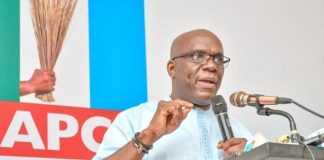
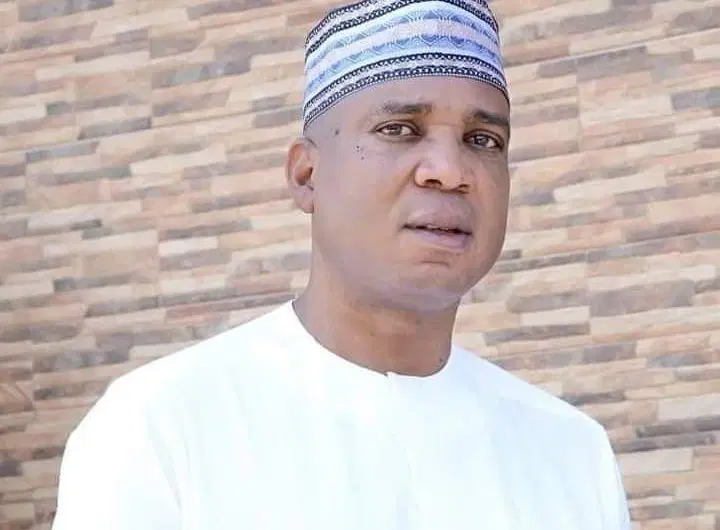
According to Dr. Mathias Byuan, a candidate for governor and a candidate in the 2023 Benue governorship contest, the state’s current administration structure is no longer able to provide continuity.
Benue State is struggling with a seriously defective government structure that has become reactive, over-centralized, and estranged from the people it is supposed to serve, Byuan said in an exclusive interview at his home yesterday. According to Byuan, “Benue’s governance has fundamentally collapsed.”
“Political survival drives decisions more so than long-term planning. The use of public funds has no discernible effect on livelihoods, security, or essential services.
Continued use of this system entails accepting institutional weakness and stagnation. Byuan said his fresh ambition is motivated by the need to rethink how government functions rather than just replace political actors. Byuan ran for governor in 2023 and is putting himself in a position to win the office again.
The continuation of insecurity in spite of years of significant public spending, the continuous collapse of productive sectors like agriculture, and the degradation of the civil service, he said, are the most obvious signs that Benue needs a new path.
He questioned, “How do you explain ongoing killings and displacement after years of huge security budgets?” “How do you defend an underpaid, disheartened, and politicized civil service or an agricultural state where farming hardly makes it past subsistence?”
Byuan contended that when a government consistently fails to provide fundamental services, boost the economy, and protect lives, the issue can no longer be only ascribed to subpar performance. According to him, “that is systemic failure.”
Byuan denied that he is motivated by personal gain in his goal, stating that he is more concerned with institutional transformation than holding public office. “This isn’t about taking over Government House,” he stated.
Rebuilding institutions, establishing performance criteria, and holding the government responsible for outcomes are the main objectives. Previous governments prioritized individuals and short-term initiatives. I am concentrating on systems.
He attributed Benue’s governance issues during the past 10 years to three main structural flaws: a political culture that prioritizes loyalty over competence, planning and budgeting procedures that aren’t linked to results, and institutions that rely more on people than on regulations.
Byuan has a long history in Benue politics.
He has previously run for office, and in the 2023 election, he was one of the candidates for governor. He has a technocratic experience influenced by academic training and public service, which goes beyond partisan politics, he says.
Byuan holds a PhD in Business Administration (Finance) and is currently the Executive Director, Housing (Finance and Accounts) at the Federal Housing Authority. He has experience managing institutional systems and public finance at the federal level.
“I believe that without strong institutions, leadership alone cannot bring about sustainable change,” he remarked, drawing on his expertise in public administration. He asserted that “if the system is weak, you can have good intentions and still fail.”
Adding to these insights, Byuan described the institutional changes he would like to see if elected.
He emphasized that without the structures that underpin policies, they cannot be successful and declared that institutional transformation will be the cornerstone of his government.
“Without strong institutions, policies fail,” he stated. “Mindsets only shift when systems incentivize appropriate behavior.”
In addition to digitizing public money and introducing transparent procurement and monitoring tools that enable residents to watch government spending and projects, he revealed intentions to decentralize service delivery, strengthen local governments, and implement transparent monitoring.
He says his proposed governance model is performance-driven and people-centered, with budgets linked to quantifiable results and public officials being regularly assessed.
According to Byuan, significant change needs to be ingrained in institutional structures, legislation, and technology in order to be sustainable.
“Once procedures and performance standards are established, they transcend individuals,” he stated.
“Accountability will be enforced through public scorecards, independent audits, clear performance indicators for ministries and agencies, and sanctions for non-performance,” he added. Regarding firmly held political beliefs, he maintained that changing systems rather than focusing on specific people would always make vested interests weaker.
He claimed that entrenched interests automatically lose influence when hiring, budgeting, and procurement procedures become transparent and governed by rules.
In the first two years of an administration, Byuan stated, the effects of change should be noticeable, especially in the areas of public service delivery, agriculture, and security.
Farmers ought to feel more secure and have access to markets and extension services. Merit-based promotions and better benefits should be provided to civil officials. Traders should benefit from better infrastructure and reduced harassment,” he said.
Rebuilding public trust would be achieved, he continued, by means of timely grievance procedures, frequent town hall meetings, and institutionalized citizen feedback mechanisms.
According to him, “trust is increased when the government is honest, controls expectations, produces results, and owns up to its mistakes.”
Byuan reflected on how he would like history to evaluate his term, stating that Benue has to transition from administration driven by politics to leadership driven by purpose, from weak institutions to strong ones, and from unfulfilled promises to quantifiable progress.
He declared, “The people must now be served by the government, not the other way around.”