🌿 Ruzu Non-Alcoholic Herbal Bitters
Ruzu Non-Alcoholic Herbal Bitters is a natural health supplement specially formulated to:
- ✅ Promote general wellness
- ✅ Detoxify the body
- ✅ Support the treatment of various ailments
Made from a powerful blend of 100% organic and medicinal herbs, Ruzu is completely alcohol-free, making it ideal for:
- 👪 All age groups
- 🌱 Health-conscious individuals
- 🌿 Anyone seeking non-alcoholic herbal remedies
Whether you're looking to boost your vitality, cleanse your system, or support healing the natural way, Ruzu Bitters offers a trusted herbal solution.
Despite preparing for a commercial relaunch in January 2026, NatCom Development and Investment Ltd (known as ntel), the business that purchased Nigeria’s former national carrier, NITEL, may encounter industry difficulties.
There are worries about how the telecom will be able to survive in the nearly saturated market that has been dominated by the current companies, in addition to the fact that it has been inactive for a number of years, giving its rivals enormous opportunities to investigate the country’s industry.
It is hard to imagine the niche market that Ntel would be using to draw in a significant number of clients, given that it currently has over 170 million subscribers and is still vying for more.
Starlink’s complete nationwide entry and operation of satellite services is also problematic. Due to Starlink’s superior competence and innovative service in Nigeria, major telecom carriers MTN, Glo, Airtel, and T2 have been unsettled.
After obtaining another round of unknown funding, Ntel recently announced that it would resume commercial operations by early 2026.
The Asset Management Corporation of Nigeria (AMCON) reportedly arranged the funding, which is the most recent move in the government organization’s continuous effort to keep the telecom business afloat.
After years of insolvency, AMCON, which owns a controlling 55 percent interest, took over full management control of Ntel in 2024. In August 2025, it reportedly invested N30.72 billion as part of its phased revival plan.
The company is leading a comeback with the goal of reintroducing ntel as a competitor in Nigeria’s telecom market that is asset-light and focused on infrastructure.
Speaking recently at a Technology Times event, Soji Maurice-Diya, the CEO of ntel, promised that the once-dormant Nigerian telecom company will formally re-enter the country’s communications market in the first quarter of 2026 under a revitalized strategy that positions it as a “digital-first, infrastructure-light MVNO focused on innovation, inclusion, and sustainability.”
The company’s re-entry, he claimed, signifies “the beginning of a new chapter not just for ntel, but for Nigeria’s telecoms industry as a whole.” In order for us to give it our all, this change is required. We are aiming to lead the industry rather than just catch up.
He claimed that “sustainability, not subsidies, must power digital inclusion.” “We need smarter, more localized models of broadband delivery in order to unlock the enormous rural opportunity.”
In keeping with President Bola Tinubu’s goals, AMCON’s involvement represents both a financial stabilization effort and an attempt to save vital national telecom assets.
Despite the CEO’s overwhelming assurances, the reality of the industrial market and the economy may make it extremely difficult for the service provider to recover profitably.
Undoubtedly, NITEL possessed extensive equipment and infrastructure throughout the nation when it was purchased by Ntel, but these resources are insufficient for the dynamic operational ecosystem of today.
In 2016, NATCOM Development and Investment Limited (NatCom) founded ntel, an offshoot of the government-owned NITEL that it had purchased for $252.25 million. Since the acquisition, Ntel has been having trouble getting back on track.
Nigeria’s telecom companies have struggled over the years to maintain high-quality service in the face of rising operating costs until early this year, when a tariff hike was implemented to alleviate their predicament. However, power outages, vandalism, and fiber outages have become everyday challenges for network providers attempting to maintain connectivity for millions of Nigerians. Infrastructure and profitability are under tremendous strain due to these problems, which are compelling operators to reconsider how they run networks nationwide.
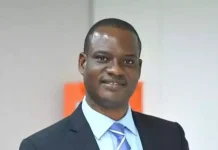
A capable leadership group has reportedly been assembled to revive the business’s operations. Soji Maurice-Diya, the former CEO of American Tower Nigeria, was chosen to take the helm.
Mr. Maurice-Diya is expected to spearhead the implementation of this turnaround plan because of his vast leadership expertise in a variety of industries, including telecom infrastructure (ATC), oil (ExxonMobil), tech (IBM), consulting (EY), and entrepreneurship (as co-founder of Hash App).
The Nigerian Communications Commission (NCC) granted the company a license for Unified Access Service.
Industry observers are wondering, “How comfortable will it be for ntel which has been inactive over the years if the long-existing operators have been battling the industry challenges without significant success?”