🌿 Ruzu Non-Alcoholic Herbal Bitters
Ruzu Non-Alcoholic Herbal Bitters is a natural health supplement specially formulated to:
- ✅ Promote general wellness
- ✅ Detoxify the body
- ✅ Support the treatment of various ailments
Made from a powerful blend of 100% organic and medicinal herbs, Ruzu is completely alcohol-free, making it ideal for:
- 👪 All age groups
- 🌱 Health-conscious individuals
- 🌿 Anyone seeking non-alcoholic herbal remedies
Whether you're looking to boost your vitality, cleanse your system, or support healing the natural way, Ruzu Bitters offers a trusted herbal solution.
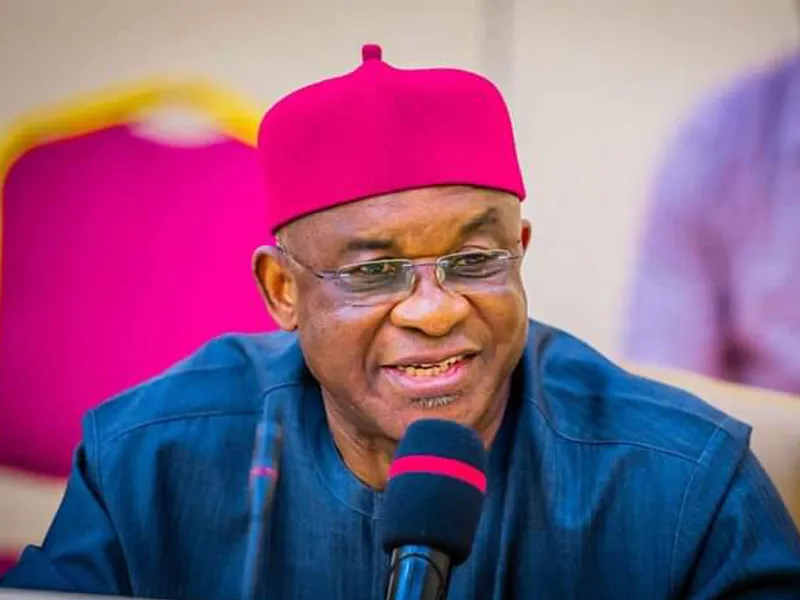
Former Senate President David Mark has refuted assertions made by former Youth Development and Sports Minister Bolaji Abdullahi about the Doctrine of Necessity’s genesis.
Mark insisted that the Senate, not the Nigeria Governors’ Forum (NGF), led by former Kwara State Governor Bukola Saraki, was the one who initiated the application of the Doctrine of Necessity.
He claimed that the concept, which allowed Goodluck Jonathan, the vice president at the time, to take over as acting president, was solely the result of legislative action.
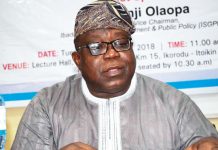
Speaking during the public release of Abdullahi’s memoir, The Loyalist, on Tuesday in Abuja, Mark—who is currently the National Chairman of the African Democratic Congress—emphasized that no Kwara State person or organization had any influence over the decision.
In contrast to the popular belief that the Doctrine of Necessity came from the National Assembly, Abdullahi has previously asserted that the NGF, under Saraki’s leadership, was the first organization to promote the concept.
On February 10, the Senate used the Doctrine of Necessity to install then-Vice President Goodluck Jonathan as Acting President after weeks of political unpredictability.
This came after President Umaru Musa Yar’Adua’s extended absence due to illness, which began on November 23, 2009, without sending a written declaration as required by Section 145 of the 1999 Constitution. Jonathan was given full presidential authority by the resolution until Yar’Adua recovered and returned.
According to Abdullahi’s 297-page autobiography, he was first introduced to the phrase “Doctrine of Necessity” when Saraki contacted him from Abuja and asked him to write a proposal to the National Assembly.
The Yar’Adua presidency is largely responsible for Saraki and Jonathan’s tense relationship, according to Abdullahi’s book. Saraki had a tight personal relationship with the president at the time and was the powerful head of the Nigeria Governors’ Forum.
Conversely, Jonathan was the vice president who lurked in the background and was usually ignored. Therefore, even though Jonathan was now the nation’s second-most important citizen, it was easy for him to feel that Saraki and his fellow governors, who were having fun with Yar’Adua, looked down on him as that “deputy governor.”
Through whatever methods, Yar’Adua was aware of his vice’s discomfort with Saraki and had once requested that he see Jonathan in order to make amends. Saraki complied with the president’s request, but in meetings like this, where there aren’t any pressing issues, decorum usually takes precedence over candor, and everything is usually covered up.
The Jonathan period then started once Yar’Adua passed away. In addition to the lingering hostility, the Jonathan circle believed that Saraki was instrumental in thwarting Jonathan’s formal assumption of office as interim president and assisted Yar’Adua in maintaining his position of authority while he was dying in a Saudi hospital.
In actuality, though, the Doctrine of Necessity was put forth by Saraki’s NGF and approved by the National Assembly, opening the door for Jonathan’s official promotion to acting president.
“When Governor Saraki called from Abuja and asked me to write a statement to present to the National Assembly, I actually learned about the term ‘Doctrine of Necessity’ for the first time.”
In response to the allegations, Mark, the Senate’s then-president, denied any connection between the philosophy and Kwara State or Saraki.
“The mission to save Nigeria is collective,” he declared. He is a forthright individual, and I always followed his counsel even when I didn’t agree with him. He is a devoted and patriotic Nigerian. The majority of Nigerians are motivated by self-interest. He’s done his best and paid his dues.
“Kwara State and its citizens have nothing to do with the Doctrine of Necessity; it is the exclusive responsibility of the Senate. The senators at the time were solely accountable for it.