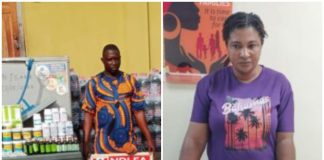
🌿 Ruzu Non-Alcoholic Herbal Bitters
Ruzu Non-Alcoholic Herbal Bitters is a natural health supplement specially formulated to:
- ✅ Promote general wellness
- ✅ Detoxify the body
- ✅ Support the treatment of various ailments
Made from a powerful blend of 100% organic and medicinal herbs, Ruzu is completely alcohol-free, making it ideal for:
- 👪 All age groups
- 🌱 Health-conscious individuals
- 🌿 Anyone seeking non-alcoholic herbal remedies
Whether you're looking to boost your vitality, cleanse your system, or support healing the natural way, Ruzu Bitters offers a trusted herbal solution.
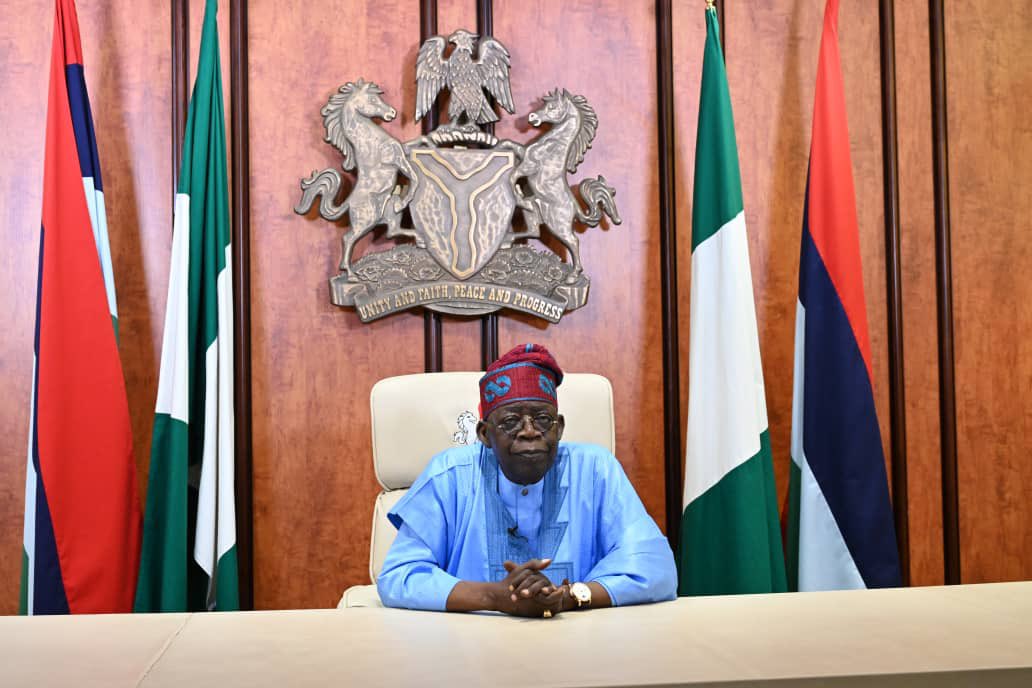
According to Bongo Adi, an economics professor at the Lagos Business School, President Bola Tinubu obtained a $6.9 billion foreign loan as a tactic to combat poverty in the nation.
Adi reportedly revealed this on Wednesday, April 1, 2026, when she appeared on The Morning Brief on Channels Television.
The President’s request for a $6.9 billion foreign credit facility was granted by the National Assembly on Tuesday.
40% of the cash must be allocated to capital projects included in the 2025–2026 budgets, according to a crucial part of the decision.
The Senate Committee on Local and Foreign Debt’s recommendation, which suggested the allocation to guarantee the loan directly supports infrastructure and development efforts, was adopted prior to the decision.
Speaking about the development, Adi connected the borrowing to initiatives to boost sectors growth and lower Nigeria’s poverty rates.
“Let’s translate that borrowing to improve sector development for the reduction of poverty. You will concur that Nigeria is currently experiencing poverty at a level never witnessed in the country’s history,” he stated.
However, he gave a bleak image of the current state of affairs, pointing out that the nation is going through unheard-of hardship.
“It appears that this government is overseeing the highest level of poverty in the history of our nation,” he continued.
The analyst clarified that logical economic factors influence the government’s decision to borrow.
“Just like individuals, the government is a rational agent, so they are looking at how to maximize their returns at the least cost,” he stated.
“I believe the government’s maximization challenge is to borrow as much as possible. They make it appear to speak in their favor given their financial circumstances.
Adi added that Nigeria’s estimated $50 billion in external reserves have contributed to an increase in creditor confidence.
“Everyone, even the creditors, has confidence that this government can repay because you have an external reserve of 50 billion,” he stated.
He claims that since long-term repayment responsibilities are usually stretched out across a number of years, the government may not be unduly concerned about them.
He mentioned loan payback schedules ranging from five to ten years, implying that the incumbent officeholders could not be fully responsible.
Thus, it’s clear that everything points to increased borrowing. You can’t stop it because, considering the logic involved, I believe that the government should borrow money,” he said.
Adi admitted that although fiscal and macroeconomic reforms may be having some effect, the average Nigerian has not yet been greatly impacted.
“We start to see the cascade to the micro level to the ordinary man or woman on the street, and given the time lag, again with the collapse of infrastructure, it starts to appear that the time lag keeps retracting,” he stated.
He pointed out that the public’s opinion of government policy is still shaped by widespread hardship.
“So this is the problem we have, and the population’s suffering is getting worse right now, which is why people are not so happy when they hear the government is borrowing more money,” he continued.
The economist also cited ongoing infrastructural issues as a significant barrier to productivity, especially in the power industry.
“Even though we seem to be doing well on the macro front, what can you say to that when there is no light and productivity is at an all-time low?” he asked.
He continued by saying that advances in the oil industry, which he claimed is still underperforming, are primarily responsible for the macroeconomic gains that have been noted.
Adi said that a lot of Nigerians are still dealing with the fallout from important policy choices, such as the unification of the foreign exchange market and the elimination of gasoline subsidies.
He claims that even while these reforms were necessary, they have continued to put pressure on businesses and households, making the population’s financial situation more dire.