
🌿 Ruzu Non-Alcoholic Herbal Bitters
Ruzu Non-Alcoholic Herbal Bitters is a natural health supplement specially formulated to:
- ✅ Promote general wellness
- ✅ Detoxify the body
- ✅ Support the treatment of various ailments
Made from a powerful blend of 100% organic and medicinal herbs, Ruzu is completely alcohol-free, making it ideal for:
- 👪 All age groups
- 🌱 Health-conscious individuals
- 🌿 Anyone seeking non-alcoholic herbal remedies
Whether you're looking to boost your vitality, cleanse your system, or support healing the natural way, Ruzu Bitters offers a trusted herbal solution.
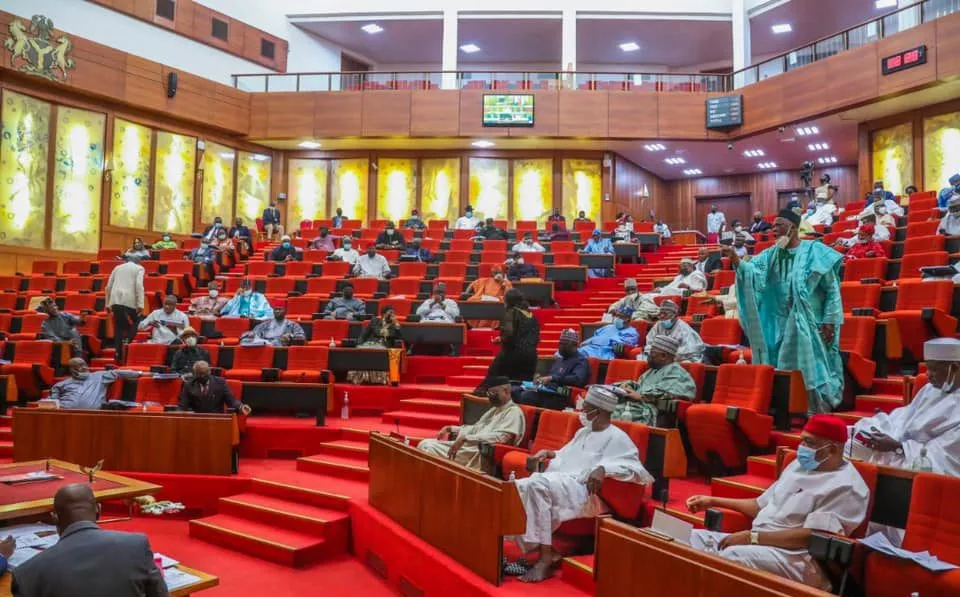
Following weeks of public indignation and persistent public pressure, the Senate has largely reversed its earlier decision to deny the electronic transmission of election results. To allow the electronic transmission of results from polling places to the Result Viewing Portal (IREV) of the Independent National Electoral Commission (INEC), senators revised the Electoral Act on Tuesday. Although many Nigerians had called for comprehensive reform, the concession came with a number of significant caveats.
Although technology is now permitted in Nigeria’s election system, electronic transmission arrives as a guest, welcome but subject to strict oversight.
The amended clause allows for the electronic transmission of election results following the vote-counting process. But lawmakers included a crucial disclaimer: the physical result sheet, Form EC8A, will be the main source of information for collation in the event that network or internet connectivity fails. The Senate has chosen a cautious, politically calculated compromise over a full embrace of election transparency by refusing to mandate electronic transmission and keeping manual collation as a backup.
Senator Tahir Monguno (APC, Borno North), the Senate Chief Whip, moved for an emergency plenary session, which resulted in the amendment. He maintained that in order to bring the Electoral Act more in line with public expectations and changing technical realities, the chamber needed to review its previous position. The move’s proponents praised it as a practical strike between idealism and viability. But what critics perceive is more concerning: a reform that has been slightly watered down to maintain historical vulnerabilities.
In fact, the public had strongly reacted negatively to the Senate’s original rejection of mandatory electronic broadcasting. Media professional associations, such as the Nigerian Guild of Editors, civil society organizations, and pro-democracy organizations cautioned that the ruling might potentially reopen well-known avenues for manipulating results. Technology is a safety measure against intervention at the most vulnerable point of the electoral process—between polling places and collation centers—and is not considered a luxury by many Nigerians.
Therefore, it seems more like a surrender than a conversion that the Senate reversed. In terms of politics, it shows a legislature trying to strike a balance between conflicting demands: the reluctance of long-standing political interests and the growing public demand for genuine elections. Electronic communication restricts political power and, thus, human discretion. That lack of discretion is upsetting to many members of the political elite.
Although the amendment’s revisions are significant, what it maintains might have even greater implications. By specifically permitting manual collation to take precedence in “network failure” situations, the law preserves a procedure that has long been linked to controversy, disagreements, and accusations of manipulation.
The “network failure” language creates ambiguity that is broad enough to engulf the reform itself in a nation where technological malfunctions and logistical difficulties are frequently cited. Disputes are common where discretion flourishes.
Nigeria’s uneven infrastructure realities are evident to any sane observer. Administratively speaking, the clause gives INEC more operational freedom, especially in remote or underdeveloped areas where requiring electronic transmission might not be feasible. It protects the electoral authority against charges of non-compliance in cases where there are real technical difficulties.
This flexibility, however, has reciprocal political implications. It will now be necessary for INEC to provide an explanation for why electronic transmission was feasible in certain polling places but not in others.
Selective application, whether sincere or declared, may increase mistrust, erode public confidence, and open up new legal issues after the election. The amendment may make elections more complicated rather than simpler.
More importantly, the Senate has maintained the very discretion that reformers aimed to limit by adopting an optional rather than mandatory electronic transmission policy. In elections with narrow margins and high stakes, disagreements at the polling station are uncommon. During collation, they appear—exactly the stage that electronic transmission was intended to protect.
Thus, the amendment serves as a political pressure point. Without radically changing the balance of power in the electoral process, it calms public ire. Analysts characterize it as an effort to control conflict instead of addressing the more fundamental issue of electoral credibility. Nigeria’s reform history lends credence to this skepticism, as electoral reforms are frequently presented as advancements while covertly maintaining the status quo.
Nevertheless, the amendment has some importance. For the first time, there is clear legal recognition for the electronic transmission of findings. That’s important. A foundation for future improvements is established by legal recognition. The argument that electronic transmission is unlawful or unnecessary for Nigeria’s electoral system is eliminated.
Transformation, however, is not recognition without coercion. The influence of electronic transmission would be mostly dependent on political will, which is frequently the most unpredictable factor in Nigerian elections, rather than statutory authority as long as it is voluntary. The reform’s legitimacy will depend on how consistently INEC implements it, how openly it explains deviations, and how resolutely it withstands political pressure.
The legal ramifications are just as important. When it comes to election legislation, ambiguity rarely stops at the polls; instead, it often ends up in the courts. The amendment’s non-mandatory wording and the “network failure” exemption are probably going to be major points of contention in election petitions. Tribunals could be required to decide whether it was reasonable to transmit electronically in particular places, whether it had an impact on results, and whether it was appropriate to rely on manual collation.
The amendment runs the risk of making post-election issues worse rather than better. However, the Senate’s reversal also shows that civic pressure is becoming more powerful in Nigeria’s democratic arena, which is good. Lawmakers were pushed to reevaluate an unpopular choice due to public outcry, protests, and persistent campaigning. That’s a democratic win in itself.
The issue is that partial reform frequently delays actual change while giving the appearance of advancement. Senators may have reduced the political fervor by reaching a compromise without tackling the fundamental issue of a lack of confidence in the democratic process. The worry of reformers is still present and legitimate: half-measures will not save Nigeria’s elections.
In the end, the amendment is a step forward, but it’s a step forward measured in inches rather than meters. It shows how difficult it is for the democratic system to balance elite concerns about losing power with popular demands for transparency.
Three things will determine whether electronic transmission is a step toward truly legitimate elections or just a quick fix: how INEC operationalizes the clause, how courts resolve its ambiguities, and how strong public pressure continues.
Electronic transmission is currently allowed in Nigeria’s voting system, but only as a guest and not as a rule. Its intended resolution of the credibility dilemma will remain unresolved until it becomes the norm.