🌿 Ruzu Non-Alcoholic Herbal Bitters
Ruzu Non-Alcoholic Herbal Bitters is a natural health supplement specially formulated to:
- ✅ Promote general wellness
- ✅ Detoxify the body
- ✅ Support the treatment of various ailments
Made from a powerful blend of 100% organic and medicinal herbs, Ruzu is completely alcohol-free, making it ideal for:
- 👪 All age groups
- 🌱 Health-conscious individuals
- 🌿 Anyone seeking non-alcoholic herbal remedies
Whether you're looking to boost your vitality, cleanse your system, or support healing the natural way, Ruzu Bitters offers a trusted herbal solution.
The SNG Health Agreement signed with the Federal Ministry of Health has been rejected by the Health Reform Initiative Nigeria (He-RIN), a civil society organization that promotes health sector reform through increased funding, accountability, and local capacity building. He-RIN characterizes the agreement as self-serving, dishonest, and a purposeful attempt to cripple current local mosquito net manufacturers.
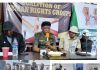
He-RIN denounced the deal that resulted in a collaboration between Vestergaard and Harvestfield, leading to the establishment of SNG Health for the provision of mosquito nets in Nigeria, in a joint statement released on Wednesday by its Executive Director, Sunday Tobi, and Secretary, Abdul Musa.
The organization claims that the agreement is only an extension of the United Nations Office for Project Services’ (UNOPS) past dominance of the industry under dubious circumstances.
According to the statement, “UNOPS incubated the so-called SNG Health at the request of the Federal Ministry of Health through a Swiss company, in collaboration with the World Bank Nigeria, which operates as a sister organization to UNOPS, based on available evidence widely reported in the media weeks ago.”
He-RIN accused the Ministry of Health of purposefully undermining regional producers of insecticide-treated mosquito nets, attributing Nigeria’s ongoing malaria epidemic and inability to considerably lower malaria-related fatalities to what it claimed was the ministry’s cooperation with UNOPS years prior to the Bola Tinubu administration taking office in 2023.
Nigeria continues to have the highest rate of malaria worldwide, according to the group. Nigeria is responsible for about 27% of all malaria cases worldwide and 31% of malaria-related deaths, with an estimated 184,000 deaths per year, primarily among pregnant women and children under five, according to the World Health Organization’s (WHO) World Malaria Report.
He-RIN added that despite significant public health spending, this dire result continues. Nigeria’s health sector has routinely gotten about 4–6% of the country’s annual budget, significantly less than the 15% benchmark set by the Abuja Declaration, according to data from the Federation’s Budget Office.
The health sector received almost N1.3 trillion in the 2024 Federal Budget, or slightly more than 5% of all government spending.
According to data from the National Malaria Elimination Programme (NMEP) and partner funding declarations, the organization revealed that Nigeria has received and deployed about N1.5 billion for malaria control activities between 2015 and 2023.
Insecticide-treated mosquito nets (ITNs), indoor residual spraying, diagnostics, and antimalarial medications were the main uses for these funds, which were mostly supplied by the Global Fund, World Bank, USAID, and UN agencies.
He-RIN stated that “policy inconsistency, excessive reliance on imported mosquito nets, weak local manufacturing capacity, and opaque procurement practices continue to cause Nigeria to struggle with malaria control despite this scale of investment.”
The organization recalled that after a competitive bidding process was finished in 2022, the Federal Government had reached agreements for the local production of mosquito nets. However, it claimed that the process was abruptly stopped at UNOPS’s request soon after the current administration took office.
There hasn’t been any significant investment in the sector since. Nigeria continues to be the most malaria-ridden nation in the world, and mosquitoes continue to devastate communities,” the statement continued.
President Bola Tinubu’s Renewed Hope Agenda for the health sector, which prioritizes a Sector-Wide Approach (SWAp) to Universal Health Coverage (UHC), increased funding, strengthened Primary Health Care through the Basic Health Care Provision Fund (BHCPF), reforms under the National Health Insurance Authority (NHIA), health workforce development, and the promotion of local production as a pillar of a resilient health system, is directly at odds, according to He-RIN.
The group emphasized that millions of direct and indirect jobs could have been created, foreign exchange could have been preserved, and malaria-related deaths could have been greatly decreased if local manufacturers had not been prevented from obtaining a proposed $100 million contract for the local production of insecticide-treated nets.
Following the failure of what it claimed was an attempt to redirect the $100 million plan, He-RIN maintained that SNG Health does not serve Nigeria’s best interests, characterizing it as a re-emergence of vested interests within the Ministry of Health in partnership with UNOPS.
The organization emphasized that the President needs to look into the situation immediately to find out why the Ministry of Health is, in its opinion, putting profit-driven agreements ahead of Nigerians’ health and lives, even though malaria still kills hundreds of thousands of people every year.
The organization expressed grave concern over the Honourable Minister of Health’s refusal to publicly acknowledge the existence of local LLIN mosquito net manufacturers in Nigeria, despite their documented supply history to organizations like the World Bank and the Global Fund, their verifiable presence, and their prior international certifications.
He-RIN claimed that the Minister had a blatant conflict of interest when he took office since he had previously collaborated with Vestergaard. Since then, the Minister has consistently disadvantaged Nigerian-owned manufacturers while promoting policies that serve his personal and business interests.
It was discovered that the same Vestergaard company behind SNG’s partnership was also in charge of shutting down more than 20 net manufacturers in Nigeria, including bed net clusters in Lagos, Aba, Kano, and Onitshia, when it developed its standard Llin, which was given away for free to Nigerians, thereby destroying the commercial market.
The organization claims that in order to create a gap that allowed SNG Health to become the favored supplier, the Minister purposefully persuaded UNOPS to reject and effectively restrict local manufacturers who had made significant personal and borrowed capital investments to establish LLIN facilities.
He-RIN also claimed that until the SNG Health agreement was finalized and procurement contracts could be directly directed to the SNG arrangement, the Minister refused to start bids or malaria intervention programs in states funded by the World Bank.
The group claimed that despite available national data demonstrating that various LLIN types are still effective in various parts of the country, the Minister unilaterally pushed for the award of more than 25 million Global Fund-supported LLINs to a select group of favored companies without the support of any publicly available or Nigeria-specific epidemiological study.
He-RIN emphasized that Nigeria’s epidemiological data supports the use of various LLIN technologies adapted to local mosquito species and resistance patterns, pointing out that a single-net approach is not scientifically justified because Lagos mosquitoes differ greatly from those in Ebonyi and Sokoto States.
The organization claimed that policies that disregard current local manufacturers who have previously invested millions of dollars to establish LLIN factories and successfully produced nets for international donors, such as the Global Fund and the World Bank, seem to be motivated more by corruption than by public health outcomes.
He-RIN recalled that the Ministry of Health still owes local manufacturers money for supplies that were delivered more than ten years ago, despite the fact that those same manufacturers once made Nigeria famous by creating the largest mosquito net in the world, which was displayed at the African Leaders’ Summit on Roll Back Malaria in Eagle Square, Abuja, and recognized by Guinness World Records.
According to the group, the goal of creating the biggest mosquito net in the world was to show off Nigeria’s manufacturing capabilities, promote long-term local production of LLINs, and support government and donor support for manufacturers who had taken out large loans to set up factories.
He-RIN questioned why SNG Health was given priority when Nigerian manufacturers might have benefited from guaranteed market access and sovereign-backed loan guarantees of up to $40 million, which would have produced the same results without uprooting current competitors.
The organization cautioned that because SNG Health competes in the same small market while receiving preferential treatment that distorts competition and jeopardizes the future of local business, the Minister’s current policy framework directly harms existing firms.
He-RIN further claimed that the Minister purposefully delayed the issuance of tenders for World Bank-borrowed funds for more than two years—despite an increase in child malaria deaths—until the SNG Health plan was fully positioned. He-RIN warned that similar tactics are currently being used under the pretense of promoting “dual” LLIN technology, despite the fact that SNG Health is not the only manufacturer of such nets worldwide and dual LLINs shouldn’t be Nigeria’s only option.
According to the statement, “we therefore call on President Bola Tinubu to act in the national interest by stopping the SNG Health arrangement and directing the Ministry of Health to publicly account for what happened to the $100 million initiative intended for local mosquito net manufacturing.”