🌿 Ruzu Non-Alcoholic Herbal Bitters
Ruzu Non-Alcoholic Herbal Bitters is a natural health supplement specially formulated to:
- ✅ Promote general wellness
- ✅ Detoxify the body
- ✅ Support the treatment of various ailments
Made from a powerful blend of 100% organic and medicinal herbs, Ruzu is completely alcohol-free, making it ideal for:
- 👪 All age groups
- 🌱 Health-conscious individuals
- 🌿 Anyone seeking non-alcoholic herbal remedies
Whether you're looking to boost your vitality, cleanse your system, or support healing the natural way, Ruzu Bitters offers a trusted herbal solution.
Like the cases of previous victims of systemic failures in Nigeria, the case of Ms. Ifunanya Nwangene, the stunning singer who died in Abuja from the effects of neurotoxins from snake bites, may eventually fade, but one thing is extremely important: her case will add to the many reminders of how Nigerians have been let down by those in positions of power.
Professor Muhammad Ali Pate, Nigeria’s Coordinating Minister for Health and Social Welfare, will gladly list the health-related accomplishments of the Renewed Hope Agenda today. However, an avoidable death occurred right at the seat of power when hospitals failed to act promptly to save the life of a singer who, against all odds, dragged herself to medical facilities in order to survive.
According to sources, Ifunanya was meant to live, but the system wanted her not to; the corruption in the system and the ignorance of the ruling class wanted her to die, which was clearly preventable if the nation’s hospitals had been prepared for emergencies.
It took Ifunanya more than half an hour to go from her home to the two medical facilities, according to Sam Ezugwu, the director of Amemuso Music, where she was a member. This suggests that if anti-venom had been administered sooner, she would still be alive today.
According to what I understand, Ifunanya went to a hospital in Lugbe after being bitten by the snake, and they informed her that they did not have anti-venom. According to Ezugwu, she drove a Bolt to FMC.
The distance is roughly half an hour. When she arrived at FMC Jabi, she was still active and told them what had transpired. She even told them about the snake’s species.
Ezugwu claims that a doctor subsequently informed him that the poison had already spread by the time Ifunanya got to FMC.
Why a facility like FMC would not have the necessary care was the thing that hurt me the most. Losing her in that way is sad,” he remarked.
According to another story, Ifunanya was bitten by the snake at around 8 a.m. and arrived at the FMC through the first hospital by 10 a.m. This indicates that she was able to withstand the venom for roughly two hours, which is sufficient to preserve her life in a nation where protecting the safety of its residents is of utmost importance.
Given that Ifunanya had to take herself to the two hospitals in order to survive, it is clear that she would still be alive today if she had received treatment right away.
The Federal Medical Center, the second hospital she went to on her own, claimed to have injected her with anti-venom, although it was rumored that this was a face-saving ploy because Ifunanya was only given a drip.
A doctor at a government clinic in Abuja who wished to remain anonymous told our correspondent that it was clear FMC didn’t do that.
“Look, anti-venom loses its potency if you just keep it at the wrong temperature,” he explained.
To stay active and effective, anti-venom must be stored consistently between 2°C and 9°C, just as the majority of vaccines.
I doubt that any hospital, especially government institutions, can afford this given the FCT’s subpar power supply.
Based on this, I’m not sure if they had anti-venom when the woman was transported to their hospital. But the doctor remarked, “I believe her death should serve as a lesson.”
Her inability to obtain anti-venom was a bad thing, but the emergency response from people who ought to have known was worse.
The first establishment she visited, Divine Health Hospital, displayed a very poor standard of professionalism. Snake bites are treated as emergencies anywhere in the world.
The hospital left Ifunanya to her fate after acknowledging that they lacked anti-venom and neglected to send an ambulance for her next trip. Additionally, they neglected to provide her with a trained person who would keep an eye on her at every stage till the next stop. They also didn’t try to find a way to stabilize her condition. Instead, they let a cobra bite victim find her way to another hospital.
Unfortunately, a woman who was bitten by a snake was compelled to ride normally while the venom slowly shut down her body. Even though it was a private facility, the first hospital would have handled her condition as an emergency in a rational nation because snakebite causes a rapid emergency reaction, when an ambulance service is triggered and oxygen is promptly accessible. In developed nations, medical escorts are present when such situations are referred in order to guarantee the victim’s stability.
This is due to the fact that snake venom targets the neurological system and rapidly stops breathing, paralyzing the breathing muscles, producing abrupt respiratory failure, and depriving the brain of oxygen. Nevertheless, Ifunanya was permitted to find her way to the FMC despite the fact that doing so would cause the venom to spread quickly.
Ifunanya’s situation serves as a depressing reminder of how Nigerians’ healthcare system has failed them. This type of healthcare shortfall has been found to be the primary cause of preventable deaths in the nation.
Nigeria is among the nations with the highest rates of maternal and infant mortality worldwide, according to studies and reports that show about 1.2 million lives are lost each year as a result of deficiencies in emergency medical services. The sector is beset by persistent underfunding, substantial brain drain, and inadequate infrastructure.
Nkanu Nnamdi, the 21-month-old twin son of well-known Nigerian author Chimamanda Ngozi Adichie, passed away in a Lagos hospital on January 6. Adichie and her husband, Dr Ivara Esege, who lived in the United States, had Nkanu and his twin sibling via surrogacy in 2024, eight years after the birth of their first child, a girl. After a brief illness, he passed away in the private medical facility Euracare Hospital in Lagos.
Nkanu passed away apparently the day before he was scheduled to be transported to Johns Hopkins Hospital in Baltimore, which is close to the couple’s US residence, for medical treatment. Following a referral from another hospital in Lagos, he underwent a battery of diagnostic tests at Euracare, including a brain MRI and echocardiography.
The parents filed a lawsuit against Euracare, claiming medical negligence due to mistakes made during the child’s admittance and the absence of basic resuscitation equipment.
Additionally, early this week, there was news of a school headmistress in Ibadan who passed away as a result of hospitals in the capital of Oyo State refusing to intervene in her emergency.
According to a report our correspondent was able to obtain, the woman’s relative, Mrs. Ajayi Omowunmi Fajuyigbe, the headmistress of the Nigerian Army Officers’ Wives Association (NAOWA) Model Nursery and Primary School, Letmuck Barracks in Mokola, gave up the ghost after being turned away by multiple hospitals where she was taken in critical condition.
Fajuyigbe, a relative of the dead, stated that she was transferred between hospitals in Ibadan’s Mokola, Adeoyo, Oluyoro, and Basorun regions at night. She was refused admittance for various reasons until around 1:00 a.m., when she was accepted by a private hospital in Idi-Ape after a sizable payment, where she subsequently passed away.
These tragedies highlight the nation’s leaders’ shortcomings, both past and present. Muhammadu Buhari’s more than 200 days spent receiving medical care abroad and his eventual death in a London hospital after leading Nigeria for an astounding eight years serve as a critique of his regime’s lack of moral character.
Femi Adesina, a former aide, was cited as defending his nearly monthly medical tourism by claiming that it was required since specialized knowledge was not accessible in Nigeria, so confirming his boss’s failure.
A presidential spokesperson won’t do much to justify the reality that the majority of African heads of state visit their own nations’ medical institutions.
The Mediclinic Heart Hospital in Pretoria, which former President Nelson Mandela frequently visited during his active years, admitted him prior to his passing.
According to what our source learned, South African presidents and other high-ranking government leaders mostly receive their medical care from state-run facilities, particularly military hospitals.
It was discovered that military hospitals in Wynberg, Cape Town, and Thaba Tshwane, Pretoria, serve both presidents and high-ranking government officials.
Both current and former authorities in Nigeria have reportedly lacked the essential medical equipment needed to treat patients, according to reports.
The Aso Rock Clinic, which was constructed specifically to care for the first family and other well-known State House occupants, was in appalling condition in 2017, and then-First Lady Aisha Buhari voiced her concerns.
The first lady at the time was very direct in pointing out that, despite the clinic receiving large annual allocations, there was not even a syringe or an x-ray machine at the facility.
“I would like to speak briefly on Nigeria’s health delivery system while maintaining realism. She said, “I’m sorry to say that it’s very poor,” as she opened a two-day stakeholders meeting on nutrition, adolescent, newborn, maternal, and reproductive health and nutrition in the Presidential Villa’s banquet hall.
“I’m glad the Aso Clinic MD is here. Thank you for being here, Dr. Manir.
“A few weeks earlier, I was also ill; they suggested that I fly to London, but I declined.
“There is a fund for a designated clinic to care for us, therefore I said I must receive treatment in Nigeria.
“We need to know how the N100 million fund was utilized. As I persisted, they called Aso Clinic to check on the X-ray machine and reported that it was not functioning. They were unaware that I was supposed to be at the hospital at that very moment.
“I had to visit a hospital founded by foreigners.
What is meant by that? It’s time for us to act morally, in my opinion. Of course we have policies, but there is always a problem with how they are put into practice. In order to act morally, we must alter our perspective.
What does it signify if there isn’t a single syringe in the hospital despite numerous construction projects? For whom will the structure be used? Back then, she said.
The fact that the facility’s annual budgets lacked corresponding inputs highlights the system’s inherent corruption.
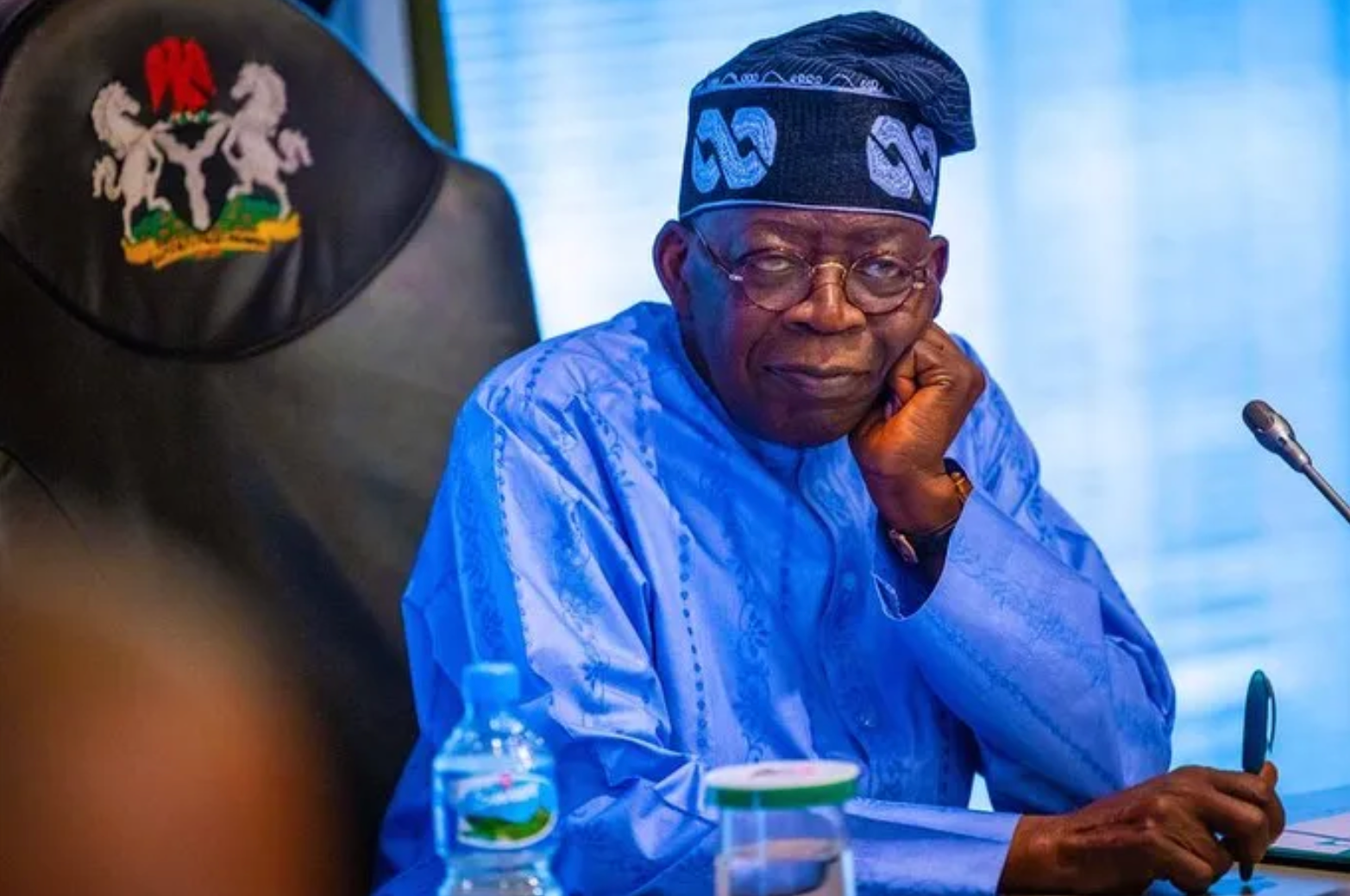
President Bola Ahmed Tinubu has been in France for more over 60 days as of right now, according to his advisers, for diplomatic and commercial purposes. Inside sources, however, have consistently suggested that the president’s trip was mostly for medical examinations, which is also a critique of the government’s pledge to improve the health sector.
Due to the system’s inability to maintain their expertise, the nation’s top medical experts are currently working abroad to provide services that are absent domestically.
Healthcare is not the only area of the nation experiencing systemic failure; almost every sector is in dire need of improvement.
Nigeria’s situation has gotten worse due to the large number of victims. Nigeria, as the adage goes, has seen many Nigerians abducted and murdered in their homes or on the roads.
For example, the rise of one-chance criminals in the country’s capital has resulted in numerous deaths. A nurse named Chinemerem Chuwumeziem and a lawyer named Chigbo Mediatrix were murdered by robbers in Abuja last month.
In the past, Mediatrix served as the NBA Abuja Branch’s treasurer, and Chuwumeziem worked in healthcare. The bodies of the two women were subsequently discovered in various locations throughout the country’s capital after they were allegedly attacked by criminals acting as commercial transport providers.
Because terrorists have robbed their residents, several communities in the Plateau, Benue, Niger, Kwara, and numerous other places are now abandoned.
Infrastructure is in poor shape, and thieves take advantage of poor road conditions and cover to wreak havoc on defenseless Nigerians. Because their breadwinners have either been murdered or abducted, several families have been left defenseless. Twenty individuals were slain by terrorists in Katsina just this week amid a ceasefire agreement in which security personnel were in close proximity.
In the meantime, analysts have connected the increase in insecurity to a number of factors, chief among them being the mishandling of defense budgets, where money intended for the acquisition of armored vehicles, modern weapons, and surveillance equipment is routinely embezzled, leaving soldiers on the front lines with less equipment than better-armed insurgents.
Additionally, there is the problem of personnel allowance diversion, wherein senior officials are suspected of withholding operational allowances, incentives, and wages, which seriously undermines military morale and dedication to the objective.
Additionally, there are several examples of soldiers leaking operational knowledge to rebels due to low morale and other reasons, which results in an ambush of soldiers and their eventual murder.
There have also been cases where high-ranking employees have been linked to helping terrorist organizations transport supplies and weapons.
There were also accounts of officers purposefully destroying or abandoning armored personnel vehicles and other critical military assets in order to aid insurgent advances.
All of these are the result of a broken system in which Nigerians’ lives are being sacrificed for the government’s misguided aims.
The founder of the All Progressive Grand Alliance (APGA), Chekwas Okorie, acknowledged that Ifunanya is a victim of a broken system, acknowledging that her death was not caused by snake bites but rather by the system’s failure to provide her with timely medical attention. He talked to our reporter.
Our budget for healthcare is insufficient. Her death was caused by a subpar healthcare system. She would have survived with timely care, thus she is a victim of subpar healthcare delivery,” he stated.
Unfortunately, it is more than just anti-venom. Many essential medications that Nigerians require are currently unavailable in our hospitals, and if you visit them, they will advise you to buy them elsewhere.
“Do we need to wait for the death of another Ifunanya in order to find out? Nigeria’s system is utterly hopeless, and something must be done about it.
“We need to reconsider how we choose leaders because this is a result of leadership shortcomings. This is crucial,” he declared.
Speaking on his social media page, well-known internet user Egemba Chinonso Fidelis, also known as Aproko Doctor, a physician by trade, health influencer, and actor, concurred that Ifunanya died not from snake bites but rather from the failure of the system she may have trusted.
Although snakes bite humans all across the world, they don’t always die this way. Not in 1980 or 1970, but in 2026, they do not die just because they visited two hospitals and were told directly that antivenom was not available in a nation where snakes are common.
Additionally, Nigeria has developed a specific antivenom for Nigerian snakes, which is worth considering. We refer to it as “Echitab.” Why did the hospitals she visited not have this antivenom in their refrigerators? just because the fundamentals have slipped our minds.
“Our leaders are constructing flyovers in areas without ambulances. The main healthcare facility, which ought to be the initial point of contact in any functioning nation, is being ignored as we concentrate on constructing ultramodern hospitals.
Dele Farotimi, a human rights advocate and attorney, lamented the state of affairs and thought back to the time when foreigners were receiving assistance from Nigerian secondary healthcare facilities.
The Saudi royal family’s chosen hospital in the late 1950s and early 1960s was the University College Hospital in Ibadan. It was that delicious.
However, in Nigeria in 2026, basic antivenoms are lacking in our hospitals, and all of our doctors are overseas, resulting in fatalities. We are to blame for this.