🌿 Ruzu Non-Alcoholic Herbal Bitters
Ruzu Non-Alcoholic Herbal Bitters is a natural health supplement specially formulated to:
- ✅ Promote general wellness
- ✅ Detoxify the body
- ✅ Support the treatment of various ailments
Made from a powerful blend of 100% organic and medicinal herbs, Ruzu is completely alcohol-free, making it ideal for:
- 👪 All age groups
- 🌱 Health-conscious individuals
- 🌿 Anyone seeking non-alcoholic herbal remedies
Whether you're looking to boost your vitality, cleanse your system, or support healing the natural way, Ruzu Bitters offers a trusted herbal solution.
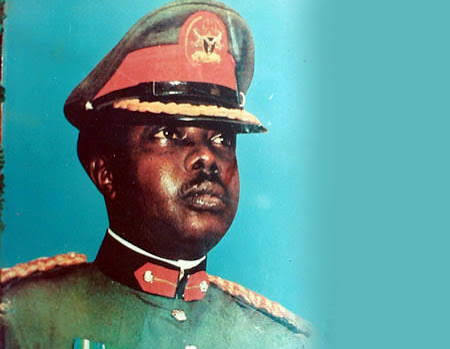
In February 1976, General Murtala Mohammed radically reshaped Nigeria, creating seven new states and designating Abuja as its capital – a bold attempt to address post-civil war fractures and foster a more inclusive nation. Completed just weeks before his assassination, these decisions continue to define Nigeria’s political and economic landscape. SOLA SHITTU examines the complex and often contradictory outcomes of Murtala’s “political reset,” exploring how his vision of a decentralised, responsive government has played out over the last fifty years, and whether his urgent call for action remains relevant today
If General Murtala Ramat Mohammed could speak in February 1976— six months into power, impatient with bureaucracy, and contemptuous of excuses—he would likely say this: Nigeria was too large to be governed from too few centres and too fragile to survive injustice disguised as unity.
He did not inherit a calm country. He inherited a Nigeria emerging from civil war trauma, centralised military overreach, bloated regional dominance, and a crisis of belonging. To Murtala, delay was betrayal. Power was not to be enjoyed; it was to be used swiftly.
That urgency produced one of the most consequential acts in Nigeria’s political history: the creation of seven new states and the designation of Abuja as the Federal Capital Territory in 1976—an act completed mere weeks before his assassination on February 13. Fifty years later, those decisions still shape Nigeria’s political economy, for better and for worse.
Murtala Mohammed ruled Nigeria as a soldier in a hurry, convinced that the greatest danger to the federation was not dissent but stagnation. He saw a country immobilised by the weight of its own structure, where oversized administrative units reproduced the same inequalities the civil war was supposed to have buried. From his vantage point, Nigeria’s post-war unity was brittle because it was managed from too few centres of power. Regions had become landlords, minorities perpetual tenants, and the federal centre an overbearing referee in disputes it had helped to create. State creation, for him, was not cosmetic federalism; it was a political reset.
According to political historian and author Prof. Max Siollun, Murtala’s thinking was shaped more by military pragmatism than by ideological theory. “He believed Nigeria was drifting after the war,” Siollun said. “State creation was his way of reasserting control while simultaneously reassuring minorities that the federation was not designed to suffocate them.”
On February 3, 1976, Nigeria’s map was redrawn. Seven new states were formally created—Bauchi, Benue, Borno, Imo, Niger, Ogun, and Ondo—raising the total to 19. In the same exercise, Abuja was carved out as the Federal Capital Territory. Additionally, existing administrative units were reorganized and renamed, producing Oyo State from the former Western State and Anambra State from the old East Central State. That distinction has fuelled decades of technical debate about numbers, but the political reality is clear: February 1976 fundamentally altered Nigeria’s internal balance and inaugurated a new phase of decentralised governance whose consequences are still unfolding.
Prof. Jibrin Ibrahim, a political scientist and senior fellow at the Centre for Democracy and Development, argues that the controversy over numbers often misses the point. “Whether you call it seven or nine is less important than understanding intent,” he said. “Murtala was responding to a legitimacy crisis. He wanted Nigerians to feel seen by the state again.”
To understand what those states and Abuja represent fifty years later, one must return to Murtala’s logic. He believed Nigeria could not be held together by sentiment alone. Belonging had to be institutionalised. People needed to see themselves reflected in power, not merely invoked in national slogans. The creation of new states was, therefore, an act of political recognition—a redistribution of administrative space designed to alleviate ethnic tensions and create new arenas for leadership. It was also an economic gamble: smaller units, closer to the people, were expected to plan better, compete harder, and unlock local potential that large bureaucratic states had ignored.
Dr. Muda Yusuf, former Director-General of the Lagos Chamber of Commerce and Industry, notes that this economic logic remains relevant but incompletely realized. “The assumption was that smaller states would be more agile,” he said. “What we got instead was agility without capacity in many cases. The structure changed faster than the economy.”
Half a century on, the record is mixed—sometimes uncomfortably so. In the South-West, the fragmentation of the old Western State into Ogun, Ondo, and Oyo drastically altered the region’s political economy. Ogun State, once overshadowed by Ibadan and Lagos, leveraged its proximity to the nation’s commercial capital and built an industrial profile now ranked among the strongest in the country. Manufacturing clusters, logistics hubs, and private-sector investments turned the state into a corridor of factories and warehouses, validating Murtala’s belief that decentralisation could unleash competition and growth.
A former Ogun State governor, speaking on condition of anonymity, said that the advantage was structural as much as political. “Statehood forced us to think for ourselves,” he said. “We couldn’t hide behind Ibadan anymore. That pressure created innovation.”
Ondo State, rich in cocoa, bitumen, and later oil, gained political visibility and administrative autonomy, but its economic trajectory never quite matched its endowment, serving as a reminder that statehood creates opportunity, not automatic prosperity. Oyo State, formally born in 1976, emerged as a cultural and political anchor of the South-West, producing national leaders and sustaining Ibadan’s role as a centre of education, politics, and media, even as debates about industrial depth and urban management persist.
In the South-East, the creation of Imo State and the reorganization that produced Anambra State were deeply symbolic. For a region still processing the trauma of war, statehood offered reassurance that reintegration was real. Anambra evolved into one of Nigeria’s most commercially vibrant states, powered by trading networks, manufacturing clusters, and an entrepreneurial culture that exceeded expectations based on its size.
Prof. Bolaji Akinyemi, former External Affairs Minister, has argued in past lectures that this psychological reassurance was as important as economic logic. “After the civil war, legitimacy mattered more than efficiency,” he said. “Murtala understood that symbols could stabilize a nation faster than policies.”
Imo, smaller and densely populated, became politically influential and culturally assertive, though later fragmentation in the zone diluted the economic scale Murtala’s original map envisioned. Together, these states demonstrated how political inclusion could restore confidence, even as infrastructure gaps and security challenges exposed the limits of federal restructuring.
In the North and Middle Belt, the story is heavier, shaped by geography, demography, and later insecurity. Bauchi State was created to unlock agrarian potential and ease administrative pressure in the old North-East. Fifty years later, it remains agriculturally significant and politically relevant, yet its economy reflects a broader northern dilemma: abundant land, limited industrialisation, and heavy dependence on federal transfers.
Benue State, carved out to recognise Middle Belt identity and protect minority interests, earned the title of Nigeria’s food basket, supplying grains, tubers, and livestock to markets across the country. However, persistent farmer-herder conflicts and weak agro-processing infrastructure have hindered the state from fully converting agricultural strength into broad-based prosperity.
Security analyst and former military officer Col. Abubakar Umar (rtd) notes that these outcomes cannot be separated from national policy failures. “States like Benue and Borno show that political autonomy does not equal security capacity,” he said. “Murtala created structures, but security architecture remained centralised.”
Borno State’s trajectory has been the most dramatic. Created as a strategic border state with deep trans-Saharan trading links, it later became synonymous with insurgency and humanitarian crisis. Yet even in tragedy, Borno’s national relevance has grown. Its reconstruction, security spending, and geopolitical importance place it at the centre of Nigeria’s stability calculus.
Niger State, vast in landmass and home to major hydroelectric assets, illustrates one of Nigeria’s starkest paradoxes: regions that generate national power while remaining locally underpowered. Its political weight has been steady, but economic transformation has lagged behind its resource profile.
And then there is Abuja, the boldest stroke of Murtala Mohammed’s pen. Conceived as a neutral capital, free from ethnic ownership and colonial baggage, Abuja was designed to belong to everyone and to no one. Politically, the idea succeeded. The capital became a meeting point of Nigeria’s diversity, a city where power was centralised without being regionally captured.
Urban development analyst Dr. Chukwudi Okoye describes Abuja as “Murtala’s most disciplined idea.” According to him, “Every other reform was negotiable, but Abuja was non-negotiable. It was about symbolism, neutrality, and permanence.”
Economically, Abuja grew into a magnet for real estate, construction, services, and diplomacy, reshaping migration patterns and creating a federal city whose influence rivals Lagos in political terms. Yet Abuja also inherited Nigeria’s contradictions: inequality between districts, displacement of indigenous communities, and urban expansion that often outruns planning. Even so, it stands as proof that institutional imagination can outlive the men who author it.
From the perspective of the slain general, the mixed outcomes of his reforms would not be surprising. Murtala Mohammed did not believe in perfect systems; he believed in necessary interventions. He understood that structures only create possibilities and that leadership determines outcomes.
As constitutional lawyer Mike Ozekhome, SAN, has observed, “Murtala was not trying to solve Nigeria forever. He was trying to prevent Nigeria from breaking apart in his time.” The states he left behind expanded political participation, multiplied centres of influence, and produced generations of governors, legislators, and ministers who might never have emerged under the old regional order. They also entrenched a culture of fiscal dependence, where many states survive on monthly allocations rather than internally generated growth, and where administrative multiplication sometimes replaced economic planning.
Fifty years after February 1976, Nigeria exists within Murtala’s map. The arguments about restructuring, devolution, and state police are, in many ways, extensions of the questions he confronted during his six compressed months of rule. Did state creation bring government closer to the people? In many places, yes. Did it resolve the deeper challenges of productivity, security, and national cohesion? Clearly not on its own. But expecting it to do so would miss the point of the man himself.
Murtala Mohammed did not stay long enough to manage outcomes. He came to break logjams. His assassination froze him in national memory as a martyr of decisiveness, but his true legacy lies in the unfinished work his actions set in motion. The states created under his watch, including those formally birthed and those reorganised in that defining February, are living institutions still negotiating their place in Nigeria’s political economy.
If the fallen general could survey the federation today, he might be disappointed by missed opportunities yet encouraged by pockets of progress. He would likely insist, as he did in life, that the problem was never a lack of ideas but a lack of urgency. Fifty years on, his message still echoes through the states he left behind: the map can be redrawn, but the will to build must be renewed.