
🌿 Ruzu Non-Alcoholic Herbal Bitters
Ruzu Non-Alcoholic Herbal Bitters is a natural health supplement specially formulated to:
- ✅ Promote general wellness
- ✅ Detoxify the body
- ✅ Support the treatment of various ailments
Made from a powerful blend of 100% organic and medicinal herbs, Ruzu is completely alcohol-free, making it ideal for:
- 👪 All age groups
- 🌱 Health-conscious individuals
- 🌿 Anyone seeking non-alcoholic herbal remedies
Whether you're looking to boost your vitality, cleanse your system, or support healing the natural way, Ruzu Bitters offers a trusted herbal solution.
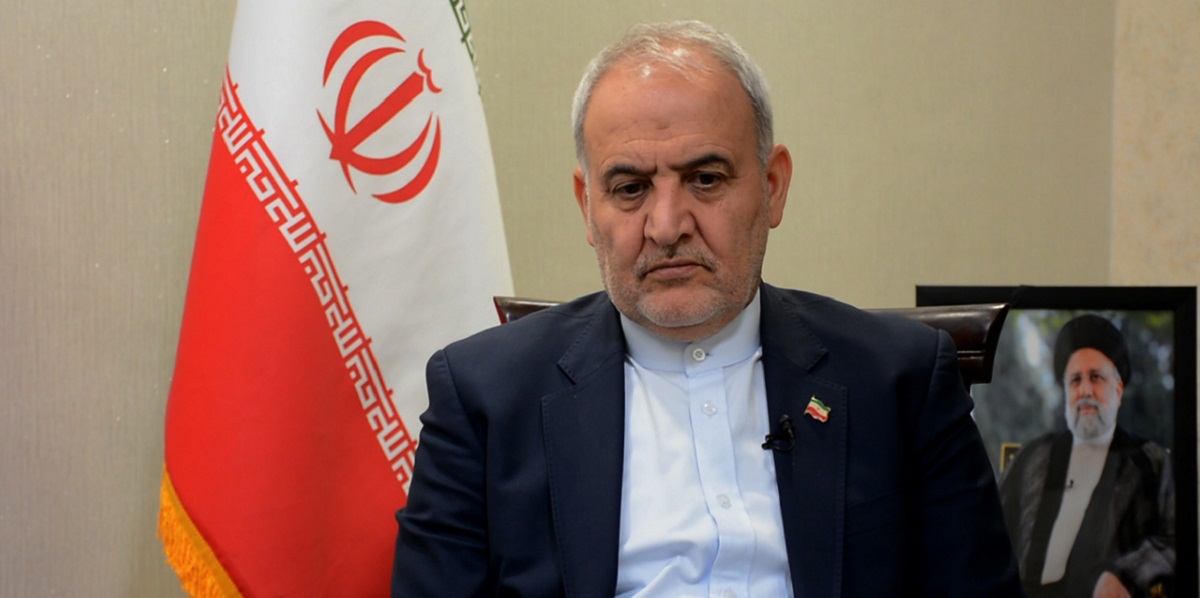
Reza Amiri Moghadam, Iran’s ambassador to Pakistan, denied on Wednesday that Tehran and Washington were still in talks, defying statements made by US President Donald Trump that suggested the crisis was getting closer to a resolution.
According to the ambassador, “no direct or indirect talks have taken place so far, but we have heard such reports in the media,” AFP said.
He described the present confrontations as “illegitimate aggression” and noted that although friendly governments frequently try to negotiate, there was no real engagement between both sides.
Iran’s military denied Washington’s claims of diplomacy, echoing the ambassador’s stance.
According to state media, Ebrahim Zolfaqari, a spokesman for the Khatam al-Anbiya Central Headquarters, stated that the US was essentially “negotiating with itself.”
He emphasized that unless Washington changed its strategy, pre-war economic conditions would not return and cautioned that regional stability would continue to be dependent on Iran’s military posture.
Early on Wednesday, Iran launched another round of missiles and drones as fighting escalated around the Middle East amid the diplomatic dispute.
Iran’s Revolutionary Guards claim that Israel was the target of the assaults, along with US military installations in Bahrain, Kuwait, and Jordan.
Central Israel reported hearing air raid sirens, and missile tracks were seen over Netanya.
Jordan confirmed falling debris near Amman, while a drone strike struck a fuel tank at the international airport in Kuwait, igniting a fire. Bahrain responded to the danger by turning on its air defense systems as well.
The crisis started on February 28 as Israel and the United States launched coordinated strikes on Iran. Since then, it has extended throughout the Middle East, upsetting an already unstable area.
Gulf countries, which were previously thought to be reasonably stable, are now dealing with increasing security threats, which have a significant influence on the travel and aviation industries.
Additionally, the conflict has spread to Lebanon, where Israeli forces have stepped up their operations against Hezbollah, which is supported by Iran. Over a million people have been displaced and over 1,000 people have died, according to authorities, amid extensive damage in the southern suburbs of Beirut.
In spite of Tehran’s protestations, Trump maintained that talks were in progress.
He claimed that Iran had made a “very big present” related to the crucial Strait of Hormuz and stated, “We are in negotiations right now.” However, he did not elaborate.
Even though sources point to potential backchannel diplomacy utilizing middlemen like Pakistan, Iranian authorities have not formally confirmed the idea.
According to reports, the US is getting ready for more escalation, including plans to send more soldiers to the area.
Because of its importance to the world’s oil supply, the Strait of Hormuz continues to be a crucial flashpoint in the situation.
In a message disseminated through the International Maritime Organization, Iran guaranteed that “non-hostile vessels” would be permitted safe passage.
But it cautioned that ships associated with what it called “aggressor parties,” Israel and the United States, might not be allowed entry.
Global markets have already been rocked by the disruption, which has forced nations to reduce their energy use and forced airlines to cancel or reroute flights.
The dispute is starting to have wider economic repercussions.
Jean-Marie Paugam, a senior World Trade Organization official, cautioned that supply disruptions, especially with regard to fertilizers, might have long-term consequences for the world’s food output.
He stated, “If fertilizer supplies are impacted, it will impact both output and prices, with effects carrying into future harvests.”
The stark differences between Tehran and Washington, together with the rising military activities, continue to foment instability throughout the Middle East and the global economy, even in the face of hesitant diplomatic signals.