🌿 Ruzu Non-Alcoholic Herbal Bitters
Ruzu Non-Alcoholic Herbal Bitters is a natural health supplement specially formulated to:
- ✅ Promote general wellness
- ✅ Detoxify the body
- ✅ Support the treatment of various ailments
Made from a powerful blend of 100% organic and medicinal herbs, Ruzu is completely alcohol-free, making it ideal for:
- 👪 All age groups
- 🌱 Health-conscious individuals
- 🌿 Anyone seeking non-alcoholic herbal remedies
Whether you're looking to boost your vitality, cleanse your system, or support healing the natural way, Ruzu Bitters offers a trusted herbal solution.
Nigeria appears trapped in a grim cycle where mass killings spark outrage, promises are issued, troops are deployed, and then silence follows until the next round of bloodshed erupts.
From the North East to the North West, from the Middle Belt to pockets of the South West, violent attacks have become so frequent that they now blur into one another, leaving behind grieving families, displaced communities and a nation struggling to keep count of its dead.
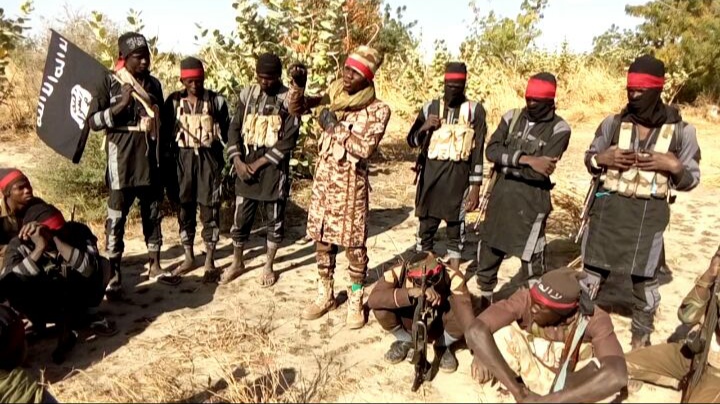
The latest reports from Kwara State have once again dragged the country into this familiar and troubling pattern, raising fresh questions about whether Nigeria’s security strategy is built to prevent violence or merely respond after lives have already been lost.
Kwara State, long regarded as relatively calm compared to neighbouring flashpoints, has in recent times found itself drawn into Nigeria’s widening insecurity map.
Reports of violent attacks in parts of the state have shocked residents and reignited fears that no region is truly insulated from the reach of armed groups, bandits and criminal networks.
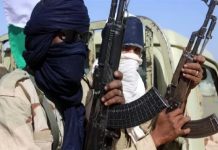
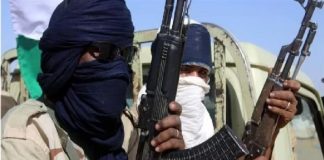
While official details continue to emerge, the pattern mirrors what Nigerians have witnessed repeatedly across the country: assailants strike, communities are left devastated, and security forces are deployed after the fact, often when the attackers have already melted into forests, border towns or ungoverned spaces.
This reactive posture has increasingly drawn criticism from security analysts, civil society groups and political actors who argue that the country is losing ground to criminals who have mastered speed, terrain and intelligence gaps.
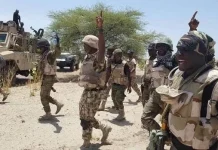
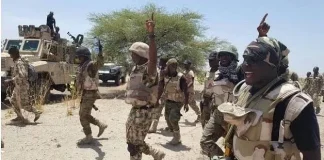
The deployment of troops, though necessary in many cases, is frequently viewed as a belated response rather than part of a coherent, intelligence-driven prevention strategy. For affected communities, the arrival of soldiers often brings little comfort, coming only after the damage has been done.
Former presidential candidate of the Social Democratic Party, Prince Adewole Adebayo, has added his voice to the growing chorus of concern, sharply criticising the Federal Government’s handling of the security crisis. Reacting to reports of the deployment of the Nigerian Army to Kwara State following the latest violence, Adebayo warned that Nigeria is “sleepwalking into the next tragedy” if the current approach remains unchanged.
Speaking through his verified X account, formerly Twitter, @Pres_Adewole, Adebayo argued that the administration of President Bola Tinubu has failed to act decisively, choosing instead to respond after attacks have already occurred.
According to him, this pattern does little to deter criminals who have learned to strike swiftly and retreat before security forces can engage them.
“Tinubu is not acting decisively, he is reacting,” Adebayo said, noting that by the time troops are deployed, bandits are often “already long gone.” He warned that such delayed responses only embolden violent actors who now operate with the confidence that consequences will arrive too late to matter.
The former presidential candidate questioned how many violent incidents the country must endure before a proactive security framework is adopted. “How many attacks have we witnessed this year? How many more do we need to witness?” he asked, warning that unless the government changes course, the nation may simply be waiting for the next inevitable tragedy.
Adebayo’s comments have resonated widely online, reflecting a broader public frustration that cuts across political and ethnic lines. Many Nigerians argue that the persistence of killings, kidnappings and village raids suggests deep structural failures within the country’s security architecture.
Despite repeated assurances from successive governments, armed groups continue to operate with alarming ease, often exploiting vast forests, poorly monitored borders and weak intelligence coordination.
The unending killings have also reignited debates about the effectiveness of Nigeria’s centralised security system. Critics argue that state governments remain largely powerless spectators, reliant on federal approval and deployment even when violence is unfolding within their jurisdictions.
This, they say, creates dangerous delays and limits the ability of local authorities to respond swiftly to threats they understand intimately.
Beyond official circles, religious and civil society organisations have increasingly taken on advocacy roles, calling for international attention to Nigeria’s security crisis.
The Pentecostal Fellowship of Nigeria, PFN, has in the past petitioned foreign governments including those of the United States and the United Kingdom, drawing attention to persistent killings, particularly in rural communities, and urging global partners to pressure Nigerian authorities to take stronger action.
While the timing and status of such petitions vary, the recurring calls underscore a sense of desperation among groups who feel domestic appeals have yielded little change.
For many faith-based and human rights organisations, the concern is not only the frequency of attacks but the apparent normalisation of mass violence. Killings that would once have triggered national mourning now pass with brief statements and quickly fade from public discourse. Communities bury their dead, survivors flee, and life moves on under the shadow of fear.
Security experts warn that this pattern carries dangerous long-term consequences. Each successful attack without meaningful prevention or accountability reinforces the perception that the state is unable or unwilling to protect its citizens. This perception, they argue, fuels a vicious cycle where communities lose trust in authorities, criminal groups gain local influence, and violence becomes easier to sustain.
In Kwara and other affected states, residents have increasingly voiced fears that banditry and violent crime are spreading southward, exploiting economic hardship, youth unemployment and porous internal security. What began years ago as isolated incidents in remote areas has gradually evolved into a nationwide crisis touching nearly every geopolitical zone.
The Federal Government has consistently maintained that it is committed to tackling insecurity, pointing to military operations, intelligence efforts and ongoing reforms within the armed forces and police. However, critics argue that results on the ground tell a different story. They contend that without a clear shift from reaction to prevention, deployments will continue to resemble emergency firefighting rather than a sustainable solution.
Prince Adebayo’s remarks tap into this broader anxiety, framing the issue not as a failure of personnel but of strategy. His warning that the country may be “waiting around the corner” for the next tragedy reflects a growing belief that Nigeria is trapped in a dangerous holding pattern, where warnings are issued only after blood has been spilled.
The impact of the killings goes beyond statistics. Behind every report are families torn apart, children orphaned and communities uprooted. Farmers abandon their fields, traders flee markets and entire villages are emptied as residents seek safety elsewhere. The economic and social toll is immense, compounding an already fragile national situation marked by inflation, unemployment and declining public confidence.
As Nigerians react to the latest violence in Kwara State, the questions being asked are no longer new, but they remain unresolved. Why do attackers continue to evade capture? Why does security intervention so often arrive too late? And how many more lives must be lost before a truly preventive security framework is put in place?
For now, the nation watches and waits, once again mourning victims whose names may never trend and communities whose pain may soon be replaced by the next headline.
Whether the latest outrage will translate into meaningful change or fade into the long list of unanswered tragedies remains to be seen. What is clear, however, is that the killings have ceased to be isolated events. They are a national emergency, demanding more than reactions, more than promises, and far more than silence after the dead have been buried.