🌿 Ruzu Non-Alcoholic Herbal Bitters
Ruzu Non-Alcoholic Herbal Bitters is a natural health supplement specially formulated to:
- ✅ Promote general wellness
- ✅ Detoxify the body
- ✅ Support the treatment of various ailments
Made from a powerful blend of 100% organic and medicinal herbs, Ruzu is completely alcohol-free, making it ideal for:
- 👪 All age groups
- 🌱 Health-conscious individuals
- 🌿 Anyone seeking non-alcoholic herbal remedies
Whether you're looking to boost your vitality, cleanse your system, or support healing the natural way, Ruzu Bitters offers a trusted herbal solution.
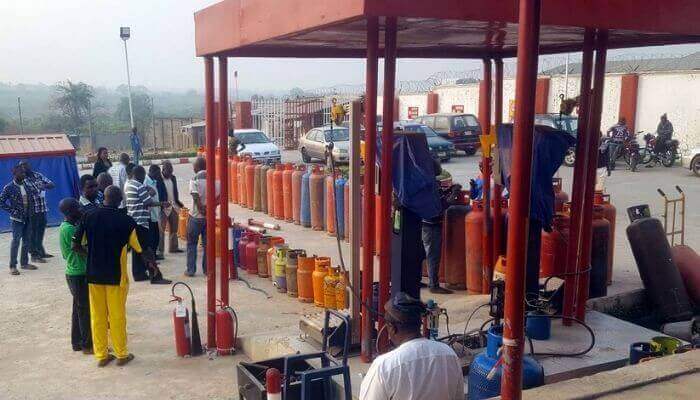
Cooking gas costs in Nigeria are higher than in a number of nations, including Saudi Arabia, Russia, India, and Angola, according to an examination of data from the Global Petroleum Price web. This raises new questions about the affordability of energy.
Despite Nigeria’s prominence as a major producer of gas and oil, the results show the increasing burden on Nigerian households.
The information shows that as of March 16, 2026, the price of Liquefied Petroleum Gas (LPG) in Nigeria was $0.674 per kilogram.
According to the figure, Nigeria is one of the nations with comparatively higher cooking gas prices worldwide.
In contrast, LPG is substantially less expensive in other nations. Russia has $0.388 per kilogram, Saudi Arabia records $0.290, and Angola has one of the lowest prices at $0.109. At $0.091 per kilogram, Azerbaijan is even lower.
Honduras ($0.412), Belarus ($0.438), Armenia ($0.503), and the Dominican Republic ($0.596) are among the other nations examined.
Additional comparisons reveal Georgia at $0.624, India at $0.648, and Paraguay at $0.656, putting Nigeria on par with Chile at $0.674, but still above many countries that produce oil.
According to data, the minimum salary in Nigeria is roughly $49, while it is nearly $1,065 in Saudi Arabia.
The minimum salary in Russia is approximately $321.32, which emphasizes the difference in purchasing power.
The disparity indicates that Nigerian customers have a much more difficult time obtaining cooking gas than people in other nations.
The growing price of LPG is a reflection of larger developments in Nigeria’s energy industry, where petroleum product prices have been steadily rising.
As more Nigerians switch from kerosene and firewood to cooking gas, this has had a direct impact on household energy expenses.
The rise has also been influenced by recent changes in the market. The gantry price of LPG at the Dangote Refinery was recently increased from ₦760 to ₦800 per kilogram. The new price will go into effect on March 17, 2026.
Market checks show that the change is related to rising crude oil prices worldwide, which have raised the cost of feedstock and processing.
Stakeholders caution that without action, the growing price of cooking gas could further restrict many people’ access to clean energy.
Calls for measures to stabilize prices and increase affordability in Nigeria’s domestic energy sector have been rekindled by the development.