
Oshiomhole Says Some Nigerians Believe Food Prices Are Dropping Too Low

0

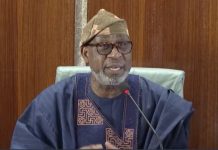
On Channels Television, Senator Adams Oshiomhole made comments that provoked criticism while defending the government’s economic policies.

Oshiomhole reportedly responded to inquiries regarding whether the reforms had a detrimental impact on regular Nigerians during the interview.

He refuted claims that the reforms had created hardship and maintained that they were intended to bring about change.

He claimed that many of the issues brought up were primarily conjectural rather than grounded in reality.

Contrary to popular belief, he said, some Nigerians believe that food costs are currently declining.

Oshiomhole questioned whether there was actual proof of numerous complaints, challenging the notion that common people are suffering.

“The truth is that we promised radical reforms,” stated Oshiomhole. Who are the typical people? You take these things directly from people’s mouths. Have you gone to witness complaints? Food is become too cheap, according to some Nigerians.

In other news, Oshiomhole claimed that the tax policies of President Bola Tinubu align with the principles of a progressive government.

He claimed that the tax reforms shift the burden from the poor to the wealthiest during an appearance on Channels Television.

He claimed to be one of the lawmakers that backed the tax package that was subsequently signed into law.

“The facts on the ground show that President Tinubu’s tax policy is consistent with the values of a progressive government,” stated Oshiomhole.

“And this is a progressive tax policy that offers tax exemptions to those who earn less while imposing a greater burden on those who earn more.”

ADC Begins Campaign in FCT as Peter Obi Makes Appearance

0

Prior to the Federal Capital Territory (FCT) council election, former Labour Party presidential candidate Peter Obi undertook a campaign tour with African Democratic Party (ADC) members and supporters.

The well-known Kugbo furniture market, which was impacted by a fire outbreak, was the first place the former Labour Party member, who just defected to the ADC, visited.

He revealed this on his X page, writing, “Such losses are especially painful at a time when many Nigerians are grappling with deepening hardship and poverty.”

“Despite the setbacks they faced, they will recover and thrive again with the right support,” he added, reassuring traders in the market square who related their stories of the tragic event.

“This incident underscores my consistent call for a comprehensive reform of our emergency response systems,” he continued.

“In order to save lives and livelihoods, a country that genuinely cares for its citizens must invest in effective, well-coordinated emergency services.”

Alongside Moses Paul, the contender for ADC chairmanship in the Abuja Municipal Area Council election, the former governor of Anambra State went to a local market.

According to Obi, the visit was intended to increase community involvement prior to the elections, highlighting the significance of active citizen participation.

“We must strive towards a Nigeria where avoidable tragedies are avoided and where institutions function effectively for the benefit of everyone,” he continued.

CBN Urges Financial Institutions to Curtail Fraud and Enforce 30-Minute Response Time

0

Banks and payment service providers have been urged by the Central Bank of Nigeria (CBN) to make quantifiable commitments to reduce electronic fraud.

Additionally, it recommended organizations to use the Nigeria Electronic Fraud Forum (NeFF) framework to address suspicious transactions within 30 minutes.

Speaking at the “Shrinking Fraud Losses with ISO 20022 and Identity Management” Technical Kick-Off Session of the 2026 Nigeria Electronic Fraud Forum (NeFF) According to Mr. Philip Ikeazor, Deputy Governor, Financial System Stability, CBN, the sector has to implement enterprise-wide, data-driven fraud management systems that can produce measurable outcomes in place of dispersed controls.

Premier Oiwoh, Managing Director and Chief Executive Officer of Nigeria Inter-Bank Settlement System Plc (NIBSS), also spoke at the conference. He stated that the financial system saw a notable improvement in fraud outcomes in 2025, with the value of money lost to fraud decreasing by 51% year over year.

“The industry must commit to bold, measurable fraud-reduction targets, supported by clear strategic priorities,” continued Ikeazor.

Full utilization of ISO 20022 data, universal and real-time identity verification, improved round-the-clock fraud monitoring and response, organized frameworks for liability-sharing and consumer reimbursement, increased interaction with telecoms and payment service providers, and stringent performance evaluation through clear scorecards are some of these. Improvements are required for what is measured.

“In the end, fraud is a problem that affects financial stability rather than just operations. Unchecked fraud creates systemic dangers, jeopardizes advances in inclusivity, and erodes confidence in digital money.

Nigeria maintains macro-financial stability, promotes economic growth, and protects trust in its payments system by tightening fraud measures. The central bank is still fully dedicated to offering the coordination, policy assistance, and regulatory leadership needed to accomplish these goals.

We have an important and communal task ahead of us. 2026 can and should be remembered as the pivotal year when Nigeria significantly reduced fraud losses and ensured the future of its digital financial ecosystem thanks to well-defined goals, shared accountability, and persistent cooperation under NeFF.

As a result, the sector came to an agreement under NeFF to cut the time it takes to respond to fraud to less than 30 minutes. Ikeazor described this as a crucial step in enhancing recovery results and reducing systemic exposure.

“Efforts to mitigate fraud have changed in step with evolving threat vectors,” he said. While more recent threats, such as internet fraud, social engineering, SIM-swap misuse, insider compromise, and authorized push payment (APP) frauds, have surfaced, legacy fraud, including ATM card cloning, has been successfully eliminated.

NeFF has been instrumental in organizing prompt reactions, such as industry alerts, public awareness campaigns, obligatory two-factor authentication, round-the-clock bank fraud desks, and, most recently, the creation of a Standardized APP Scam Framework.

“A significant step that significantly improves recovery outcomes and limits systemic exposure is the industry’s agreement to cut fraud response times to less than 30 minutes.”

The impact of the Bank Verification Number (BVN) and its integration with the National Identification Number (NIN) in lowering impersonation and synthetic identity fraud is another example of how Ikeazor emphasized the relevance of identification infrastructure in preventing fraud.

He pointed out that maintaining cooperation with the National Identity Management Commission (NIMC) would be essential to bolstering the integrity of the payment system.

According to Oiwoh’s contribution, the overall amount of fraud losses decreased from N52.26 billion in 2024 to N25.85 billion in 2025, and the number of fraud cases reported decreased by 4% to 67,518 from 70,111 in 2024.

He credited stricter regulations, increased cooperation between banks, security agencies, and regulators, and enhanced fraud detection capabilities throughout the payments ecosystem for the notable decline in fraud losses.

“Looking at industry fraud over the past five years, the number of cases has declined significantly,” he declared. Losses increased to N52.26 billion in 2024, mostly due to a single fraud occurrence involving one entity that cost N31.1 billion. 2025 saw a sharp decline in losses to N25.85 billion.

“I have to thank the police, the DSS, and other security organizations for their work. Fraud must be reduced to nearly nil if we are to attain financial inclusion. It’s doable.

According to Oiwoh, insider misuse has emerged as the single greatest concern, but social engineering continues to be the most common fraud strategy. He noted that the ongoing evolution of SIM-swap fraud, phishing, and account penetration highlights the need for more robust internal controls, employee monitoring, and collaborative industry action.

However, he warned that non-reporting is still unacceptable and voiced alarm over the dropping fraud reporting, which dropped by almost 34% in the final quarter of 2025.

Tracking and inquiry are made possible by reporting. Because events were not recorded, fraudsters occasionally just transferred from one institution to another, he claimed.

In response, Oiwoh revealed that the NIBSS has created the Person of Interest Portal in collaboration with the CBN, the Nigeria Financial Intelligence Unit (NFIU), and security agencies. As of right now, 13,417 people have been implicated in fraudulent activities since 2019. He said that law enforcement organizations were making active use of the portal.

Along with the introduction of the National Payment Stack (NPS), which was constructed in accordance with ISO 20022 and integrated with advanced security and Nigerian data sovereignty, he also emphasized the expanding significance of AI-driven cybersecurity and digital intelligence capabilities. He said that all quick payments were now risk-scored and that questionable transactions were immediately reported.

In the future, Oiwoh stated that financial knowledge and access to reasonably priced cellphones are still essential to expanding digital inclusion, while the recovery of stolen assets is still ongoing.

He emphasized that good BVN and NIN validation using APIs may prevent up to 95% of identity-related fraud, but cautioned that weak account restrictions, subpar client profile, and insufficient KYC measures continue to expose institutions to risk.

Dr. Rakiya Yusuf, CBN Director, Payment System Supervision and NeFF Chairman, stated in her presentation that the apex bank will shortly start inspecting banks to guarantee adherence to ISO 20022 standards and improved use of electronic channels.

She emphasized that all institutions must make sure that appropriate know-your-customer (KYC), know-your-business (KYB), and customer due diligence (CDD) procedures are properly followed and reaffirmed that there was no “KYC zero” policy.

“We have KYC 1, 2, and 3, with different thresholds,” the woman stated. In KYC 0, there is no identity at all.

“The central bank hasn’t developed a KYC four policy. Therefore, it will be quite expedient to address them if you have that in your books.

First Bank Trustees, Receiver Sued by Glencore, AFC, Mauritius Bank, Fidelity

0

A group of foreign financial institutions, including Glencore Energy UK Limited, Africa Finance Corporation, Mauritius Commercial Bank, and Fidelity Bank, has launched a lawsuit against FBN Trustees Limited in a major escalation of the ongoing legal disputes influencing Nigeria’s oil and gas industry.

Due to what the international lenders claim is an illegal attempt to take control of Neconde Energy Limited’s holdings in the valuable Oil Mining Lease 42 (OML 42), the case is directed at both FBN Trustees and the designated receiver, Abubakar Sulu-Gambari SAN.

The foreign lenders claim that Abubakar Sulu-Gambari SAN’s appointment as Receiver/Manager violates their rights by being an illegal attempt to enforce a subordinate security.

Context: Neconde and OML 42’s Conflicting Interests

A significant participant in Nigeria’s oil and gas industry, Neconde Energy Limited owns 45% of OML 42, a strategically significant oil asset.

Neconde received credit facilities from overseas lenders, including international financial institutions, an international oil trading company, and Fidelity Bank. FBN Trustees were designated as their security trustees in accordance with the provisions of the agreements.

The complicated network of connections between Neconde, the foreign lenders, and a group of Nigerian banks known as the “Nestoil Lenders” at the root of the conflict.

First Bank Limited and FBN Trustees, a company connected to First Bank Nigeria Limited, served as trustees for these Nestoil lenders.

Claims: Violation of Trust and Illegal Establishment of Security

Allegations that FBN Trustees violated their fiduciary duties and trust obligations by arranging the development of a secondary security interest over Neconde’s assets in OML 42 in order to benefit the Nestoil Lenders are at the center of the complaint.

Despite the foreign lenders’ express lack of consent—a requirement outlined in the original terms of their lending agreement including FBN Trustees—the foreign lenders maintain that this security was constituted through a Deed of Charge executed by FBN Trustees.

Notably, the lawsuit claims that Neconde does not owe the Nestoil Lenders, which makes it entirely illegal to create this extra security without the necessary approval.

Legal Arguments and Demands from Foreign Lenders

The plaintiffs contend that FBN Trustees created the challenged security interest despite being fully aware that previous approval was required and receiving an unequivocal rejection.

They contend that this activity amounts to a grave breach of fiduciary duty and trust, making FBN Trustees liable for acting in the best interests of persons that have no right to claim Neconde’s assets.

In order to invalidate the disputed security, remove FBN Trustees from their position as security trustees, and remove Abubakar Sulu-Gambari SAN as a putative receiver, the foreign lenders are requesting damages and court orders.

They want the court to decide whether the following security and the receiver’s appointment are lawful, as well as to interpret and uphold the priority clauses of the facility agreement, debenture, and intercreditor deed.

The plaintiffs contended in a written letter supporting an originating summons dated December 11, 2025, that the December 2022 Deed of Charge was performed without their agreement and is therefore null and void, invalid, and legally ineffectual.

Consequences: A Novel Development in First Bank Litigation and the Investment Environment

The current legal conflicts between First Bank Nigeria entities, Neconde, and Nestoil are complicated by this development.

Legal experts point out that the accusations of fraudulent security creation and the involvement of several foreign lenders could have significant ramifications.

The case casts doubt on Nigeria’s investment climate and raises significant ethical concerns about the country’s banking system’s transparency and governance.

Opponents caution that if these disagreements are not resolved, they may discourage future foreign investment and harm Nigeria’s financial institutions’ reputations.

Conclusion: Next Actions and Industry Monitoring

Stakeholders from the banking and oil industries are keeping a close eye on the court’s decision as it evaluates the claims of the foreign lenders.

Tuggar Appeals to Investors as Nigeria Battles Localized Security Challenges

0

Yusuf Tuggar, the Minister of international Affairs, advised international investors Tuesday not to see Nigeria’s future through the lens of sporadic security occurrences. According to Tuggar, these situations did not accurately represent the long-term investment fundamentals of Africa’s biggest economy.

Speaking to CNN from the sidelines of the current World Economic Forum (WEF) in Davos, Switzerland, Tuggar acknowledged the security issues facing Nigeria. However, he emphasized that the administration is aggressively addressing them and that they are localized.

He claimed that the propensity to generalize about insecurity throughout the entire nation frequently resulted in inflated perceptions of danger, which masked opportunities in important industries. He asked the world community to reconsider their perception of Nigeria.

According to the minister, Nigerians are among the most diverse populations on the continent. He emphasized the nation’s strengthening macroeconomic reforms and the Bola Tinubu administration’s continued efforts to improve governance.

According to Tuggar, investors should have a more nuanced perspective on Nigeria, evaluating the nation on its unique qualities rather than making generalizations, even though no nation is impervious to security problems.

“I think it would be nice to see (Nigeria) as a very diverse country that actually has not fared bad compared to countries that are more homogenous,” he stated to CNN. Because despite certain peripheral or even warring areas, we have been coexisting peacefully in border regions that are currently cascading downward.

But in order to identify the best answers, it is crucial to define it for what it is. In addition to our forest guards, we offer a number of other programs. As a matter of fact, our efforts against Boko Haram had been quite successful.

The minister refuted what he described as an inaccurate portrayal of the Nigerian and African situations, stating that many of the assertions are exaggerated.

“Some of the discussions that are taking place here also have to do with Africa’s risk bias, where the issue of risk, particularly geopolitical risk, is overhyped when it comes to Africa, which doesn’t apply in other parts of the world,” he stated.

Therefore, it is crucial that we examine the advancements made by the Tinubu government in macroeconomic changes, such as the reduction of corporate income tax, the reform of foreign exchange, and the tax reforms that facilitate investment into Nigeria.

“We have $43 billion in foreign reserves, so we can literally come to Davos and use our Nigerian cards, which are limitless credit cards. The yield on our Treasury bills and sovereign bonds is between 8 and 10%. Let’s examine Nigeria from a broad perspective. Let’s stop focusing on a few isolated occurrences and using them to characterize the nation as a whole.

“And it’s also important to note that sometimes we dwell on some of these incidents, sorry, when we don’t frame the narrative correctly, we actually trigger some of these incidents, because that’s when some of the terrorists and bandits try to go for innocent civilians and use them as human shields because they know they’re going to be targeted,” he continued.

Tuggar acknowledged the impact of the recent coup in the Niger Republic and its detrimental effects on security in the Sahel, stressing that Nigeria is still willing to cooperate with other countries in order to provide equipment and training to address the country’s security issues.

“We were trying to sort out the thousands who had surrendered,” he said. Prior to the coup in Niger, some were innocent victims trapped in war areas. Additionally, because it permits the right of pursuit, Niger withdrew from the global joint task force that was operating so well.

Nigerian soldiers are able to pursue terrorists into Niger and vice versa because to this. We are pleading with prospective investors to view us and treat us similarly to other nations.

“You don’t write off the entire country just because there was an incident in a 923,000 square kilometer country.”

Regarding whether the targets in Sokoto were hit by the recent US-Nigeria airstrikes, the minister declined to provide a definitive answer. He said those in command of the armed forces and security were best suited to respond to such inquiries.

“Suffice to say that certain targets were hit, and as is the case with some of these strikes, sometimes you don’t get the right target,” Tuggar stated.

However, it shows how eager Nigeria, the US, and other nations are to comprehend the situation in the area and cooperate to put an end to it.

“The West African region, as well as the Sahel and Lake Shad regions in particular, are among the fastest growing regions in the world due to the global nature of the conflict.” The population of Nigeria will reach 400 million within the next 24 years. The continent of Africa will have the largest population.

In order to prevent these wars from spreading to other continents and to prevent terrorism, extremism, and other criminal activities from flourishing in the Sahel, it is crucial that we put an end to them early on. And we’re doing a lot on a regional level.

“Nigeria is taking on a lot of responsibilities,” said Tuggar. If you look at the job we’ve done in just one month—intervening in the Republic of Benin, where a coup attempt occurred, sheltering an opposition leader following an election, and overseeing a coup in Guinea-Bissau—you’ll see that we have a lot of duties, and we need your help.

“We need support in the form of equipment, training, and—above all—understanding and appropriate framing of what is going on in our region and the nation.”