🌿 Ruzu Non-Alcoholic Herbal Bitters
Ruzu Non-Alcoholic Herbal Bitters is a natural health supplement specially formulated to:
- ✅ Promote general wellness
- ✅ Detoxify the body
- ✅ Support the treatment of various ailments
Made from a powerful blend of 100% organic and medicinal herbs, Ruzu is completely alcohol-free, making it ideal for:
- 👪 All age groups
- 🌱 Health-conscious individuals
- 🌿 Anyone seeking non-alcoholic herbal remedies
Whether you're looking to boost your vitality, cleanse your system, or support healing the natural way, Ruzu Bitters offers a trusted herbal solution.
A recent personal decision by a prominent Nigerian pastor has sparked widespread discussion across the country, raising questions about faith, leadership, and individual freedom within modern Christianity. The issue gained national attention during a live YouTube programme hosted by media personality Morayo Afolabi-Brown, where Nigerians openly shared contrasting opinions.
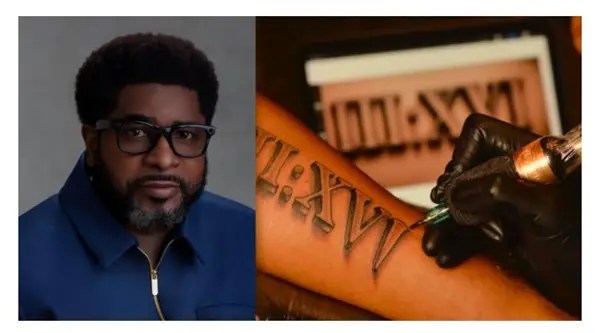
The debate follows the revelation by Pastor Kingsley Okonkwo, founder and senior pastor of David Christian Centre, who displayed a tattoo on his arm featuring the biblical verse John 3:16 written in Roman numerals. The disclosure quickly went viral on social media, drawing reactions from supporters and critics alike and prompting a live public conversation on Morayo’s platform.
During the interactive session, several participants defended the cleric, arguing that a tattoo—particularly one inspired by scripture—does not undermine a person’s spirituality or ministerial calling. Supporters described the tattoo as a personal expression of faith and a reflection of changing times, stressing that true Christianity should be measured by values and actions rather than physical appearance.
However, others expressed reservations, noting that pastors hold influential positions and are often regarded as moral role models. According to these contributors, public actions by religious leaders can shape perceptions and influence followers, especially young believers. They argued that such decisions should be approached with caution due to the expectations attached to spiritual leadership.
Some contributors took a balanced view, stating that while tattoos may not be inherently wrong, religious leaders should consider how personal choices are interpreted in a society where faith leaders are held to high ethical standards.
Morayo Afolabi-Brown moderated the discussion without passing judgment, encouraging respectful dialogue and allowing diverse opinions to be heard. The exchange reflected a broader national conversation on how religious traditions can coexist with evolving cultural expressions.
As discussions continue online and within religious circles, attention is now focused on Pastor Okonkwo, who is expected to address the controversy later in the day. Nigerians remain divided, awaiting his response amid ongoing debates that have extended beyond body art to deeper issues of faith, influence, and responsibility in contemporary society.