🌿 Ruzu Non-Alcoholic Herbal Bitters
Ruzu Non-Alcoholic Herbal Bitters is a natural health supplement specially formulated to:
- ✅ Promote general wellness
- ✅ Detoxify the body
- ✅ Support the treatment of various ailments
Made from a powerful blend of 100% organic and medicinal herbs, Ruzu is completely alcohol-free, making it ideal for:
- 👪 All age groups
- 🌱 Health-conscious individuals
- 🌿 Anyone seeking non-alcoholic herbal remedies
Whether you're looking to boost your vitality, cleanse your system, or support healing the natural way, Ruzu Bitters offers a trusted herbal solution.
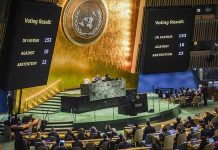
The world faces not only the threat of a wider Middle East conflict as tensions between the United States, Israel, and Iran escalate into open conflict, but also a more profound and unsettling question: Is the United Nations losing its legitimacy or, worse, crumbling under the weight of great-power politics?
The aftermath of World War II served as the foundation for the contemporary international order. The United Nations, which was established to “save succeeding generations from the scourge of war,” is at its core. The ban on using force against sovereign states, unless in self-defense or with permission from the UN Security Council, is a key component of that pledge. The United Nations Charter established this legal structure to guarantee that power would be constrained by the law.
There is a great deal of pressure on that structure now.
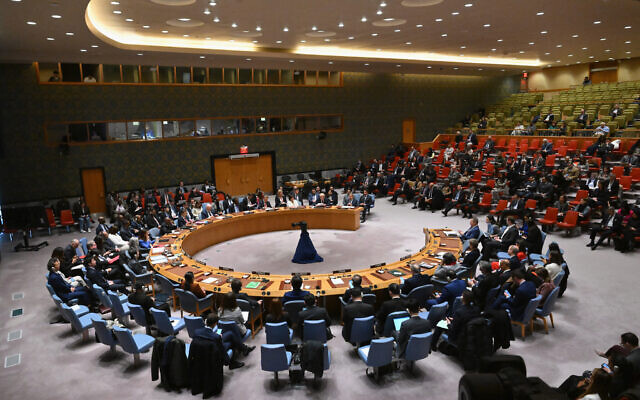
Direct strikes, retaliatory missile strikes, cyber operations, and the mobilization of regional proxies are all part of the most deadly escalation in decades. All parties have used self-defense and deterrence in their rhetoric. However, the long-standing complaint that international law is interpreted selectively when large nations are involved has been rekindled by the lack of unanimous Security Council authorization or clear multilateral agreement.
The Security Council’s immobility is not a recent development. Its five permanent members were given veto power in 1945 as a practical response to geopolitical circumstances. However, at such times, it seems more like a structural defect than a stabilizing mechanism. The council’s capacity to take decisive action is significantly reduced when permanent members are actively or indirectly involved in a conflict. Speeches and symbolic resolutions are produced at emergency sessions, but they are rarely enforced.
The optics are concerning for several countries in Africa, Asia, Latin America, and some regions of Europe. It is common practice to remind smaller states of their responsibilities under international law. Some states are quickly subject to sanctions regimes for territorial transgressions. However, accountability procedures appear to be significantly less solid when powerful parties participate in cross-border military operations.
Legitimacy, not military might, is what keeps international organizations alive. Confidence declines if audiences around the world start to view multilateralism as a front for geopolitical rivalry rather than a real restraint on power. And compliance follows as legitimacy erodes.
However, it would be premature and possibly strategically incorrect to declare the UN “dead.” UN organizations continue to coordinate humanitarian relief, track refugee movements, record human rights conditions, and support quiet diplomacy despite geopolitical impasse. Blue-helmet peacekeepers continue to stand between combatants in war zones. UN flags continue to fly over aid convoys. Even now, negotiations take place in hallways away from the media.
Therefore, the issue is not institutional disappearance but rather institutional fragility.
A more general change in the world order is exemplified by the conflict between Washington, Jerusalem, and Tehran. Diffusion of power. Blocs inside regions are claiming their independence. Recalibrating strategic alliances. It is more difficult to reach a consensus and more alluring to take unilateral action in this new multipolar climate.
However, history teaches us a harsh lesson: instability increases when multilateral systems falter. The 20th century’s interwar years shown what occurs when international governing systems lose power. There are rival blocs. Races for arms quicken. There is a greater chance of miscalculation.
These days, the stakes are much larger. In contrast to 1945, the globe is now dominated by nuclear capability, cyberwarfare, and sophisticated missile systems. There would be no simple containment of a regional conflict involving the United States, Israel, and Iran. Financial systems, energy markets, maritime lines, and vulnerable neighboring states would all be affected.
Are we seeing the collapse of the UN?
So far, no. Unquestionably, though, it is being tried.
Whether or if member states—especially the most powerful ones—recommit to the idea that no country is above international law will determine whether or not it survives. Discussions on reform, such as the expansion of the Security Council and the limitation of veto power in situations involving large-scale conflict, must continue to be theoretical. They have to become top diplomatic priority.
The alternative is a society in which might subtly replaces right, deterrence replaces diplomacy, and alliances replace institutions.
More than a regional conflict, the current crisis is a test of whether global government can change to meet the demands of the twenty-first century. The UN runs the risk of becoming irrelevant if it does not change. However, it could still come out stronger if it reforms and the main countries decide against escalation in favor of prudence.
Which course is taken now could have a significant impact on the future of the global order.