
🌿 Ruzu Non-Alcoholic Herbal Bitters
Ruzu Non-Alcoholic Herbal Bitters is a natural health supplement specially formulated to:
- ✅ Promote general wellness
- ✅ Detoxify the body
- ✅ Support the treatment of various ailments
Made from a powerful blend of 100% organic and medicinal herbs, Ruzu is completely alcohol-free, making it ideal for:
- 👪 All age groups
- 🌱 Health-conscious individuals
- 🌿 Anyone seeking non-alcoholic herbal remedies
Whether you're looking to boost your vitality, cleanse your system, or support healing the natural way, Ruzu Bitters offers a trusted herbal solution.
As the controversy surrounding the electronic transmission of election results prompts an emergency sitting on Tuesday, the Nigerian Senate is taking action to quell growing political tension and popular cynicism over the Electoral Amendment Bill.
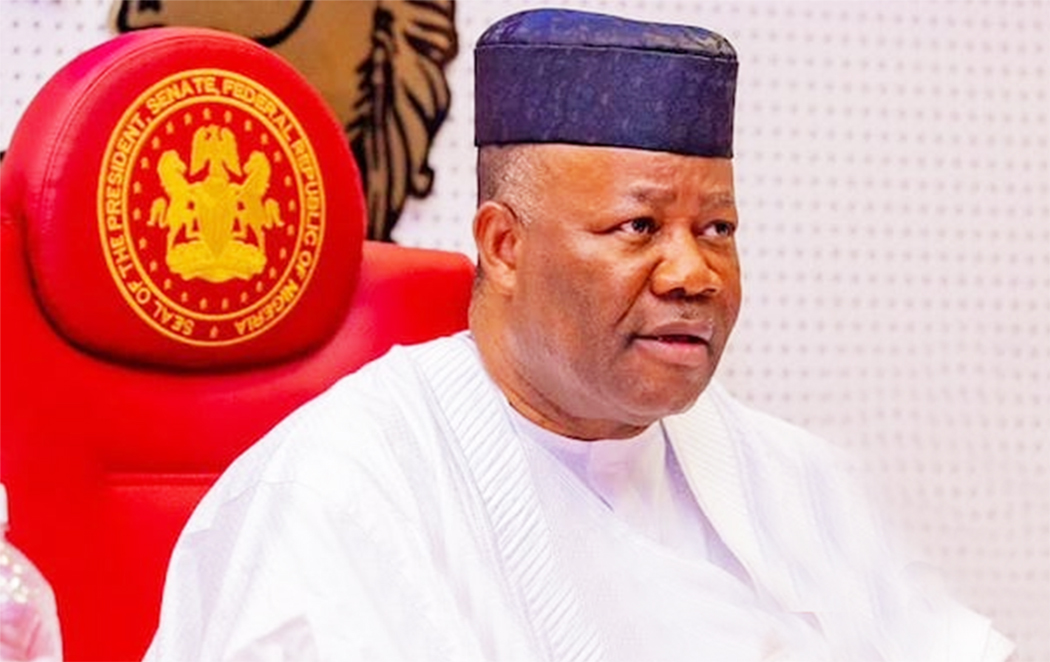
The main questions are whether the Senate changed rules pertaining to the real-time electronic transmission of results, weakening a crucial transparency safeguard, or if lawmakers are being misled about what Senate President Godswill Akpabio called “deliberate misrepresentation of proceedings in the Red Chamber of the National Assembly.”
In the face of growing criticism, Akpabio maintained that the Senate never objected to the electronic delivery of election results throughout any phase of the discussion process.
The Senate President stated that the Senate never opposed the electronic transmission of election results. “We looked at how to handle real-time transmission in the context of Nigeria’s heterogeneous network coverage, especially in remote and outlying communities.”
Passage of the Electoral Amendment Bill, which aimed to improve the 2022 Electoral Act, was anticipated to go somewhat smoothly. On the contrary, it has sparked a national discussion about the future of election openness in Nigeria as well as intent and confidence. The Senate was accused of reversing hard-won election reforms as reports quickly circulated that the bill no longer required real-time electronic transmission. On the one hand, opposition parties accused the Senate of reopening loopholes for manipulating results, while civil society organizations (CSOs) warned of a hazardous retreat.
The Senate leadership was obliged to react due to the severity and speed of the criticism, and they ultimately decided to call an emergency sitting for next Tuesday. Narrative distortion, in Akpabio’s opinion, is the problem.
“What was discussed was how to avoid creating legal problems where network coverage is unavailable,” he insisted, emphasizing that the modified statute still firmly covers electronic communication.
Although they have frequently been outspoken in their criticism of the Senate leadership, the opposition senators this time mostly agreed with Akpabio’s explanation, albeit with a more nuanced focus. The Senate agreed to transmit results electronically in real time, according to opposition members led by Senate Minority Leader Senator Abba Moro. However, they warned against interpreting this agreement in strict legal terms that may render elections void in the event of a network outage.
An opposition lawmaker with knowledge of the discussion stated, “Real-time transmission was agreed upon, but the worry was that the law should not become a trap where elections are annulled simply because of technical limitations beyond the control of voters or the Independent National Electoral Commission (INEC).”
In order to prevent a scenario where the results are dictated by infrastructure breakdown rather than voter choice, authorities aimed to increase the use of technology in elections, according to Moro. Notwithstanding the fact that it hasn’t completely reassured a cynical public, this unusual meeting between the Senate President and opposition lawmakers highlights the intricacy of the problem.
In support of the Senate’s stance, lawmakers contend that their choice strikes a compromise between embracing technology and preventing elections from being thrown out due to procedural issues. Nigeria’s varied topography, ongoing infrastructural deficiencies, and security issues are cited, and they caution that a strict legal requirement for real-time broadcasting that does not account for extraordinary situations may exacerbate post-election litigation.
Courts have been sought to declare results void in past election cycles on the basis of purported procedural errors rather than proof of election tampering. According to senators, they are committed to preventing a situation in which voter intent is overridden by a technical error. The Senate is still completely dedicated to holding credible elections and using technology to increase transparency, but Akpabio has emphasized time and again that the Senate will not pass legislation that gives network providers control over election results instead of voters.
Even with these guarantees, public mistrust has not decreased. Real-time electronic transmission is now seen by many Nigerians as a sign of electoral integrity rather than just a technological feature. As the most susceptible phase of the voting process, it serves as a barrier against meddling between polling places and collation centers.
Election observer and Yiaga Africa Executive Director Samson Itodo has cautioned that vague electoral laws tend to exacerbate post-election conflicts rather than settle them, pointing out that in cases where the legislation is imprecise, interpretation turns political and public trust starts to decline.
Time itself has become political in Nigeria, according to Prof. Jibrin Ibrahim, a political scientist and election expert. “Any delay, no matter what the reason, creates suspicion once the results leave the polling station,” he said.
Despite their thoroughness, Senate explanations have failed to restore public trust because of this ingrained skepticism.
The emergency sitting’s official goals are to resolve any misconceptions and lay the foundation for harmonization with the House of Representatives.
Informally, politicians admit that it’s also a damage-control exercise. If the dispute isn’t settled, it might make harmonization more difficult, lead to fresh pressure from civil society, or even cast doubt on the president’s decision to sign the measure.
Nigerian Senior Advocate and constitutional lawyer Sebastine Hon. issued a warning, stating that the debate has transcended legislative drafting and now involves institutional legitimacy. He asserts that whether electoral reforms are being quietly negotiated or strengthened is more important to Nigerians than technical reasons.
Weakening electoral safeguards is perceived as having significant political ramifications for a Senate already beset by public mistrust regarding elite consensus politics.
The ongoing conflict is reminiscent of previous conflicts during the 2022 Electoral Act’s passage, when comparable disagreements over electronic transmission almost caused the law to halt. Lawmakers have mentioned network issues in the past. Public pressure then, as now, compelled more explicit promises. The political climate is what has changed. Technical amendments rarely stay technical for long because of increased opposition scrutiny, changing alliances, and a more technologically savvy electorate. Legislative activities are now reviewed in real time.
In Nigeria, election reform is no longer a discussion reserved for the elite, according to public policy analyst Dr. Tunji Olaopa. This is because citizens, having learnt from the past, are now scrutinizing each clause for any flaws.
The Independent National Electoral Commission is currently embroiled in the dispute. While warning of operating difficulties in isolated, unsecure, or inadequately connected locations, INEC has made significant investments in electronic transmission infrastructure and has frequently reaffirmed its readiness to implement technology to improve transparency.
There is a lot of pressure on the commission to provide speed, transparency, and uniformity across wildly disparate terrains because of a regulation that acknowledges network constraints while affirming real-time broadcasting.
Legal experts warn that if the final, unified version of the bill is unclear, judges may be left to interpret what “real time” actually means, which could convert specialized discussions into legal disputes.
The dispute goes beyond the phrasing of a single provision to address a more general question: to what extent is Nigeria’s political elite prepared to cede control to open, technologically advanced voting processes? Deterrence is weakened by any ambiguity, according to detractors. Rigid drafting exposes legislators to the possibility of injustice through technical failure. The easier fear for voters is that once a loophole is established, it is rarely used.
Whether electoral reform is a negotiated compromise or a steadfast democratic commitment will be determined by the Senate’s next actions as it gets ready for Tuesday’s emergency session and eventual harmonization with the House of Representatives. In a nation where courtrooms and polling places are frequently used to decide elections, clarity is not an extravagance. It is the money of confidence.