🌿 Ruzu Non-Alcoholic Herbal Bitters
Ruzu Non-Alcoholic Herbal Bitters is a natural health supplement specially formulated to:
- ✅ Promote general wellness
- ✅ Detoxify the body
- ✅ Support the treatment of various ailments
Made from a powerful blend of 100% organic and medicinal herbs, Ruzu is completely alcohol-free, making it ideal for:
- 👪 All age groups
- 🌱 Health-conscious individuals
- 🌿 Anyone seeking non-alcoholic herbal remedies
Whether you're looking to boost your vitality, cleanse your system, or support healing the natural way, Ruzu Bitters offers a trusted herbal solution.
Two Nigerian Teenagers Rescued from Human Trafficking Network in Mali
By Naomi Onome
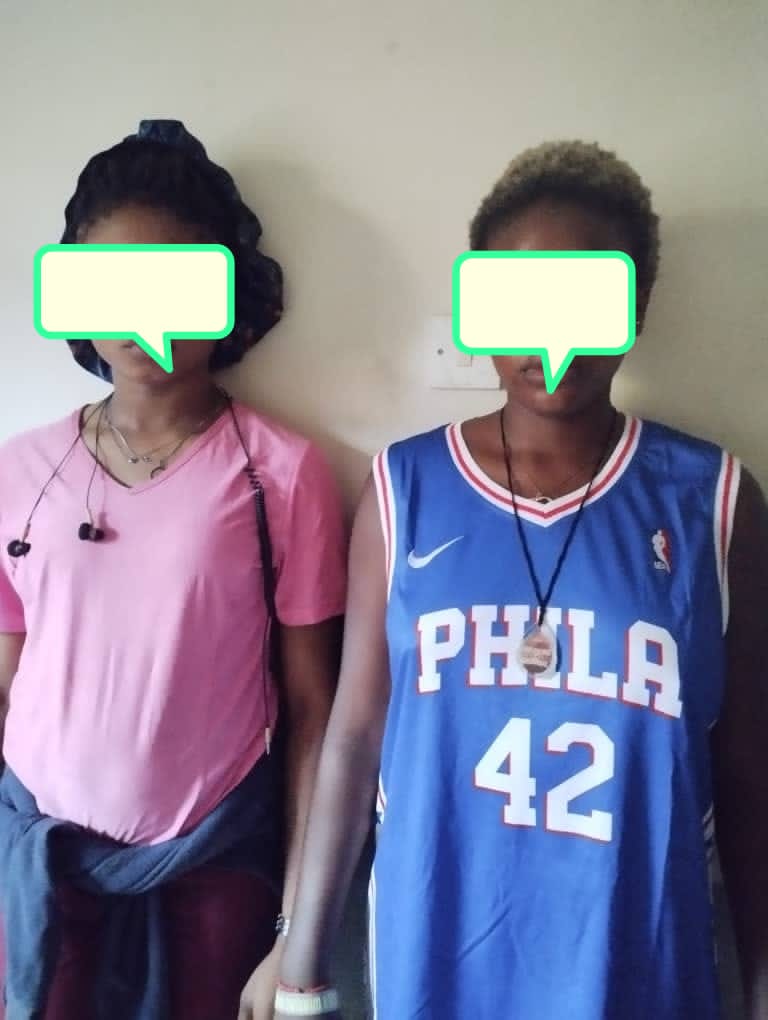
Two Nigerian teenagers, 15-year-old Daniela Ighosotinu from Warri, Delta State, and 17-year-old Sonia from Benin City, Edo State, have been rescued from a human trafficking network in Mali after being lured abroad with false promises of legitimate employment.
Their testimonies reveal a disturbing pattern of deception, coercion, and exploitation, underscoring the growing threat of transnational human trafficking affecting vulnerable young Nigerians.
Recounting Daniela Ighosotinu’s ordeal aided by false promises, she left Warri late last year, in 2025, after being persuaded by a man she described as a familiar face in her neighbourhood. Despite warnings from her parents not to travel, she secretly left home, hoping to find better opportunities.
According to her account, the man financed her journey and arranged contacts for her upon arrival in Mali. She was initially told she would engage in drug-related work—an illegal activity she admitted she did not fully understand—but upon arrival, she discovered she would be forced into prostitution.
Daniela described being housed with other girls under strict control, where they were compelled to solicit clients daily. She explained that she was forced to stand outside to attract customers. Payments from clients were collected directly by her trafficker. She had no knowledge of the total earnings or her supposed debt; refusal to work resulted in punishment, starvation, or threats. “I didn’t know how much I was earning or paying back. I could have worked for years and still been told I hadn’t finished paying,” she said.
The traffickers reportedly used intimidation and physical abuse to maintain control. Daniela recounted being beaten when she resisted and being threatened with police action if she attempted to escape.
Her eventual release came after her family intervened by threatening legal action against the trafficker and reaching out to Comrade Prosper K. A. Michael, founder of the Global Anti-Human Trafficking Organization (GAHTO), which led to her return to Nigeria.
However, Sonia’s story is that of ‘A Narrow Escape’. Sonia, 17, embarked on her journey to Mali on March 1, 2026, after being recruited in Benin City with promises of a job opportunity in Libya. Unaware of the risks of human trafficking, she agreed to travel, accompanied by a friend who remains in Mali.
The journey, which lasted nearly a week, involved crossing multiple borders, including a dangerous passage through forests to evade law enforcement.
“We spent days without sleep. At a point, I was very scared, especially when we had to pass through the forest,” she recounted.
Upon arrival in Mali, Sonia was informed she would have to repay 1.5 million CFA francs (approximately equivalent to #3.5 Million Naira) before gaining independence. However, she soon discovered that instead of working in gold washing as promised, she was expected to engage in prostitution.
When she refused, her trafficker—identified as “Madam Cassandra”—reportedly demanded ₦4 million from her family as compensation for the cost of trafficking her. Sonia described harsh living conditions, stating that over 30 girls, mostly aged between 17 and 19, were kept in makeshift huts and subjected to similar exploitation.
“She tried to seize my phone so I wouldn’t contact anyone. I had to hide it to stay in touch with my family,” she said. Her rescue came after her family alerted the authorities, prompting intervention by anti-trafficking organisations.
Sonia confirmed that her rescue was facilitated through collaboration between the National Agency for the Prohibition of Trafficking in Persons (NAPTIP) in Benin and the Global Anti-Human Trafficking Organisation (GAHTO).
She expressed gratitude to the agencies involved, saying, “I want to thank NAPTIP and GAHTO for rescuing me. They saved my life.”
These cases highlight a broader trend of Nigerian youths being trafficked across West African borders under false pretences. Traffickers often exploit poverty, family instability, and lack of awareness to lure victims.
Victims are frequently trapped in cycles of debt bondage, where they are forced to “repay” inflated and often indefinite costs of transportation and accommodation through exploitation.
Both Daniela and Sonia have urged other young people to be cautious of offers that seem too good to be true.
“I didn’t know about human trafficking before. I thought they wanted to help me,” Sonia said. “It is not good. It is very risky.”
Daniela, now back in Nigeria, expressed regret over her decision and emphasised the importance of seeking legitimate means of livelihood.
On the victim’s path to recovery, Sonia plans to return to her previous vocational training in fashion design, determined to rebuild her life after the traumatic experience.
Authorities have continued to investigate the trafficking network, with calls for stronger border monitoring, public awareness campaigns, and community vigilance to prevent further exploitation.
About ‘GAHTO’
Prosper K. A. Michael, founder of the Global Anti-Human Trafficking Organization (GAHTO), established in 2019, has dedicated over two decades to humanitarian service, focusing on the critical issue of human trafficking.
Despite operating without government funding and relying solely on private donations, GAHTO is committed to rescuing victims and aiding their rehabilitation and empowerment, emphasising the necessity of financial support for these missions.
Michael advocates for poverty eradication as a primary strategy to prevent trafficking, stressing the need for improved parent-child relationships to ensure children’s safety. He urges vigilance among parents to protect their children from traffickers.
Highlighting the organisation’s past efforts, Michael recounts the recent rescue of two victims, Anita and Saviour, from Burkina Faso; Daniela and Sonia from Mali; and others, where they were held against their will.
He condemns human trafficking as a crime against humanity and expresses gratitude to the Nigerian ambassador to Burkina Faso, Mali and Côte d’Ivoire and ambassadors from other African countries for the embassy’s support in the repatriation process of trafficked victims.
African embassies have pledged collaboration with GAHTO to intensify the fight against human trafficking in Burkina Faso, Mali and other African countries, targeting areas notorious for sexual exploitation of young girls. Michael’s vision is to position GAHTO as the leading NGO in the fight against human trafficking in Nigeria, advocating for partnerships and donor support to enhance their operations.
The report highlights the need for increased efforts to combat human trafficking and protect vulnerable individuals from exploitation.
GAHTO also seeks the support and partnership of the Nigerian government, corporate organisations and individuals to enable the creation of proper rehabilitation facilities and resources for survivors of trafficking victims all over Africa.
You can reach out to GAHTO on the following:
Phone no: +2348050503535.
Email Id: global.antihumantrafficking@gmail.com