
🌿 Ruzu Non-Alcoholic Herbal Bitters
Ruzu Non-Alcoholic Herbal Bitters is a natural health supplement specially formulated to:
- ✅ Promote general wellness
- ✅ Detoxify the body
- ✅ Support the treatment of various ailments
Made from a powerful blend of 100% organic and medicinal herbs, Ruzu is completely alcohol-free, making it ideal for:
- 👪 All age groups
- 🌱 Health-conscious individuals
- 🌿 Anyone seeking non-alcoholic herbal remedies
Whether you're looking to boost your vitality, cleanse your system, or support healing the natural way, Ruzu Bitters offers a trusted herbal solution.
A state of emergency has been imposed by Dr. Omar Touray, President of the ECOWAS Commission, in response to the sub-region’s growing political instability, military coups d’état, banditry, and violent extremism and terror.
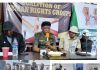
At the Ministerial level of the 55th Ordinary Session of the ECOWAS Mediation and Security Council (MSC) in Abuja on Tuesday, Touray made this declaration.
He claimed that the past few weeks’ events had demonstrated the necessity of serious reflection on democracy’s future as well as the pressing need to make security investments in the subregion.
He claims that country-by-country evaluations of member states reveal varying risk levels throughout the sub-region, ranging from high to medium, with a high risk average, necessitating prompt and coordinated action.
It is safe to declare a state of emergency in our town given the current circumstances.
“We ought to give these threats the consideration they merit.
For the coming year, the mediation and security council sessions should be held more frequently than just twice a year.
“To combat the challenges posed by terrorism and banditry, which disregard national borders, we must combine our resources.
“Therefore, we have to make choices and take actions that will stop this trend,” he stated.
Despite this, Touray claimed that elections in the subregion have turned into a significant cause of instability.
ECOWAS’s best efforts to preserve its democratic credentials and stability while establishing norms of constitutional convergence.
In keeping with the emergency, he stated that the MSC must continuously assess the political and security landscape in West Africa in order to offer direction and facilitate regional action.
In light of the terrible effects of terrorism along their shared borders, he stated that ECOWAS must also engage in negotiations with its neighbors in the Alliance of Sahel States (AES), especially with reference to their security cooperation.
Elections will be held in Guinea, the Republic of Benin, the Gambia, and Cape Verde in the days and months leading up to next year.
“We will also be handling the aftermath of the coup attempt in the Republic of Benin and the coup in Guinea-Bissau,” he stated.
According to the president of the panel, families, women, and children were disproportionately affected by the instability in West Africa.
According to him, the number of people who were forcefully displaced in West and Central Africa as of October 2025 was about 7.6 million, up from 7.4 million in March.
According to Touray, who cited United Nations High Commissioner for Refugees sources, 6,506,270 of this number were internally displaced people (IDPs), with Nigeria, Burkina Faso, Niger, and Mali having the biggest numbers.
1,094,742 refugees and asylum seekers are also present. According to a distribution analysis of asylum seekers, Niger, Mali, Nigeria, Côte d’Ivoire, Togo, Burkina Faso, Ghana, Benin, Senegal, and Gambia are the 10 nations with the largest populations, in descending order.
“I want to reassure the people in our community that we will not stop working. For the benefit of all community members, we will keep putting up more effort to advance an area that is stronger, more stable, and peaceful.
He declared, “Let us all continue to be dedicated to maintaining regional unity, promoting peace, and upholding the Community’s Constitutional Convergence Principles.”
Timothy Kabba, the chairman of the ECOWAS Council of Ministers and Minister of Foreign Affairs for Sierra Leone, cautioned that the subregion’s growing political and security unrest jeopardized democratic governance and undermined public trust.
“Our residents’ anxiety is understandable. They are looking to us for leadership that turns dedication into action, not simply for statements of concern.
“Our people are tired of unfulfilled promises, so our resolutions need to be more than just platitudes. He said, “They demand unity, seriousness, and purpose.”
According to the News Agency of Nigeria (NAN), the purpose of the conference was to evaluate the political and security environment of the sub-region in order to establish strategic actions to handle new issues.
As the Senate grants Tinubu’s request to send troops to the Benin Republic
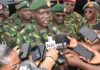
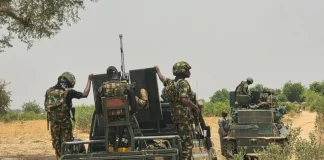
In the meantime, President Bola Tinubu’s request to send Nigerian troops to the Republic of Benin for a peacekeeping mission in the wake of last Sunday’s abortive coup was expedited by the Senate on Tuesday at plenary.
The higher legislative chamber’s approval came after Tinubu’s letter to that effect was reviewed by the Committee of the Whole, which unanimously approved the deployment and provided parliamentary support for the regional security intervention.
The decision, according to Senate President Godswill Akpabio, is a positive move because instability in any neighboring country threatens the region as a whole.
“An injury to one is an injury to all,” he remarked.
Tinubu’s appeal was read aloud at the plenary in a letter sent to the Senate President.
The President claims that the letter was sent in response to the Republic of Benin’s request for extraordinary air help from Nigeria’s Armed Forces following troops’ attempt to depose President Patrice Talon.
Citing Section 30(5), Part II of the 1999 Constitution (as modified), Tinubu said he had conferred with the National Defense Council prior to sending the request.
He pointed out that in order to approve a regional peacekeeping mission, Senate approval was now necessary.
President Tinubu called on the Senate to take immediate action after warning that Benin was in danger of “an attempted unconstitutional seizure of power and the destruction and destabilization of democratic institutions.”
According to the current security arrangements of the Economic Community of West African States (ECOWAS), Nigeria has a historical obligation to assist Benin.
He claims that “urgent external intervention” is necessary to help restore stability and stop further disintegration of order.
After that, the Senate President sent the request to the Committee of the Whole for prompt review.
Recall that on Sunday, soldiers working under the “Military Committee for Refoundation,” under the command of Lt. Col. Pascal Tigri, briefly took control of the state television station in Cotonou and declared the overthrow of President Patrice Talon’s government. However, President Tinubu’s troops and fighter jets intervened to prevent the coup.