A thorough examination of the Nigerian Midstream and Downstream Petroleum Regulatory Authority (NMDPRA) factsheet shows that between August 2024 and October 2025, Nigeria imported ₦12.8 trillion worth of Premium Motor Spirit (PMS), commonly referred to as gasoline or fuel.
The agency’s record of 15,435,000,000 liters transported into the nation over a 15-month period was used to compute the import value, with an average landing cost of ₦829.77 per litre.
According to the breakdown, September 2024 had the highest volume of petrol imports at 1.52 billion liters, when there was no local production. August 2024 (1.38 billion liters) and December 2024 (1.31 billion liters) came next.
Import volumes decreased somewhat to 1.12 billion liters in November 2025 from 1.17 billion liters in October. Before slightly increasing to 770 million liters in February and 889.7 million liters in March of 2025, the number dropped precipitously to 765.7 million liters in January.
April’s importation was 861 million liters, May’s was 1.19 billion liters, June’s was 978 million liters, July’s was 1.11 billion liters, August’s was 818.4 million liters, September’s was 663 million liters, and October’s was 855.6 million liters in 2025.
All 7.2 billion liters of local PMS are supplied by Dangote.
It was understood that the Dangote Refinery was the only source of the 7,208,280,000 liters of local supply during that time.
August 2024 saw no local supply; however, production started up again in September 2024 at 102 million liters, increasing to 300.7 million liters in October and 558 million liters in November.
After falling to 306.9 million liters in December 2024, production increased to 592.1 million liters in January 2025, 694.4 million liters in February, and 709.9 million liters in March.
645 million liters were reported in April, followed by 573.5 million liters in May, 543 million liters in June, and 511.5 million liters in July. In August 2025, supply increased to 613.8 million liters; in September, it fell to 528 million liters; and in October, it reached 529.48 million liters.
Despite growing pressure to stop imports and switch to domestic refining, the factsheet reveals Nigeria is still largely dependent on imported PMS.
Through a presidential order to the Federal Inland Revenue Service (FIRS) and NMDPRA, the Federal Government previously levied a 15% ad valorem duty on imported PMS and diesel.
Stakeholders fiercely opposed the idea, cautioning that Nigeria had not yet attained self-sufficiency. The directive was eventually overturned by the administration.
Additionally, industry participants cautioned that prohibiting PMS imports might give Dangote a monopoly, which they claimed would jeopardize energy security.
Dangote Expresses Concern About Delays in Vessel Clearance
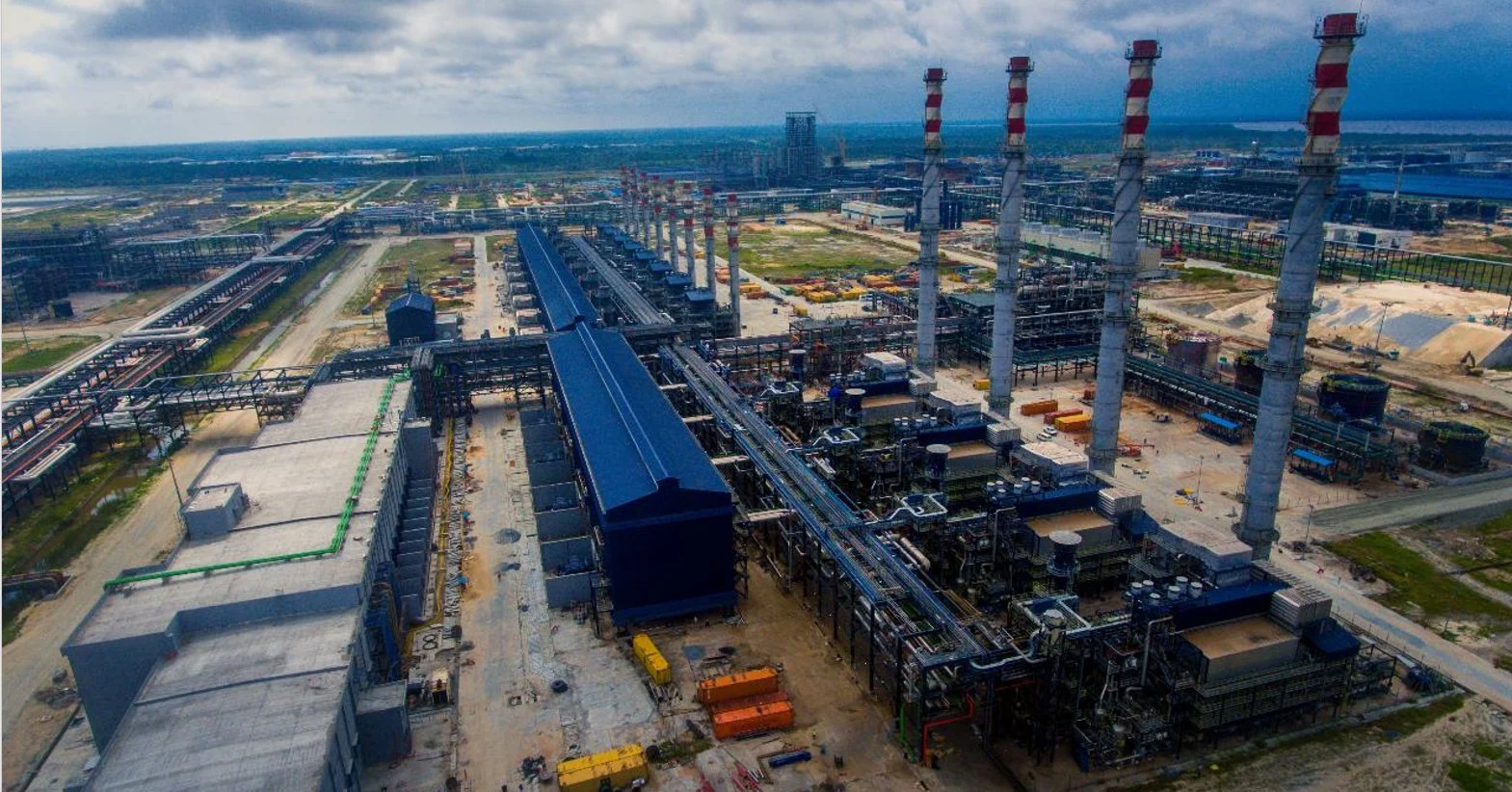
The Dangote Refinery has expressed dissatisfaction over vessel clearance delays, claiming that the bottlenecks are interfering with business operations and negatively impacting clients.
The CEO of the refinery, David Bird, said in a letter to the NMDPRA Chief Executive that the delays were causing “unnecessary costs and inefficiencies.”
“We continue to experience vessel clearance delays, which impact not only the refinery operations but also our customers, adding unnecessary costs and inefficiencies,” he added.
According to Bird, Nigeria’s PMS needs may still be met by the refinery.
“Dangote refinery is ready and able to supply 1.5 billion liters of PMS per month (50 million liters per day) in December and January, followed by 1.7 billion liters per month (57 million liters per day) starting in February 2026,” he stated.
In order to allow the refinery to import crude and feedstocks “unhindered” and to facilitate product lifting by vessels, he asked the Authority for assistance.
“Please allow the ‘Nigeria First’ policy to work to the benefit of all Nigerians,” Bird continued.
Additionally, he requested that the regulator send representatives to the refinery starting on December 1 in order to verify and disseminate the refinery’s daily supply levels. He pledged complete openness by publishing production and stock data every day.
The Reasons Nigeria Still Requires Fuel Imports According to Henry Adigun, Director of the Institute for Energy and Extractive Industry Law, Nigeria is unable to halt PMS imports at this time due to insufficient diversification of local refining capacity.
In order to fill supply gaps, he clarified that Section 317(9) of the Petroleum Industry Act (PIA) gives the regulator the authority to provide import licenses to businesses that have active local refining licenses or a track record of successful international crude and product trading.
When the Dangote refinery’s pricing are more competitive, current fuel importers inevitably purchase from it, according to Adigun.
However, he issued a warning that the refinery cannot keep lowering PMS pricing until favorable conditions in the global market are present.
He said that Dangote’s recent price reduction, which saw ex-depot gasoline drop from ₦880 to ₦865 per litre, was motivated by declining global crude prices and anticipation of a possible oil-for-naira deal.
The start of domestic petroleum production from the Dangote Refinery has changed Nigeria’s downstream operations by lowering imports, improving stability, and testing regulatory requirements under the PIA 2021, according to petroleum economist Prof. Wumi Iledare.
Although there are still issues like unreliable crude supply, infrastructural constraints, regulatory overreach, and market dominance, he added the advantages include foreign exchange savings and inflation moderation.
“Operationalizing transparent supply arrangements, enforcing PIA provisions, de-bottlenecking logistics, overseeing competition, and ensuring data transparency through public dashboards are priority actions,” he stated.
To maintain a balanced downstream market, he said Nigeria needs to keep an eye on logistical KPIs, import quantities, pricing trends, scarcity occurrences, and refinery production.