Nigeria has restated its commitment to bolster cyber and digital diplomacy as emerging technologies continue to transform global governance, security and international relations.
The commitment was reaffirmed at the second edition of the Anticipatory Cyber and Digital Diplomacy Workshop organised by the Ministry of Foreign Affairs with the support of the British High Commission.
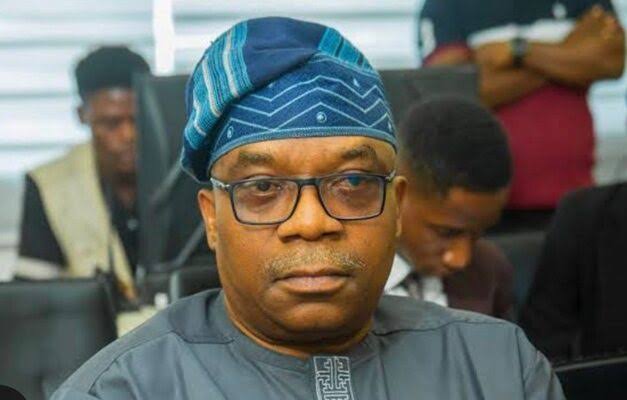
The Minister of State for Foreign Affairs, Ambassador Sola Enikanolaiye, said while opening the workshop that the future of diplomacy would be increasingly shaped by information and communication technology and the ability of nations to adapt to changing global dynamics.
Speaking on the theme, “From Awareness to Activation: Operationalising AI, Cyber and Digital Statecraft for Nigeria’s Foreign Policy,” Ambassador Enikanolaiye said the workshop is building on the success of its maiden edition, which led to the establishment of the Ministry’s Artificial Intelligence and Cyber Diplomacy Unit.
He said the unit would coordinate Nigeria’s engagement with emerging technologies and bolster the nation’s participation in global digital governance.
Ambassador Enikanolaiye urged participants to concentrate on practical outcomes, stating that anticipatory diplomacy requires a move from reactive to proactive engagement.
“By adopting AI, cyber capabilities and digital statecraft, Nigeria will expand its diplomatic reach, improve strategic communication and better promote its national interest,” he said.
Also speaking, the Chairman, African Union Cybersecurity Experts Group, Abdul-Hakim Ajijola, said the workshop was meant to help Nigeria to prepare for future advances in technology rather than to react to them.
“We are looking at AI, quantum computing and drones. The questions for Nigeria are: how do we prepare, how do we benefit from these technologies and more importantly, how do we mitigate the risks they may bring?” Ajijola said.
Read Also: Morocco to Host Emergency FIFA Crisis Meeting Led by FIFA Pre
“Cyber diplomacy has become more important as conflicts often start in cyberspace before they escalate into physical confrontations,” he said.
“Through digital platforms, digital diplomacy enables Nigeria to project its interests all over the world,” Ajijola added. He said that the workshop was a follow-up on last year’s awareness campaign with emphasis on implementation.
The Minister of Communications, Innovation and Digital Economy, Dr Bosun Tijani, said the workshop was timely and added that digital capability was becoming a major measure of national influence.
“Nigeria is already a digital leader in West Africa,” Dr Tijani said, pointing to the country’s communications satellites, the region’s largest concentration of submarine internet cables and its status as a regional data hub.
“We are a strong nation in the digital space. Big tech companies care about how we organise ourselves and neighbouring countries benefit from our investments in digital infrastructure,” he said.
The workshop was designed to strengthen Nigeria’s capacity in artificial intelligence, cybersecurity and digital statecraft to improve the country’s foreign policy objectives and participation in global digital governance.