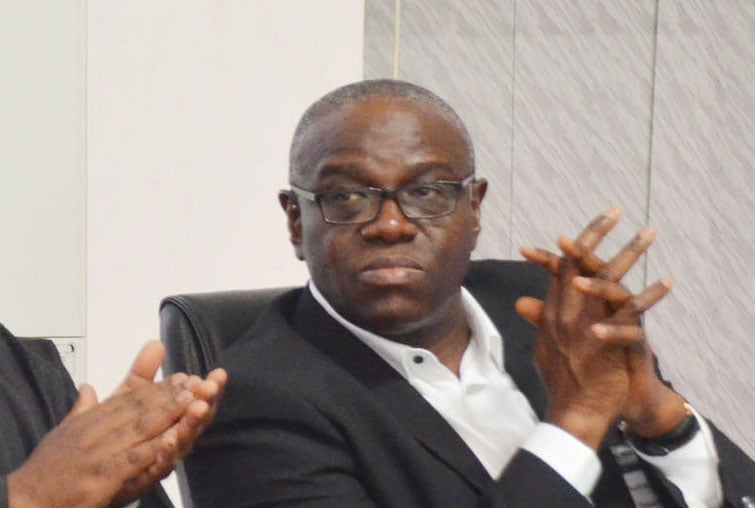
Okechukwu Ibeanu, a former electoral commissioner and political science professor, has cautioned that there are still holes in Nigeria’s revised electoral law that could jeopardize the nation’s democratic process.
Speaking as the keynote speaker at a Citizens’ Townhall, a policy discussion on electoral changes in Abuja, Ibeanu asked people to be more accountable for preserving democracy.
According to him, Nigerians frequently have too much faith in laws as the only way to resolve election problems. He pointed out that relying too much on laws without institutional and civic reforms may not produce the intended results.
“I believe that the law still has flaws and inconsistencies, and it’s regrettable that it took national discussion over a proviso before we agreed that electronic transmission was, in fact, covered by the 2022 act. But in reality, what we did was to go all the way back to 2018, when those discussions took place in this nation.
“As though the election law framework has all the solutions to our electoral issues, we constantly tamper with it. However, we give politicians—the very individuals the law is intended to regulate—the authority to change the Act, which is more significant, he argued.
According to the professor, Nigeria’s electoral legislation has undergone numerous revisions and repeals, a pattern that is detrimental to a stable democracy.
Ibeanu cautioned that frequent changes run the risk of transforming reforms into instruments for political maneuvering rather than protections for the rights of voters, saying that “amendment and repeal of the law should be its medicine, not its daily bread.”
He went on to say that if the law is consistently changed, it may result in measures that are primarily intended to further political agendas rather than safeguard voters’ rights.
Ibeanu also issued a warning against the electoral commission’s overzealous regulatory control of political parties, comparing it to a “military regime spectre” if not properly balanced with democratic values.
He called on Nigerians to take an active role in safeguarding their votes and holding authorities accountable, emphasizing civic duty. The focus here is on you, citizens. Politicians and INEC are not at the center.
Our ambition of a truly democratic nation will remain a pipe dream until voters are able to safeguard their ballots and exert control over those who purport to represent them, he stated.
The political scientist also urged the electoral commission to produce more precise rules and recommendations to eliminate uncertainties and called for a thorough examination of particular sections of the election legislation, such as Sections 50, 60, and 62.
On February 18, 2026, President Bola Tinubu signed the Electoral Act 2026 into law, replacing the 2022 legislation in advance of the general elections in 2027, updating Nigeria’s electoral system.
The new law’s main features include: requiring results to be sent electronically to the INEC Result Viewing (IReV) portal; acknowledging the Bimodal Voter Accreditation System (BVAS); establishing new deadlines for both candidate nominations and election notices; updating the procedures for party primaries; and allocating funds for the electoral commission sooner.
Opposition parties and civil society organizations have criticized parts of the law, claiming that specific discretionary powers granted to election officials amid technical problems could influence accountability, even though the revisions are intended to increase openness.