What is happening in Edo South right now is more than just a political fight; it is a test of leadership before the All Progressives Congress primaries in May 2026. It will show if Edo State Governor Monday Okpebholo can rise above outside factional pressures and make decisions with strategic clarity. This will show if it is possible to keep past promises without hurting the present. Iyobosa Uwugiaren looks at the problems that are coming up.
Edo politics is once again becoming unstable. Beneath the surface of party statements, planned silences, and public fights, there is a bigger, more important question: who really controls the politics of Edo South?
What is happening in the APC in Edo State is not just another round of fighting within the party; it is a high-stakes battle for memory, power, and survival.
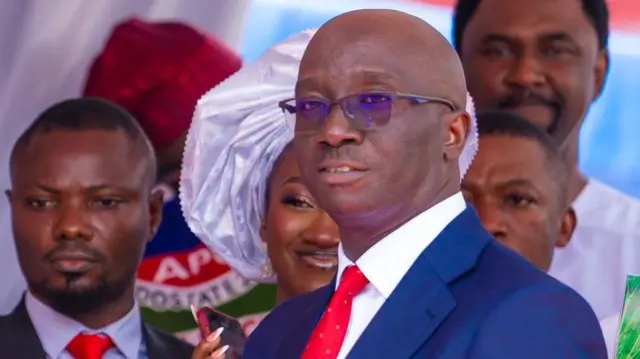
Osagie Ize-Iyamu is at the center of it all. His political career has been marked by patience, resilience, reinvention, and staying important. Opposing him are voices of resistance, such as former Governor Adams Oshiomhole and Jarret Tenebe. Their opposition is both strategic and symbolic. Governor Monday Okpebholo is stuck in a web of conflicting loyalties and future goals that is getting tighter. And don’t get it wrong: this is no longer about a senatorial ticket. This is for 2028.
History has a way of coming back at tough times in politics, and Edo State is a place where political memory is long and not forgiving. Not too long ago, Okpebholo was at a dangerous crossroads. His goal of becoming governor of Edo State was anything but easy. There were powerful political players, led by Oshiomhole, who were not completely convinced or willing to give up ground.
When alliances were weak and the future was uncertain, it was Ize-Iyamu who stepped up. Not with words, but with the tools of politics. Not with vague endorsements, but with structures that have been tested, used, and deeply rooted in Edo South. His intervention wasn’t just a gesture; it was planned. And it worked. That help made the scales tip in their favor. It made a hard path into a winnable race for the governor, both in the primary and the general election.
And that’s why the growing resistance to Ize-Iyamu’s plans today is more important than a normal political disagreement. It brings up a very important question: can a structure that helped the APC win in Edo State, especially the governor, be ignored without any problems?
Edo South is not just another district for senators. It is the heart of Edo politics, the biggest, most complicated, and most important voting group in the state. Here, not only do governorship victories happen, but they also happen. The district is a place where different identities, loyalties, historical ties, and political gatekeepers come together. If you don’t understand Edo South, you don’t understand Edo State.
Ize-Iyamu is more than just a participant in this area. He is a part of the system. His political networks, which he built over years of being involved, go beyond party lines and election cycles. They are a part of communities, strengthened by loyalty, and put into action when it counts the most.
This is why there is some risk in the current pushback against his senatorial ambition. It’s not just about stopping a candidate; it’s about facing a system. And in Nigerian politics, structures don’t go away. They respond.
The resistance itself is very telling. When people like Oshiomhole and Tenebe get involved, it’s more than just disagreement; it’s recognition. In politics, people don’t say anything when something is unimportant. Being relevant brings out opposition. The strong pushback against Ize-Iyamu is, ironically, proof that he still has political power and weight.
But things are not as simple as they seem. Okpebholo’s job is not just to pick a side; it’s also to deal with the results. He could think that openly supporting Ize-Iyamu could make other powerful groups in the APC angry. But going against Ize-Iyamu could break the very base that helped him win in the first place.
It is a difficult balancing act that needs more than just political instinct. It takes discipline, planning, and a very good sense of timing.
Things are getting even worse because more and more people are realizing—thanks to Ize-Iyamu’s camp—that his candidacy is unavoidable, and rightly so. He is making himself not only a candidate but also the obvious choice for Edo South by talking to people, getting strategic endorsements, and staying involved with the community.
Some of his critics might say that the view is not shared by everyone. But in politics, how things look affects how they really are. It changes alliances, gives things momentum, and makes people who are still on the fence choose sides. It makes people want to join in, which can be hard to stop.
Recent events have shown that Ize-Iyamu is a train that is moving. And for those who are against him, this makes things more urgent. It puts pressure on the governor. The real test for Okpebholo is not whether he can stop a political contest; that is neither convincing nor advisable. The question is whether he can handle it without letting it break up.
Edo politics has seen this movie before: fights within parties turn into factional crises, new party structures form, defections weaken electoral strength, and in the end, losses that could have been avoided.
These fears are not just ideas. They are experiences that people have had that have shaped the state’s political consciousness. For a governor who wants to run for re-election, the lesson is very clear: a party that is divided cannot win an election that is united.
This is where political memory can be both a burden and a help. Ize-Iyamu’s past support isn’t just a historical footnote; it’s still important in current calculations. In Nigerian politics, loyalty may not last forever, but it is rarely forgotten, especially when it gives someone power.
Not facing that truth is not a good idea; it is dangerous. But just because you know about it doesn’t mean you have to give in to it. The governor’s job is more complicated. It’s about making a system where competition can happen without hurting people, where ambition can be controlled without making people angry, and where results don’t leave lasting scars. That means getting involved, not staying away.
It means knowing how much Ize-Iyamu affects things without letting that affect the party’s overall goals. It means making sure that other people feel heard and valued, even when a powerful person is in charge. It takes a strong and broad coalition to make it happen. Because winning 2028 won’t happen with just a few wins. Cohesion will win it.
Ize-Iyamu himself is still at the center of this equation. He is a politician whose importance has not changed even though alliances have changed and strong opposition has come up. His resilience is not coincidental; it results from sustained involvement, strategic flexibility, and a profound comprehension of Edo’s political landscape.
It’s not easy to break up his networks. It’s not easy to ignore his influence. And maybe most importantly, his story is not one of decline, but of staying strong. So, the fact that outsiders are currently resisting him does not make him less powerful. If anything, it makes his goals even more important. It turns his run for office into a vote on who has power, loyalty, and control over Edo South.
The effects are very important for Governor Okpebholo. He can’t afford to sit this one out. The result, whether it’s about choosing candidates, party unity, or how voters feel, will have a direct impact on his own political future.
If you don’t handle it right, the effects could go far beyond just losing a Senate seat. If you handle it well, it could help you build a strong base for a successful re-election campaign in 2028.
In the end, what’s going on in Edo South is more than just a political fight. It is a test that shows what kind of leader you are. It will show if the governor can deal with outside factional pressures and make decisions with strategic clarity. It will show if old alliances can be kept without hurting the way things are now. And it will decide if the APC in Edo State can deal with its own problems without losing votes.
One thing is for sure: Edo South won’t be neutral in 2028. It will choose, shape, and finally define the result. And in that important arena, Osagie Ize-Iyamu is still a force that can’t be ignored.
If you don’t pay attention to him, you’ll be sorry.