
🌿 Ruzu Non-Alcoholic Herbal Bitters
Ruzu Non-Alcoholic Herbal Bitters is a natural health supplement specially formulated to:
- ✅ Promote general wellness
- ✅ Detoxify the body
- ✅ Support the treatment of various ailments
Made from a powerful blend of 100% organic and medicinal herbs, Ruzu is completely alcohol-free, making it ideal for:
- 👪 All age groups
- 🌱 Health-conscious individuals
- 🌿 Anyone seeking non-alcoholic herbal remedies
Whether you're looking to boost your vitality, cleanse your system, or support healing the natural way, Ruzu Bitters offers a trusted herbal solution.
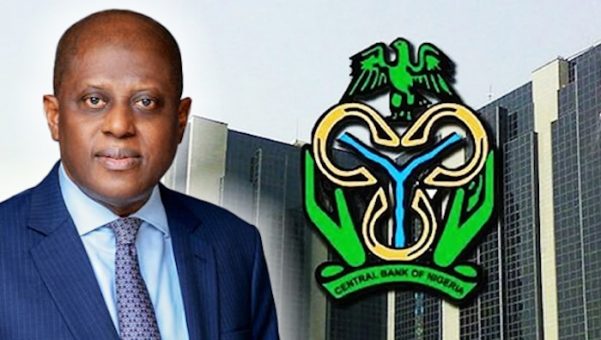
With concerns over compliance risks; operational vulnerabilities and the rapid growth of Islamic fintech services, the Central Bank of Nigeria has begun efforts to improve governance standards and regulatory oversight of Nigeria’s non-interest financial sector.
The apex bank said at the 2nd Annual Interactive Session between the CBN Financial Regulation Advisory Council of Experts (FRACE) and Advisory Committees of Experts (ACE) of Non-Interest Financial Institutions, held in Abuja, that stronger governance frameworks had become critical to sustaining investor confidence, financial stability and the credibility of the country’s expanding non-interest finance ecosystem.
Speaking on behalf of the Deputy Governor, Financial System Stability, Mr. Philip Ikeazor at the session, the Director, Financial Policy and Regulation Department, Dr. Rita Ijeoma Sike, described the engagement as a strategic platform for strengthening the resilience and soundness of the industry.
The session, Ikeazor said, is an extension of the foundation laid during the inaugural engagement and a reflection of the CBN’s commitment to promote a “sound, credible and resilient non-interest financial system anchored on robust governance, effective compliance and prudent risk management.”
He noted that Non-Interest Financial Institutions (NIFIs) have continued to be more strategic players in Nigeria’s financial system by providing ethical and Shariah-compliant alternatives to conventional banking and also promoting financial inclusion, real sector financing, MSME development and shared prosperity.
But he warned that the growth and sophistication of the sector has also made operators more vulnerable to new threats that could undermine public trust if not properly checked.
“The industry is facing unique risks, in particular non-compliance risk, governance challenges, operational vulnerabilities and emerging technological risks,” he said.
Such challenges, if not managed properly, could undermine financial stability and erode confidence in the non-interest finance industry, he cautioned.
The Deputy Governor said that the establishment of FRACE and the mandatory constitution of Advisory Committees of Experts in all NIFIs were geared towards institutionalising a harmonised governance framework across the industry and ensuring uniform interpretation of Shariah principles.
He added: “The objectives of today’s session are to foster the institutionalisation and effective operation of a robust Shariah governance system within Non-Interest Financial Institutions, and to provide a structured platform for dialogue, knowledge-sharing and collaboration.”
The Deputy Chairman of FRACE, Prof. Bashir Aliyu Umar, stated in his remarks that the engagement was aimed at deepening governance standards in the sub-sector while creating room for constructive engagement between regulators and operators. He hailed the CBN management for bringing back the interactive forum, which was first introduced in 2014, noting that continued engagement was becoming more and more necessary as the industry evolves.
Earlier, Dr. Sike had reiterated the apex bank’s commitment to sustain a robust and efficient non-interest finance industry to support economic growth and innovation.
“The increasing diversity of products and delivery channels in the sector, especially the emergence of Islamic fintech platforms,” she noted, citing them as examples that require robust regulatory oversight and sustained collaboration among regulators, scholars and practitioners.
“The increased diversity of products, institutions and delivery channels, especially with the advent of Islamic fintech, demands continuous dialogue, sound regulatory oversight and robust advisory input from scholars and practitioners,” she said.
The session also included technical presentations on emerging industry risks and opportunities.
Prof. Bashir Aliyu Umar presented a paper titled “Shariah Non-Compliance Risk in Non-Interest Banks and its Impact on the Non-Interest Financial Services Industry” while Muhammad Kabir Muhammad and Mustapha Ishaq presented another paper on “Islamic Fintech and Financial Inclusion.”
During the event, participants discussed in detail the operational challenges facing the sub-sector including governance independence, risk mitigation strategies, capacity building and innovation management.
Prof. Abdul-Razzaq Alaro, a member of FRACE, in his closing statement, called on the stakeholders to move beyond discussions to the implementation of the resolutions reached during the engagement.
He stressed that the real value of the session would be judged by the practical improvements in governance that it brought about across the industry.
FRACE is the apex advisory body that links conventional financial regulation and faith-based financial practices in Nigeria. The council supports the CBN in managing complex regulatory and Shariah governance issues while promoting consistency, credibility and investor confidence within the non interest finance sector.
The event had in attendance members of FRACE, chairmen and members of ACEs, managing directors of non-interest banks, senior CBN officials, and representatives from institutions like the Bank of Industry and the Securities and Exchange Commission.