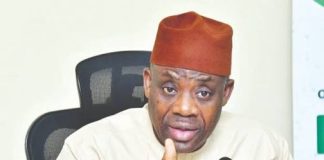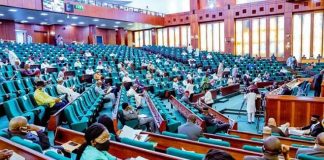
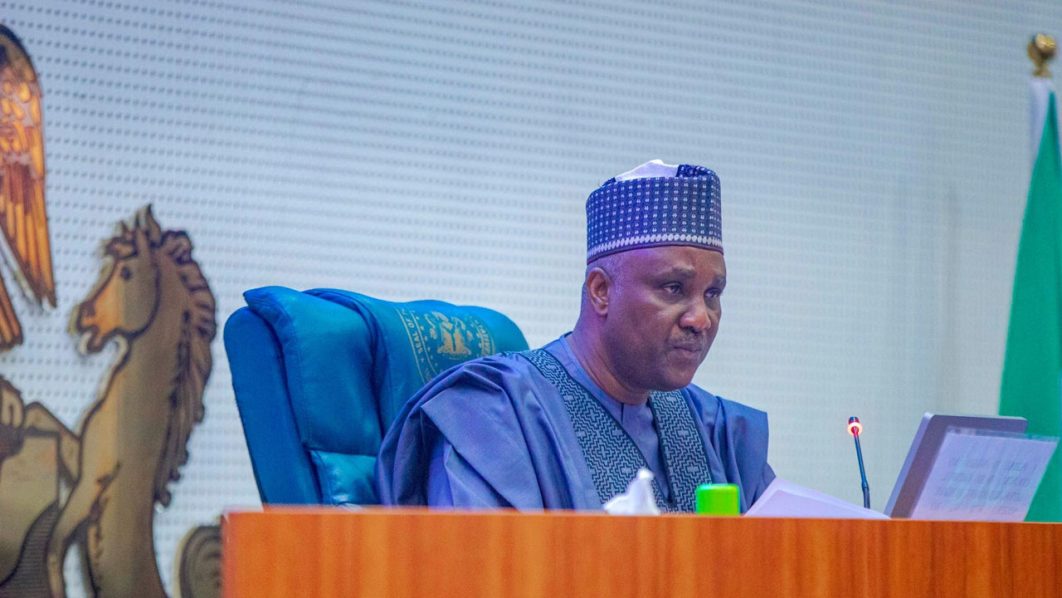
Speaker Tajudeen Abbas’ 10th House is a record in legislation and stability at 3years. But critics say it is toothless as executive requests sail through and oversight reports gather dust, writes JAMES KWEN.
President Bola Tinubu inaugurated the 10th House of Representatives with a proclamation letter on Tuesday, 13 June 2023. 353 out of 359 members present at the inauguration voted for the member representing Zaria federal constituency of Kaduna state, Hon. on that fateful day. Speaker, Abbas Tajudeen.
Also, the representative of the Bende federal constituency of Abia state, Hon. Benjamin Kalu, had emerged unopposed as Deputy Speaker of the 10th House.
Abbas, in his acceptance and inaugural speech, promised that the 10th House under his watch would continue and even surpass the gains of the 9th House.
He said the 10th House would bring reforms and innovations that would be beneficial to Nigerians. He said the Green Chamber will in a matter of weeks present its legislative agenda which will guide its operations.
As a result, the House later adopted a comprehensive Legislative Agenda with eight key priority areas, which include: the strengthening of good governance; improvement of national security; law reform; and economic growth and development.
Others include social sector reform and development, inclusion and open parliament, influencing/directing Nigeria’s foreign policy, and climate change and environmental sustainability.
According to its legislative agenda, the 10th House has received and processed some 1500 bills, 1000 motions and 300 petitions, some of which have been passed and even signed into law in the last three years.
Some of the important bills include: Electric Power Sector Reform Act (Amendment) Bill, 2023; Nigeria Hunters and Forest Security Service (Establishment) Bill, 2023; Federal Audit Service Bill, 2023; Control of Small Arms and Light Weapons Bill, 2023; Armed Forces Act (Amendment) Bill, 2023; National Assembly Library Trust Fund Act (Amendment) Bill, 2024 and Student Loans (Access to Higher Education) Act (Repeal and Enactment) Bill, 2024.
Others are: Mandatory Inclusion of Teachings on Breast and Cervical Cancers into the Curriculum of All Senior Secondary Schools in Nigeria Bill, 2023; Mandatory Inclusion of Preventive Measures and Teachings on Sexual Gender-Based Violence into the Curriculum of All Levels of Secondary Schools in Nigeria Bill, 2023; Revenue Mobilisation Allocation and Fiscal Commission Act (Repeal and Enactment) Bill, 2023 and National Anthem Bill, 2024.
Passed are Appropriations Bills(Budgets), 2024, 205 and 2026, four tax reform bills namely – Nigeria Tax; Nigeria Tax Administration; Nigeria Revenue Service and Joint Revenue Board of Nigeria (Establishment), Electoral Act(amendment) bill, 2026 and the State Police Bill, 2026. The other 43 prioritised Constitution alteration bills are awaiting voting and final passage.
The 10th House also introduced sectoral debates and briefings with heads of Ministries, Departments and Agencies (MDAs) to enable lawmakers engage with MDAs and get deeper understanding of the specific challenges facing each sector. So far, this had included service chiefs and heads of security agencies, Central Bank, Finance and National Planning, Agriculture and Food Security and Customs.
The 10th House also promotes a harmonious and professional relationship with the executive for the efficient functioning of governance, political stability, effective legislation and the overall health of Nigeria’s democratic system, fostering transparency, accountability and good governance practices.
The House also had the ‘House Open Weeks’ which, according to Speaker Abbas, the 10th Assembly adopted the ‘OPEN NASS’ Project, which improves not only oversight and law-making but also the transparency of the National Assembly itself.
Also, in a bid to enhance public involvement and improve the legislative process, the House convened a National Dialogue on State Policing and a national discourse on Nigeria’s security challenges and good governance at the local government level, and a workshop for its security-based committees on non-kinetic strategies to combat insecurity and terrorism in Nigeria.
Special plenary sessions were held in the House last year to deliberate on the state of national security, with a view to identifying the causes and effects and to proffer solutions to be conveyed to the executive through resolutions.
As part of the resolutions from the sessions, the House called for the establishment of a Special Court for terrorism, banditry and kidnapping; expansion of a Multi-Agency Anti-Kidnap Fusion Cell, as well as open, expeditious and transparent prosecutions of terrorism-related cases, among others.
House members also donated 50% of their monthly salaries of N600,000 for six months, totaling N704.98 million, and handed same to President Tinubu for disbursement to suffering poor Nigerians.
During the period under review, the House also conducted a series of probes. Some of the notable ones included: investigation into the rising insecurity in the Federal Capital Territory (FCT) despite the installation of a $460 million CCTV system financed through a Chinese loan; the status and whereabouts of funds recovered from the National Social Investment Programme Agency (NSIPA) estimated at over N30 billion from 2024-2025 and over $1.8 billion and $2.8 billion grants received by Nigeria from the Global Fund and the United States Agency for International Development (USAID) for the fight against HIV/AIDS, Tuberculosis and Malaria, and for strengthening health systems from 2021-2025.
Others were the investigation into the management of N12 trillion injected into Nigeria’s Development Finance Institutions (DFIs) in the past seven years; non-remittance of over N5 trillion operating surplus and N11 trillion government revenue by the Central Bank of Nigeria (CBN), implementation of the $696 million (N1.06trillion) Nigeria Community Action for Resilience and Economic Stimulus (NG-CARES) social intervention programme of the federal government.
The most undoing of the 10th House is the issue of endless probes, which is one area. Interestingly enough, the outcome is seldom known.
Interestingly, as the 10th Assembly commenced, the House opened cans of worms when it began to probe racketeering of jobs in MDAs.
During the probe, the commissioners of the Federal Character Commission (FCC) laid damning allegations against the chairman of the commission, Dr Muheeba Dankaka, who also threw the garbage at them.
“One of the commissioners said that,” she (Dankaka) Do collect 10% from all MDAs of all the employment she is signing. She takes that full 10%. Those are the slots her agents are selling.
Similarly, the House initiated an investigation into the importation of adulterated petroleum products, the non-availability of crude oil for domestic refineries and other critical energy security issues, but midway dissolved the ad hoc Joint Downstream and Midstream Committee saddled with the responsibility and reconstituted another committee.
It was disclosed that for the most part these inquiries by standing, ad hoc or special committees are pending.
There is also a perceived rubber-stamping posture of the House under Abbas, as it tends to speed up the granting of executive requests such as borrowing.
President Bola Tinubu’s request for a syndicated loan of $516.3 million to fund critical parts of the Sokoto–Badagry Superhighway project and $6 billion external borrowing request got the nod of the House this year.
Such approvals had been challenged by the entire National Assembly including the House of Representatives.
In one such instance, former Vice President, Atiku Abubakar, faulted the National Assembly for approving President Tinubu’s request to access two new foreign loans of $6 billion from the United Arab Emirates and the United Kingdom.
Atiku, in a statement by his Senior Special Assistant on Public Communication, Phrank Shaibu, said the development was a reflection of the fact that the National Assembly, which was supposed to be the voice of Nigerians, had been reduced to a rubber stamp for the presidency.
This posturing has resulted in most of the proposals or resolutions from the House of Representatives not always being considered by the executive while ministers and heads of MDAs shun invitations from the legislature, turning the institution, which is constitutionally empowered to hold them to account, into a toothless bulldog that barks without biting.
There are many instances when the House invokes and threatens to issue warrants of arrest against ministers and heads of parastatals, but they may not turn up and nothing happens.
Last year, the House of Representatives Committee on Nutrition and Food Security threatened to issue a bench warrant of arrest on the Managing Director of the Bank of Agriculture (BOA), Ayo Sontinrin and the Director General of the Agricultural Research Council of Nigeria (ARCN), Dr Abubakar Adamu Dabban for shunning its meetings. What will happen to such threats is uncertain.
Stakeholders have given their assessment of the 10th House under Abbas as it clocked three years on Saturday.
The Civil Society Legislative Advocacy Centre (CISLAC) said its assessment would be mixed, with some notable legislative and institutional reforms but concerned about accountability, oversight, independence, transparency and responsiveness to citizens’ concerns.
In an interview, the Executive Director, CISLAC/Head of Transparency International Nigeria, Auwal Ibrahim Musa-Rafsanjani, said the 10th House has come up with an ambitious Legislative Agenda, which focuses on constitutional reform, governance, security, economic growth, social development and institutional strengthening.
“The House has processed a large number of bills and motions including proposals for constitutional amendments, electoral reforms, deliberations on local government autonomy and economic legislation,” he added.
The House has shown more committee activity and involvement with civil society, professional bodies and development partners on policy matters than previous assemblies. There has been also an increase in public hearings on important issues of the nation.
“The House has given much focus to constitutional review, with many amendment bills being considered on issues like devolution of powers, local government autonomy, electoral reforms and institutional restructuring.
“The House has regularly debated insecurity, budget implementation, reduction of poverty and economic hardship. It has also held investigative hearings on various issues relating to the public sector,” he said.
Rafsanjani, however, said: “One of the major concerns is that the House has not always exercised sufficiently robust oversight over the Executive. At a time of harsh economic conditions, inflation, insecurity and mounting public debt, Nigerians looked to the legislature for tighter checks on government policies and spending.
“CISLAC would argue that the constitutional role of the National Assembly is not to support government policies but to give independent oversight and to ensure accountability,” he said.
Rafsanjani also lamented the impact of investigations, saying: “Several investigative hearings have generated public attention, but many recommendations have not been translated into sanctions, prosecutions, policy reforms, or the recovery of public resources. This erodes public confidence in parliamentary oversight.
“Transparency in constituency projects, budget insertions, committee expenditures and lawmaker’s allowances still remains an issue. More transparency is needed to reinforce the public’s trust in the institution.
However, despite the legislative activities, many Nigerians are still faced with worsening economic situation, insecurity, unemployment and declining living standards. Not all of these issues are directly within the control of the House, but citizens often judge parliament by its ability to influence policies that improve governance outcomes.
‘There is a developing sense in some quarters of civil society that the House has not consistently shown sufficient independence from the Executive on contentious national issues. An effective parliament must be prepared to hold government to account when it is in the public interest to do so.
“CISLAC would probably rate the performance of the Abbas-led House as moderately satisfactory but below the expectations associated with its ambitious legislative agenda,” he said.
“The House deserves credit for legislative productivity, for its efforts at constitutional reform, for its increased engagement of stakeholders and for its effective institutional stability. But it still needs to improve in terms of executive oversight, transparency and accountability, follow-through on investigations, protection of democratic principles and responsiveness to citizens’ welfare concerns,” Rafsanjani said.
As the House enters its final year before the 2027 elections, he advised that it should focus on stronger oversight of public expenditure and debt management, electoral and constitutional reforms that increase democratic accountability, and greater transparency in legislative operations and constituency projects.
Rafsanjani also called for tougher action on corruption, more accountability in the public sector and legislation focused on the needs of citizens in tackling poverty, insecurity and unemployment…
The executive director, CREAP Africa, Sylvanus Udoenoh, in the same vein, described the House under the Speakership of Abbas as a mixed bag of remarkable legislative activism, vigorous representation of constituencies and residual concerns about the efficacy of oversight and institutional independence.
Legislative output, measured by the volume of bills introduced and passed since 2023, has been high in the 10th House, one of the most productive in recent history by most measures, he said.
Various stages of consideration or enactment have been reached on many major bills relating to tax reforms, local government autonomy, electoral issues, student loans and constitutional amendments.
“The House has also shown that it is responsive to emerging national concerns through many motions on insecurity, economic hardship, flooding, education and social welfare,” he said.
But Udoenoh said the scorecard was less impressive mainly because one of the major concerns of the ordinary citizen is the effective implementation of these laws and policies, which the legislature has a major role to play, through oversight functions.
The House has held several investigative hearings and inquiries into issues of public concern including revenue leakages, implementation of subsidies, financial mismanagement by MDAs and the activities of regulatory agencies, but many Nigerians have not seen any tangible results from these exercises.
“A common criticism of the National Assembly at large and the House in particular is that high-profile investigations tend to make headlines but rarely result in publicly available reports, sanctions, recoveries or systemic reforms. Good oversight is not about the number of hearings held, but the quality of accountability outcomes delivered.
Yes, the House deserves credit for maintaining a relatively vibrant motion culture. Members have consistently tabled people-oriented motions on insecurity, youth unemployment, infrastructure deficits, education, healthcare and humanitarian crises. But the life of the 10th house has also been shaped by politics and drama.
From debates on constituency projects and allegations of budget padding, to controversies over the proposed increase in lawmakers’ allowances, the Tax Reform Bills, the State of Emergency in Rivers State and the wave of defections by opposition members to the ruling APC, the House has often had to strike a delicate balance between legislative independence and perceived alignment with the Executive.
On a number of contentious national issues, critics say, the House has not always exercised the scrutiny expected of a coequal arm of government. This is an important point, and I wish they’d mention it.
Speaker Abbas Tajudeen’s House has, on the whole, proved to be active and relatively stable, avoiding the leadership crises that plagued some past assemblies. “But history will judge the 10th House not just by the number of bills passed or motions adopted but by the extent to which it strengthened democratic accountability, defended institutional independence and improved the welfare of ordinary Nigerians.”
“As the House goes into its last year before the 2027 elections start to dominate the scene, there is an urgent need for lawmakers to concentrate on effective oversight, implementation of legislative decisions and resist the temptation to jettison governance for partisan politics and re-election campaigns,” he added.
But the deputy spokesperson of the House, Hon. Philip Agbese (LP, Benue) has been effusive in his defence of the House under Abbas, saying his leadership style has put the Green Chamber on the right track.
The 360 members of the legislative chamber are one under the leadership of its Speaker, Abbas,” Agbese said.
“The House is still united, working hard, even during recesses, to make Nigeria a great place for all citizens,” he said.
“From all indications, Abbas has exhibited the revolutionary spirit of a genuine Nigerian patriot. The speaker has done all to warrant the confidence of all the members,” Agbese said.
“Members’ confidence in Rt. Hon. “We are not negotiable and unbendable – Abbas Tajudeen. Mr Speaker has exhibited exceptional leadership qualities, fairness and deep respect for colleagues across party lines since he emerged.