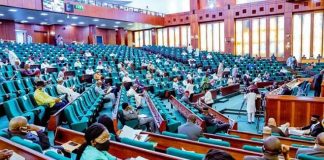
The AdvoKC Foundation, a youth-led civic-tech organization dedicated to promoting transparency, democratic governance and public participation in Nigeria, has urged President, Bola Tinubu, to assent, without further delay, to the Federal Audit Service Bill, which has now passed both chambers of the 10th National Assembly and awaiting presidential action for over seven months.
The Bill seeks to repeal the colonial Audit Ordinance of 1956, an instrument that, in reality, ceased to be part of Nigerian law by virtue of the Revised Edition (Laws of the Federation of Nigeria) Decree of 1990 and is not found in either the 1990 or 2004 Laws of the Federation. Instead, the Bill would establish a separate Federal Audit Service and Federal Audit Board, extend the powers of the Auditor-General for the Federation and for the first time bring real timelines and sanctions to a function that has hitherto relied on slow, largely administrative penalties.
“The Auditor-General can tell Nigerians where public money has gone missing, but has no reliable means of making anyone answer for it,” said Habib Sheidu, Project Director of AdvoKC Foundation. That’s the difference with a watchman and a cop. This Bill finally gives teeth to the office. Every month it is not signed is a month that the gap remains open.”
The call is coming on the back of the International Monetary Fund’s 2026 Article IV Consultation report on Nigeria which showed that capital spending equal to about two percent of the GDP, about N8.8 trillion, was carried out outside the formal budget in 2025 and did not appear in official budget documents or implementation reports. IMF executive directors concluded the consultation with concern about off-budget spending and complicated financing instruments, and urged accelerating reforms to strengthen the budget process, public financial management, fiscal reporting, and accountability. The timely passage of the budget and the phasing out of the practice of overlapping budgets would further strengthen budget implementation, the Fund’s staff report added, along with a call to resume the regular publication of audited government accounts.
Read Also: SERAP Gives NASS Ultimatum to Withdraw Controversial Social Media Bill
“The IMF report does not name this Bill but it doesn’t have to,” said Sheidu. “It describes, almost word for word, the very reform this Bill would deliver: a budget process that works on schedule, reconciled and published accounts as a matter of routine, and an audit institution with the independence to enforce that discipline. You cannot separate the mess of overlapping and re-enacted budgets from the absence of the audit law that would have caught the slippage before it required a repeal and re-enactment exercise to correct after the fact.”
The AdvoKC Foundation said this is not the first time the reform has come this close.
The Bill was first proposed in the 6th National Assembly (2007-2011) but did not scale through. The 7th National Assembly’s draft did not receive the two chambers’ concurrence. The Bill was passed by the 8th National Assembly and sent for assent in January 2019, but lapsed without assent, and no reason was ever communicated to the National Assembly. The new attempt by the 9th National Assembly could not complete the legislative process before the tenure of that Assembly expired in 2023.
Now before President Tinubu, the version introduced afresh in the 10th Assembly in October 2023 and to be passed by both chambers by December 2025, is therefore the fifth legislative attempt in almost two decades to give Nigeria a modern federal audit law, and only the second occasion on which it has reached a President’s desk.
The Foundation also relied on Section 58(4) of the Constitution of the Federal Republic of Nigeria, 1999 (as amended) which provides that the President shall within 30 days of the receipt of such Bill, assent to the Bill or communicate his reasons for withholding assent. The Bill is long overdue in now.
“Every week of silence is interpreted as ambivalence about the reforms this administration claims to be championing,” Sheidu added.
This Bill costs nothing to sign and buys a lot: it tells the IMF, the World Bank and international investors that Nigeria’s fiscal reforms are anchored on institutions, not just on pronouncements. And it tells Nigerians that a report from the Auditor-General will mean something at last.”
AdvoKC Foundation urges the President to grant his assent to the Bill now and with assent, to direct the constitution of the Federal Audit Board within 90 days, publication of a timeline for the appointment of the director general of the Federal Audit Service, and publication of a plain-language summary of the law. The Foundation said it will be tracking these milestones on its PromiseTracker.ng platform.