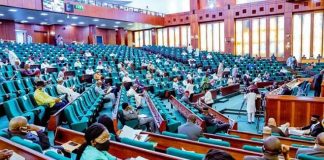
Arise TV on Thursday, July 9, 2026, had a Dialogue on building national consensus for state police and national security. Quickly done. Well done. It was a much needed literacy promotion on the principles of state/community/decentralized policing as distinct from the existing centralized National Police Force (NPF). The Arise Dialogue offered a good platform for reaffirmations and even some rethinking of positions by key state actors. Almost all of the panellists are state governors and legislators.
The outcomes of the Dialogue would complement the bold process initiated by President Bola Ahmed Tinubu, who on June 24, 2026, sent the landmark executive bill to transfer policing to the Concurrent Legislative List and set up a dual federal-state policing structure via the proposed State Police Bill (Constitution Alteration Bill). Key points on the platform include Safeguards Against Political Abuse, Technological Integration through smart security infrastructure and the Principles of Local Government Autonomy and Funding.
The Platform also revives the debate on improving our approaches to inevitable reforms. Inputs of all stakeholders are beneficial for gradual, inclusive and consensual reform dispositions leading to collective ownership and support. The ongoing police reform, just like the recently concluded tax reform, rightly, departs from the shock therapy policy that pre-empted Fuel Subsidy Removal and Foreign Exchange Unification.
However, as a participant-observer at the Dialogue, I am witness to an elitist top-down consensus building towards an emergent “Nigeria-security/state”. And why not? More than ever the legacy of insurgencies, robberies and banditry has captured the imagination of policy makers and citizens alike as to the quantity as well as the quality control of the national policing structure. The need to protect citizens from internal and external security threats cannot be over emphasized, with hundreds of abduction every year, many of the victims are school children and rural working community citizens, the recent being the rescued students and teachers of Oyo state after 56 days in captivity.
Not withstanding discordant views about the Constitution, everyone is at home with Section 14(2)(b) of the 1999 Constitution (as amended): that the “security and welfare of the people shall be the primary purpose of government”. And that is the whole point! The Arise Dialogue threw up a bagful of policy ideas, almost repetitively, on policing but almost nothing on the welfare and development component of Section 14(2)(b).
Read Also: Rhapsody Model School Celebrates 10 Years of Excellence, Rewards Teachers, Pioneer Graduates and Unveils Plans for Secondary School
Are we for a developmental state or a police state? “Nigeria is not a discussion club. The promise of independence in 1960 was to undo a century of British colonial underdevelopment. Security is a critical success factor for a developing Nigeria, but it is the means; the end is growth and development as a precondition for the eradication of poverty and crime. The founding fathers were clear about this. With the Union Jack down, they moved on to launch in earnest a series of Development Plans: the First (1962-1968), the Second (1970-1974), the Third (1975-1980) and Fourth (1981-1985). The Second, was revolution. It set out five core national goals, later enshrined in both the 1979 and 1999 Constitutions, for post-Civil War reconstruction and balanced rural-urban development: “A united, strong, and self-reliant nation. A great economy. Dynamic. A just society. A society of equals. A land of bright citizens with full opportunities. A democratic and free society.” These were mandatory mantras for undergraduates of Economics and the social sciences in the fast developing Nigeria of the 70s and 80s. The 1999 Constitution underscores security and welfare among the legacy inherited. Two Core Constitutional Provisions Count. First, all governments derive their powers from the people and the state has the primary duty of protecting the lives and property of its citizens and providing for their basic needs. Secondly, on Social and Economic Welfare, Chapter II requires the State to ensure adequate livelihood and employment, just and humane working conditions, adequate medical and health facilities and equal pay for equal work. Except for the fashionable buzzwords “kinetic and non-kinetic” from some panelists, almost all discussants were mute on the socio-economic factors of mass youth unemployment, poverty and new illiteracy that fuel criminality of varying hues. We need to name the factors that fuel insecurity, and show what we have done to tame them.
The Governor of Zamfara State, Dauda Lawal, said he has bought 500 vehicles for the police since he was sworn in on May 29, 2023. He’s certainly ready for state police, having spent so much already on the Federal police. But then security is all about vehicles for policemen who suffer wage income poverty and a pension crisis after service. Rural populations are far more likely to be recruited by criminal gangs due to high levels of poverty (over 70 percent), widespread illiteracy and a lack of economic opportunities for young people, not a lack of police vehicles. Veteran statesman-activist, BUKAR USMAN, was the star of the Dialogue, giving out 400 copies of his published “Case of Local Police”. Usman is strong on nostalgia for post-colonial ‘community policing at its best: simple, inexpensive yet effective’. But his case suffers the same limitation: security discourse without Development context. You cannot romanticise crime-free Northern Nigeria under Premier AHMADU BELLO (1954-1966) without the context of the development agenda he led: rapid modernisation through industrialisation, regional self-sufficiency and educational advancement. His education policy addressed mass illiteracy with secular and integrated Koranic schools. He established Ahmadu Bello University Zaria and Kaduna Polytechnic to produce indigenous professionals, and established the Northern Nigeria Development Commission and the Bank of the North to industrialize the region and empower local entrepreneurs. All this produced mass, decent, full employment that kept young people out of criminality. Security, whether local or regional, is a prerequisite for the development agenda. Let’s do it right.
The recent security challenges further underscore the importance of the Development Agenda. Insurgents and criminals can find sanctuary in ungoverned spaces, not only in factories. There is no question that Nigeria is under-policed. But more worrying is Nigeria’s economic under-performance, with growth rates lagging behind population growth, and increasing graft and land-grab rates. Hundreds of thousands of state and federal policemen cannot stem the tide of crime associated with unemployed and unemployable youth. Take the light arms out of the hands of children at play and put them to work on farms and in factories. Governor Dauda Lawal should bring back the cotton farms and Zamfara textile mills that gave direct and indirect employment to thousands of youths and kept them away from crime. “Zamfara has a comparative advantage in the cotton value chain, through farming, ginning, spinning, weaving and sewing, vital for boosting economic growth and creating jobs in agricultural regions.