The average cost of refilling a 5 kg cylinder of liquefied petroleum gas dropped from ₦8,243.79 in July to ₦6,404.02 in August 2025, according to the National Bureau of Statistics (NBS). However, retail prices have increased significantly in regions of Lagos and Ogun states.
Depending on the area, a kilogram of gas currently costs between ₦1,800 and ₦3,500, according to a market survey by The Guardian, which forces many homes to look for alternatives.
One customer said her experience at Ijeshatedo in Lagos was draining.
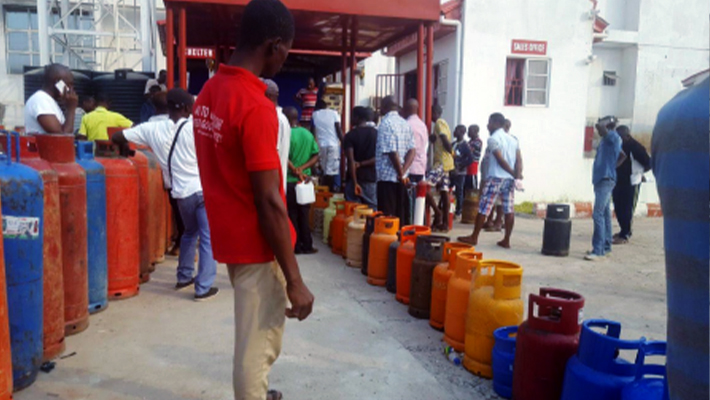
The price per kilogramme is between ₦3,000 and ₦3,500 at retailers and ₦2,500 at fueling stations. But there are hundreds of clients waiting, and the lines are intolerable,” she complained.
Before giving up, she remembered spending hours looking for petrol the day before. According to her, some residents are turning to electric or charcoal choices since the situation has gotten “unbearable.”
In difficult circumstances, inhabitants of Atan, Ogun State, reported spending between ₦2,000 and ₦2,500 per kilogramme, while residents of Igando reported paying between ₦1,800 and ₦2,000, depending on the area.
Marketers point to refinery maintenance and the strike.
Olatunbosun Oladapo, president of the Nigerian Association of Liquefied Petroleum Gas Marketers, told the Guardian that internal maintenance at the Dangote Refinery and the strike by the Petroleum and Natural Gas Senior Staff Association of Nigeria were the temporary causes of the price increase.
I can tell you with confidence right now that the majority of our LPG supply is made locally. Not much is imported. Actually, since local supply has grown considerably, importing today could result in losses, Oladapo stated.
He clarified that although the strike caused disruptions to vessel berthing at Lagos terminals, the South-South was protected from the shortage because the NLNG had supplied Port Harcourt in substantial quantities. When suppliers started loading on a large scale again, he promised, everything should quickly return to normal.
Despite increased gas output, Dr. Ayodele Oni, a partner at Bloomfield LP and an expert in energy law, criticized the ongoing shortages.
Since much of the output is still exported, he claims that increased upstream production does not always equate to increased domestic LPG supply.
According to him, “in March 2025, domestic gas sales increased by about 22% year over year to about 65,632 metric tonnes, but a large portion of the LPG is monetized through exports rather than being channeled into local bottling and retail.”