🌿 Ruzu Non-Alcoholic Herbal Bitters
Ruzu Non-Alcoholic Herbal Bitters is a natural health supplement specially formulated to:
- ✅ Promote general wellness
- ✅ Detoxify the body
- ✅ Support the treatment of various ailments
Made from a powerful blend of 100% organic and medicinal herbs, Ruzu is completely alcohol-free, making it ideal for:
- 👪 All age groups
- 🌱 Health-conscious individuals
- 🌿 Anyone seeking non-alcoholic herbal remedies
Whether you're looking to boost your vitality, cleanse your system, or support healing the natural way, Ruzu Bitters offers a trusted herbal solution.
Sunday Aborisade in Abuja, Michael Olugbode, and Chuks Okocha
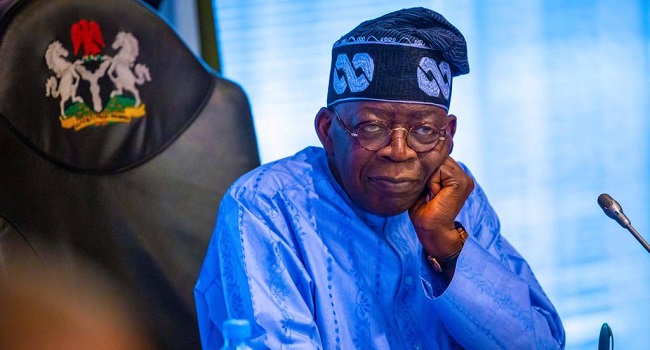
President Bola Tinubu’s prompt response to a distress call from President Patrice Tallon of the Republic of Benin, in a manner typical of Nigeria’s position on the continent, prevented rogue officers from attempting to take control of the nation in the early hours of yesterday.
In response to the request for assistance, Tinubu dispatched both air and ground forces from Nigeria, which assisted in securing the neighboring nation and mobilizing the coup plotters, opening the door for the devoted local military personnel to retake control and reinstate democracy.
The failed coup in the Republic of Benin was characterized by the federal administration as a direct attack on constitutional order, democracy, and the collective desire of the Beninese people, who had repeatedly shown their dedication to a peaceful political transition.
Unconstitutional changes of leadership, according to the government, were unacceptable and a step backward that jeopardized the subregion’s hard-won democratic victories and socioeconomic advancement.
The attempted military takeover of the Benin Republic was also denounced by the Economic Community of West African States (ECOWAS), which said that it was a subversion of popular will.
However, the Nigerian-based non-governmental organization (NGO) Campaign for Democracy (CD) cautioned ECOWAS that unless African leaders adopted true good governance that would enhance the lives of their people, its regular denunciation of coups would no longer be sufficient to prevent military takeovers.
Early on Sunday morning, a portion of the Benin Republic’s military made an attempt to remove Tallon. On Benin’s official television, the soldiers declared that they had removed Talon from office and disbanded all government agencies.
An attack on Talon’s official residence in Porto-Novo, the capital, marked the start of the coup attempt.
“Gunfire was reported at Camp Guezo,” which is close to Talon’s residence, the French Embassy stated on X, advising French nationals to stay inside for safety.
The troops, purportedly under the command of Lieutenant Colonel Pascal Tigri, appeared on television, made a statement, and declared that they had overthrown the president.
They had declared, “The army solemnly commits to giving the Beninese people the hope of a truly new era, where justice, work, and fraternity prevail.”
In order to protect the president from the threat posed by the dissident soldiers and reinstate democracy, the loyal military group later united around him with the assistance of Nigerian troops.
In response to two different requests from the Benin administration, Tinubu first gave the order for Nigerian Air Force fighter jets to enter the nation and assume control of the airspace in order to assist in removing the coup plotters from a military camp and the country’s TV station, where they had reassembled.
In a verbal request, the Ministry of Foreign Affairs of the Republic of Benin asked Nigeria for immediate air support “in view of the urgency and seriousness of the situation and to safeguard the constitutional order, protect national institutions, and ensure the security of the population.”
The Nigerian Air Force’s deployment within Beninese airspace for surveillance and quick intervention operations under Benin-led coordination was the second request made by the Beninese authorities.
Additionally, “strictly for missions approved by the Beninese Command authority in support of the protection of constitutional institutions and the containment of armed groups,” the Benin government asked Nigerian ground soldiers.
Nigerian ground forces are currently in Benin, according to General Olufemi Oluyede, Nigeria’s Chief of Defence Staff, who stated that all requests have been met.
Oluyede declared, “Ours is to obey the order of the Commander-in-Chief of our armed forces, President Tinubu.”
Tinubu praised the Nigerian military’s bravery in reacting quickly to the Benin Republic’s government’s plea to protect its 35-year-old democracy from coup plotters who attacked at first light.
According to a statement from his Special Advisor on Media and Strategy, Bayo Onanuga, Tinubu praised the Nigerian military for continuing to stand firm as defenders and guardians of democracy.
In the statement, he said, “On the government’s invitation, the Nigerian armed forces bravely stood today as a defender and protector of constitutional order in the Republic of Benin.” The ECOWAS Protocol on Democracy and Good Governance governed the actions of our armed forces.
Since 1999, they have made us proud of their dedication to upholding our democratic norms and ideals and have assisted in stabilizing a neighboring nation. Nigeria firmly supports the Republic of Benin’s government and populace.
“The Government of the Federal Republic of Nigeria has received with grave concern and unequivocally condemns in the strongest possible terms the attempted forcible seizure of power in our friendly neighbor and brotherly nation, the Republic of Benin, in the early hours of Sunday 7th December, 2025,” Kimiebi Ebienfa, the spokesperson for the Ministry of Foreign Affairs, said in a statement denouncing the development.
“Democracy, constitutional order, and the collective will of the Beninese people—who have repeatedly shown their dedication to peaceful political transitions—are all directly threatened by this act of destabilization.
“Nigeria expresses strong support for the government and people of the Republic of Benin and commends the prompt action taken by Beninese authorities to safeguard its lawful institutions and maintain peace.”
“We applaud the Beninese security forces’ bravery and expertise in protecting the constitutional order and ensuring the President’s safety. Their commitment made sure that the regrettable attempt to undermine democracy was firmly thwarted.
“Nigeria reaffirms its strong commitment to the principles of democracy, good governance, and the rule of law as fundamental pillars for peace, development, and regional stability,” the statement continued.
“Unconstitutional transitions of government are an unacceptable and retrogressive step that jeopardizes our subregion’s socioeconomic advancement and hard-won democratic victories.
“Nigeria calls on all member states and the international community to unite in denouncing this act and reaffirming our shared commitment to the African Union’s Charter on Democracy, Elections and Governance and the ECOWAS Protocol on Democracy and Good Governance, as a steadfast partner within the Economic Community of West African States (ECOWAS) and the African Union.”
“We urge all parties in the Republic of Benin to maintain composure, uphold the rule of law, and continue to channel any political discourse through peaceful, constitutional, and democratic means,” the ministry added.
“As we work together, as brothers and partners, to deepen democracy and ensure lasting peace and prosperity for our peoples and the entire West African region, the Federal Government of Nigeria assures the Government of the Republic of Benin of its full support and continued cooperation.”
ECOWAS: The Subversion of the Will of the People
The attempted military coup in the Benin Republic was denounced by ECOWAS, which described it as a betrayal of the people’s will.
The ECOWAS Commission has received allegations of an attempted military takeover in the Republic of Benin with concern, according to a statement sent by the ECOWAS office in Abuja.
“ECOWAS vehemently denounces this unconstitutional action that subverts the will of the Benin people.
“ECOWAS praises the government’s and the Republican Army’s efforts to bring the situation under control and demands that the Benin Constitution be fully respected.
“ECOWAS holds the plot’s leaders accountable for any loss of life and property resulting from their actions, both individually and collectively.
“ECOWAS will provide the government and people with all necessary support, including the deployment of the regional standby force, to protect Benin’s territorial integrity and constitution.”
In order to prevent law and order and protect constitutional democracy, ECOWAS also stationed a standby force in the Benin Republic.
In its second statement, ECOWAS emphasized the steps taken to prevent democracy in the Benin Republic.
In response to its previous statement on the Republic of Benin, the ECOWAS Commission hereby notifies the public that:
1. In accordance with the terms of the ECOWAS agreements, including Article 25(e) of the 1999 Protocol Concerning the Mechanism for Conflict Prevention, Management, Resolution, Peacekeeping, and Security
2. The Chair of the ECOWAS Authority of Heads of State and Government has ordered the immediate deployment of components of the ECOWAS Standby Force to the Republic of Benin following consultation among members of the Mediation and Security Council at the level of Heads of State and Government.
b. Troops from the Federal Republic of Nigeria, Republic of Sierra Leone, Republic of Cote d’Ivoire, and Republic of Ghana will comprise the Regional Force.
“c. The Force shall assist the Government and the Republican Army of Benin in maintaining the Republic of Benin’s territorial integrity and constitutional order.”
CD advises ECOWAS to “fix bad leadership or expect more military takeovers.”
The Campaign for Democracy (CD) cautioned that ECOWAS’s regular denunciations of coups might no longer be sufficient to prevent military takeovers, emphasizing that African leaders should instead adopt true good governance that would enhance the lives of their people.
In response to the failed coup attempt in the Republic of Benin early yesterday morning, the pro-democracy group claimed that rather than addressing the underlying causes of the growing demand for soldiers in politics, ECOWAS had reduced itself to a statement-issuing organization following each military incursion.
Pastor Ifeanyi Odili, the national president of CD, signed a statement outlining the organization’s stance in Abuja.
“ECOWAS would never serve the African people merely by denouncing coups,” the statement read. The wave of political instability sweeping the continent can only be stopped by strong regional policies that force governments to preserve justice, accountability, and transparency.
According to Odili, leaderships in West Africa have abandoned responsible administration, plunging their countries into economic misery, skyrocketing inflation, insecurity, and political uncertainty, which is directly responsible for the growing public frustration throughout the region.
Any democracy that continuously causes misery for its people, in his opinion, “is destined to collapse, either through revolution or a military intervention.”
He emphasized that only when governments have real public support can democracy continue to exist.
“African politicians cannot continue to lead the continent into hardship and expect the populace to remain passive,” Odili declared. When governance fails, the people will constantly look for alternatives.
According to CD, the recent trend in a number of African nations, where a growing percentage of individuals publicly favored military control over what they called a dysfunctional version of democracy, should worry ECOWAS and force it to reconsider how it approaches the region’s governance issues.
The group called on the regional bloc to adopt a zero-tolerance stance against corruption and incompetent leadership among political office holders and presidents, going beyond simple condemnations.
It stated that if ECOWAS wanted to maintain democracy on the continent, it needed to start demanding moral leadership, the fulfillment of electoral pledges, and stringent accountability from member states.
Opposition against coups is insufficient. Leaders must govern with justice, fairness, and integrity, according to ECOWAS. Otherwise, coups—successful or unsuccessful—will persist, according to Odili.
He added that democracy can only last when people perceive real advantages from the system they are expected to protect, and that only effective governance could shield Africa from frequent upheavals of constitutional order.
Atiku Says It’s Concerning
The Benin Republic’s attempted coup d’état was denounced by former vice president Atiku Abubakar, who called the development—particularly the frequency of incidents—concerning.
“I condemn, without reservation and in the strongest possible terms, the coup d’état in the Benin Republic,” Atiku declared in a statement released last night.
“This heedless tendency of attacking constitutional order is completely intolerable, not only due to its perilous proximity, but also because the period of military meddling in governance in Africa and our subregion has long since ended.
The fact that these coups are taking place during election seasons in the impacted nations is alarming.
“The alleged military takeover in Guinea-Bissau occurred on the eve of the anticipated announcement of the results of that country’s poll, while the presidential election in Benin is scheduled for April 2026.”
“It raises fears that some political operators may be using the military to cancel the democratic processes,” Atiku stated.
“This trend needs to be stopped before it becomes the norm rather than the exception since it poses a threat to the West African subregion’s democracy.
“Every decisive action must be taken to crush any emerging appetite for subverting democracy, and soldiers have no business going anywhere outside their barracks.”