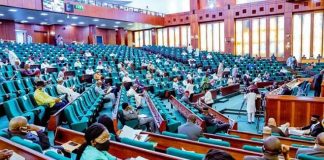
Election petition tribunals play a strategic role in Nigeria’s democratic process as they adjudicate disputes which may determine the political fate of elected officials and in some instances, reconfigure the entire trajectory of governance in a state or at the federal level. Members are appointed by the President of the Court of Appeal, mainly from serving judges of the High Courts, Sharia Courts of Appeal and Customary Courts of Appeal under Section 285(2) of the 1999 Constitution as amended.
The judiciary insists that these appointments are based on integrity, competence and consultation with state Chief Judges and other judicial stakeholders. But, away from the public contest of politicians jostling for votes, a quieter contest is said to unfold inside the judiciary itself, one allegedly involving lobbying, networking and in some accounts outright inducements, all aimed at securing a tribunal seat before the campaign season reaches its height.
The attraction of such a seat is not difficult to see. Tribunal assignments bring with them significant public visibility and access to sitting allowances and logistics support that can amount to substantial sums over the months-long lifespan of a tribunal. That is a significant draw in a judiciary that is still struggling with chronic funding gaps, irregular emoluments and infrastructure deficits that have long eroded both judicial welfare and public trust. That perception, true or not in the experience of every officer, is enough to make lobbying a rational strategy for those seeking appointment.
With Nigeria inching towards the 2027 general elections, a cycle that will generate its own wave of tribunal litigation, the question is worth serious consideration: is lobbying for tribunal seats a documented reality, or mainly speculation dressed up as common knowledge?
The National Judicial Council’s Guidelines and Procedural Rules are clear on this. Any candidate who canvassed or lobbied directly or by intermediaries, including politicians, traditional rulers or other judicial officers, for judicial appointment, is disqualified from consideration. The same ban applies to judges already serving and seeking advancement within the system.
Former Chief Justice of Nigeria, Aloma Mukhtar has described lobbying for judicial appointment as a culture that undermines the status of the judiciary. This concern is reflected in the rules governing tribunal constitution, where the Chief Justice of Nigeria, acting through the NJC and the President of the Court of Appeal, have wide discretion as to who sits on these panels.
Critics say such a concentration of decision-making in a few hands creates a clear structural vulnerability: When one office controls access to assignments of high value, the incentive to cultivate closeness to that office is natural, and almost inevitable.
A UNODC working paper on judicial selection in Nigeria reached a similar conclusion, noting that many respondents in its research voiced concerns about the outsized role of the Chief Justice of Nigeria in the process, leaving the system vulnerable to informal pressures that formal rules cannot easily measure or mitigate by limiting institutional checks and balances.
The assertion that lobbying happens is not just anecdotal. It is supported by several documented sources, either directly or by clear implication, and the weight of that evidence has steadily grown across multiple election cycles.
Professor Attahiru Jega, who headed Nigeria’s election commission during the 2011 and 2015 elections, has said publicly that some judges have become notorious for what he termed “cash and carry” judgements, particularly in election-related matters. That charge has real weight coming from someone who has been on the inside during two election cycles and seen firsthand how the outcomes of tribunals can diverge from both evidence and legal reasoning in ways that raise awkward questions.
In 2019, former EFCC Acting Chairman Ibrahim Magu gave one of the clearest public confirmations, noting that judges and lawyers were canvassing for tribunal assignments because of the financial benefits attached to them, and warning against tribunals becoming conduits for siphoning public funds. The fact that the warning had come from the country’s top anti-corruption official at the time lent it institutional weight, confirming that the allegations were taken seriously inside government, even if it didn’t lead to prosecutions that produced convictions.
And the historical record offers still more concrete evidence. In 2016, the Department of State Services raided judges’ homes countrywide and recovered huge sums of cash in situations that shocked the legal community and briefly brought the question of electoral litigation and judicial corruption to national attention.