The Socio-Economic Rights and Accountability Project (SERAP) has urged the leadership of the National Assembly to reveal all records of the allocation of over ₦1.3 billion to the alleged Presidential Foreign Intervention Promotion Council (PFIPC)/Presidential Economic Advisory Council in the 2026 Appropriation Act.
The organisation also called on the National Assembly to initiate an immediate investigation into the contentious budgetary provision following the Presidency’s announcement that the council does not exist.
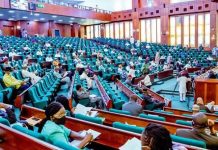
In a Freedom of Information (FoI) request dated July 4, 2026 and signed by its Deputy Director, Kolawole Oluwadare, SERAP asked Senate President Godswill Akpabio and Speaker of the House of Representatives, Tajudeen Abbas, to release certified copies of all documents relating to the consideration and approval of the ₦1,302,978,784 allocation.
The rights group also called for the release of documents identifying members of the National Assembly committees that considered the allocation and the names and official titles of government officials who appeared before the committees to defend the budget proposal.
SERAP also asked for clarification on whether the allocation was part of the Executive’s original Appropriation Bill or was inserted during the legislative budget process.
It demanded that the National Assembly reveal whether any member of parliament had questioned the legal status, establishment or operational mandate of the Presidential Foreign Intervention Promotion Council during deliberations and what actions had been taken in response.
The organisation said the Presidency’s public denial of the existence of the council has sparked serious concerns over the integrity of Nigeria’s appropriation process and the effectiveness of legislative oversight.
“These contradictory accounts are a serious concern for Nigeria’s appropriations process, legislative oversight, public financial management and accountability” SERAP said.
The organisation argued that the National Assembly has a constitutional duty not only to approve budget proposals presented by the Executive but also to scrutinize and verify all appropriations thoroughly before authorizing public expenditure.
“No one has a more sacred obligation to obey the law than those who make the law. “The National Assembly should monitor the activities of the Executive and check the Presidency and agencies of government including in the appropriation process before and during by thoroughly examining Executive budget proposals,” the group said.
SERAP maintained that Nigerians have a constitutional right to know if public funds were allocated to an entity not lawfully established and if so how such allocation was approved.
The organisation said that the requested documents would help citizens assess whether the National Assembly discharged its constitutional duties under Sections 80, 81, 88 and 89 of the 1999 Constitution in scrutinising and approving the 2026 budget.
Failure to comply with the request within seven days would leave it with no option but to institute legal proceedings against the National Assembly in the public interest, it warned.
We would appreciate the recommended measures to be taken within 7 days of receipt and/or publication of this letter. “If we do not hear from you by then, SERAP will take all appropriate legal actions to compel you and the National Assembly to comply with our request,” the organisation stated.
SERAP argued that the public release of the documents would strengthen confidence in the National Assembly, improve transparency in the management of public funds and enhance citizens’ ability to hold public institutions accountable.
It also cited Nigeria’s Freedom of Information Act, the 1999 Constitution, the African Charter on Human and Peoples’ Rights, the International Covenant on Civil and Political Rights, and the internationally recognised Tshwane Principles on National Security and the Right to Information as legal frameworks backing its demand for disclosure.
The records sought concern issues of exceptional public importance because they relate directly to the integrity of Nigeria’s budget process, the lawful establishment and funding of public institutions, and the proper use of public resources, SERAP said.
The call comes after the Presidency issued a statement on July 1, 2026, denying the existence of the Presidential Foreign Intervention Promotion Council (PFIPC)/Presidential Economic Advisory Council, even though it was reported to have been allocated over ₦1.3 billion in the 2026 Appropriation Act.