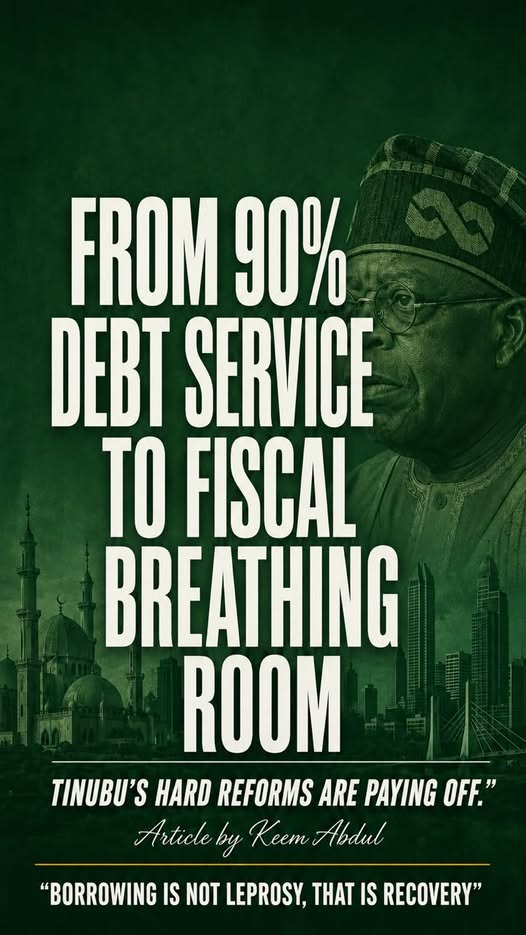
In 2023, Nigeria was spending 90% of its revenue on debt servicing. Today the budget is triple and debt to revenue ratio is down. That’s not Leprosy. Well, that’s recovery.
When President Bola Ahmed Tinubu said “borrowing is not leprosy”, he wasn’t telling Nigerians to celebrate debt. He was asking them to consider context. The headlines for the last two years have been about one number ₦65.9 trillion borrowed. Social media has focused in on anger as the one emotion. What’s missing is the math from 2023 to 2026 – and the math tells a different story.
Loud Backlash. The Balance Sheet Tells More
The backlash has been ferocious, as you would expect. Daily Times Nigeria quoted Tinubu in a headline defending borrowing “if used productively and responsibly”. Critics hit back with charts showing Nigeria’s debt in 2 years outpacing the last 55 years. Nigerians flooded the World Bank’s Instagram page with comments like “Stop giving Tinubu more loans,” forcing the bank to lock comments on the page.
And Nigerians are right to be tired Debt is now a national trauma. But trauma is a poor economist. In order to know if we are sicker or healing we have to start a comparative analysis, define what we are talking about and establish the context.
The Company Nigeria What Tinubu inherited
“You don’t measure a new CEO by the size of the loan. You judge him by the friends he kept.”
In 2023, the Tinubu administration inherited a ₦11 trillion budget deficit. The plan was to spend N11 trillion more than it expected to earn. Nigeria’s debt-to-revenue ratio was about 65% at the time. It got worse after real term estimates for Q1. At one point we were literally using 90% of all government revenue just to pay interest on debt.
It’s getting dark. The last administration had pre taken money for future crude supplies so we could pay for consumption. Imagine taking over a company with current and future earnings that can’t possibly support proposed spending, yet you still have to spend to keep the lights on.
“If you are not growing your revenue base you are going to have to borrow more money to survive.” Both were picked by the Tinubu administration.
Three Reforms That Changed Math
Between 2023 and today, three structural choices changed Nigeria’s fiscal base:
Subsidy cancellation
Economically unavoidable. Politically toxic. The fuel subsidy was debt in another guise, we borrowed to consume, not to build.
FX Unification
The massive devaluation of Naira was caused by the merging of the parallel market and CBN rate. It also killed the arbitrage racket which used to siphon billions of dollars from the treasury every year.
Lower Cost of Borrowing
In Nigeria, interest rates on foreign loans have gone down from double digit to single digit. That’s like refinancing a mortgage from 18% to 8%. You still owe. But the bleeding starts to stop.
The result: Nigeria’s 2026 budget is almost three times the size of its 2023 budget, with projected revenue skyrocketing exponentially.
The Problem: We Still Have a Hole
“Once the budget was passed, the deficit was accepted. “Pretending that borrowing is a surprise is ignoring basic arithmetic.”
And like the CEO, every time there’s a deficit, the government has two choices: raise revenues via taxation or increase business output; or borrow. I’m a fan of cutting spending myself. But you don’t run a country while you cut your way out of a ₦11 trillion hole.
The decision to borrow was not made yesterday. The moment the budget passed and the deficit was accepted, it was done.
Three Indicators of Fiscal Space
Why is Tinubu so confident? The “leprosy” comment is based on three measurable changes since 2023:
Debt to Revenue Ratio Is Down
Actually, the budget has gone up threefold, but the debt-to-revenue ratio has gone down. We are spending a lower proportion of every naira we earn on debt service than we did at the height of the crisis. In 2023, debt service took up 90% of revenue. There’s room to fund capital projects now.
Investor panic is receding
Investors are less concerned about our debt exposure when buying Nigeria’s bonds. Eurobond yields have fallen. Market-wise, it’s a vote of confidence. Money flows with risk. When yields go down, it means the world thinks you are less likely to default.
Debt in Dollars Did Indeed Fall
Nigeria has not defaulted on its sovereign debt. In fact, total debt in USD has actually come down from USD 108 billion in 2023 to USD 90-95 billion now. The sharp rise in debt in naira terms partly reflects devaluation, which pushed up the naira value of existing external debt even without new borrowing.
So, Does Nigeria Have a Debt Problem?
“So not leprosy, but not complete either.”
Yes. And no. Nigeria is no longer operating in the same fiscal environment as it was at the height of its revenue crisis. Revenue is better in nominal terms and the government has more fiscal space than when debt obligations were eating almost everything coming in.
But the country is still heavily reliant on borrowing. Inflation is still high. The naira is still weak. In the end, how long the debt remains sustainable will depend on whether revenues can continue to grow faster than obligations.
If revenues stay flat or borrowed money is frittered away, Nigeria could easily find itself back in the same fiscal stress that marked the years before 2023. But as long as they grow and as long as this administration does well with revenue, we will be fine.
The Tinubu Doctrine: Borrow to Transform Not Consume
This is the heart of the administration’s PR case. Under Buhari, subsidies and FX distortions were debt financed. We borrowed to spend. Under Tinubu, debt is driving a move away from that model.
The strategy is built on three pillars:
Cheaper Money: The move to single-digit foreign loan rates reduces the life cost of debt. That’s more important than the headline borrowing number.
Revenue First: Removing subsidies, unifying FX and tax reforms are to broaden the base so that today’s loans do not become tomorrow’s crisis.
Transparency: The budget announced the deficit. Nigerians may dislike the borrowing. But they cannot deny it was hidden.
What Nigerians Need to Watch Next
“The real PR victory is not taking Twitter. That’s when debt service is no longer 90% of the story, and growth writes the next chapter.”
If this strategy is successful, three indicators will confirm it in 24 months:
Debt Service-to-Revenue Below 40%: Permanent exit from the 90% trap means cash for schools, roads and power.
FX Stability: The first step was to unify. Step two: Reserves and inflows. The best sign that reforms are working is a stable naira.
Debt-Funded Assets: Borrowing needs to be visible in rail, power, digital infrastructure and agriculture — projects that pay for themselves.
We’re not there yet. Inflation is biting. The naira is fragile. But the vital signs are good: less dollar debt, cheaper credit and a budget that tripled without a debt spiral.
Conclusion: ICU to the Recovery Ward
Nigeria was in fiscal ICU in 2023. Debt service consumed 90% of revenues. Sold forward crude. Subsidies were a bleeding sore. Painful surgery: Tinubu administration chose to end subsidies, unify FX, borrow cheaper to fund transition.
The patient is breathing, but the patient is not dancing. The debt-to-revenue ratio has come down. The dollar is less tied. Investors are less twitchy.
Nigeria is not complete. But it is not leprous A country that can ramp up its budget three times, reduce its USD debt and borrow at single digit rates has options.
This breathing room may translate into a full recovery, but only the next 18 months will tell. For the moment, the data confirms what the President said: borrowing is not a disease. When the underlying disease was 90% debt service, the real cure was fiscal space. And that space is finally opening up.