
If professors’ pay are not fully implemented in accordance with the 2025 agreement by the end of March, the Academic Staff Union of Universities (ASUU) has threatened to take action.
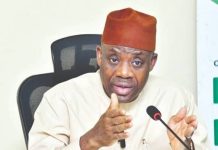
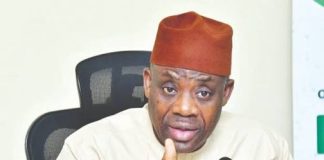
In an interview with TheCable, ASUU President Prof. Christopher Piwuna issued the warning, stating that the union anticipates receiving full payment of wages, including all agreed-upon allowances, before the end of the month.
Piwuna explained that, contrary to popular belief, the union did not issue a four-day ultimatum.
He claims that ASUU just cited the remaining days of March as a fair time frame for the government to abide by the terms of the agreement.
He pointed out that before taking any industrial action, the union follows established protocols.
The president of ASUU clarified that while certain salary modifications had been reported by academics since January, the agreement’s implementation was still ongoing.
He claimed that payments made to federal universities had not yet properly reflected a number of the agreement’s provisions.
He claims that the disparities disproportionately impact visiting and sabbatical professors, many of whom are underpaid because of host institutions’ financial limitations.
Piwuna further revealed that important components that were supposed to be included in salary, including Earned Academic Allowances, had not been paid in full.
The union is demanding strict adherence to the December 2025 deal with the Federal Government.
The agreement includes better welfare benefits for academic workers, an improved compensation structure, and a 40% rise in allowances.
Piwuna also attributed the financial difficulties facing universities to the national budget’s delayed passage.
In advance of the federal elections in 2027, he charged that the government was focusing more on political activity.
“We are sick of waiting. The full implementation of the 2025 agreement is in our own best interests,” he declared.
The head of ASUU stated that in addition to pay, the deal includes provisions for the creation of a National Research Council, better benchmarks for education spending, and a N30 billion stabilization fund that will be distributed over a three-year period to solve university funding shortages.
He bemoaned the slow progress made on these agreements, though.
He claims that there isn’t much evidence that the government is taking decisive action to achieve predetermined goals, such as gradually raising education spending to 25% of the national budget.
Piwuna cautioned that if the government does not completely carry out the deal, ASUU will not think twice about taking action.
“The union will respond in accordance with its established procedures if the government fails to ensure full payment of salaries and implementation of the agreement by the end of March,” he stated.