The Anticipatory Action Trust Fund, under the National Economic Council (NEC) has approved the release of ₦83.2 billion to address the perennial challenge of flooding in the country.
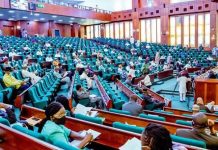
The approval was said to have been given Thursday, June 18, 2026, at the NEC meeting chaired by Vice President Kashim Shettima at the Council Chamber of the State House, Abuja.
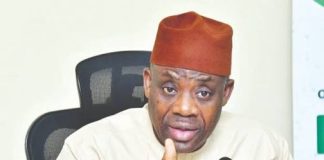
Cross River State Governor Bassey Otu, speaking with State House correspondents after the meeting, said the trust fund was initially proposed at over N166 billion.
However, he said the council approved ₦83.2bn for the intervention.
The Anticipatory Action Trust Fund is expected to fund proactive responses to flooding including early warning systems, emergency preparedness and other flood mitigation projects.
The council noted the relevance of the fund to address disasters and emergencies across the country.
It also emphasized that the NEC should no longer be treated as an institution that merely reacts after disasters occurred, but should take proactive measures to mitigate their impact.
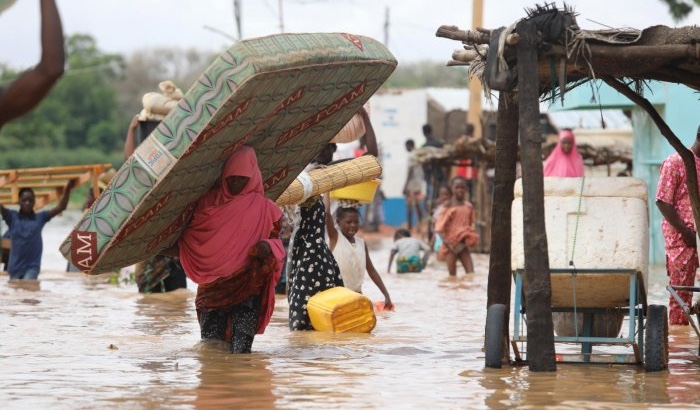
This approval comes after several instances of seasonal flooding recorded in many states which have often led to the displacement of residents, destruction of farmlands and damage to public infrastructure.
Shettima who spoke at the meeting said the reform agenda of President Bola Tinubu’s administration must now bring visible results across the federation.
The Vice President said the work of the council should be measured by the impact it makes on the lives of ordinary Nigerians, especially farmers, manufacturers, vulnerable citizens, unemployed youth and children that will inherit the country.
“When this Council last met I referred to our economy as a workshop,” he said. A place of measuring and correction. A place where plans are turned into systems and systems into institutions before any of it becomes prosperity.
“A workshop is known by one thing. Not by the plans on its walls but what comes off the bench. We are back to that bench today. Not to admire the image, but to pose the question that does it honour. “Is it coming together?”
According to Shettima, Nigeria remained a federation moving from stabilisation to production. He stated this in a statement by the Senior Special Assistant to the President on Media and Communications, Stanley Nkwocha.
He also said that the country is moving from aspiration to implementation, and from isolated interventions to coordinated national growth.
He said the agenda before the council was not a new conversation but a continuation of a national assignment that now needed more pressure for action and results.
“The assignment remains the same. We are still a federation in transition from stabilisation to production, from aspiration to implementation, from isolated interventions to coordinated national growth. “I hope what has changed is our proximity to delivery,” Shettima said.
“A federation does not achieve its prosperity by abandoning its most vulnerable to lag behind. “The least citizen’s dignity will be the minimum below which we shall not allow any Nigerian to fall.
The social protection agenda before the NEC is an opportunity to translate the national conscience into a durable system that protects citizens and strengthens human capital, the Vice President said.
He said the government must make sure that vulnerable Nigerians were not left behind as reforms continue in different sectors.
“The council must stress on pragmatic results that affect lives, create opportunities and strengthen the foundation for national development,” Shettima said.
Shettima said Nigeria must stop exporting raw materials and importing finished goods from other countries on exports and production.
Its economic transformation would depend on building a complete value chain from farms to factories, from factories to standards, from standards to ports and from ports to markets, he said.
“We can’t go on exporting raw materials and importing finished products,” he said.
The Vice President assured that the NEC would address the bottlenecks that hinder Nigeria’s agricultural exports, especially the difficulties in the movement of goods through the ports and the standards required by international markets.
Shettima said that rewarding farmers, strengthening manufacturers and expanding Nigeria’s participation in global trade hinged on improving port processes and meeting export compliance requirements.
Farmers and producers can only realize full value for their work when goods are moving efficiently and to global market standards, he said.
“A nation that can’t move its goods has imprisoned its own farmers. Meeting international standards is not bowing to foreign demand. “Our labour will be rewarded by the price of the markets,” Shettima added.
The meeting also reaffirmed the council’s emphasis on coordinated national growth, emergency preparedness, social protection and reforms to boost production across the country.