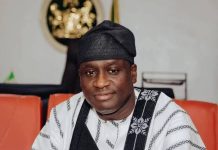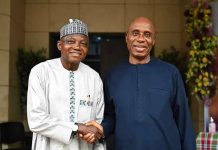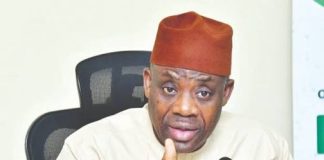
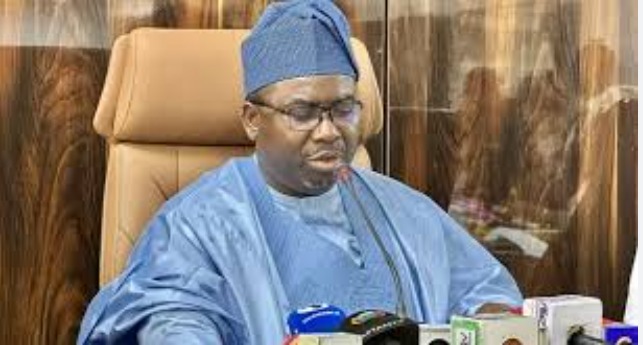
There have been a lot of problems with the way Professor Joash Amupitan, the Chairman of the Independent National Electoral Commission, has acted. The most recent one is an accusation of bias, which has made people worry about the commission’s neutrality as the 2027 general election gets closer, Davidson Iriekpen writes.
Professor Joash Amupitan, the Chairman of the Independent National Electoral Commission (INEC), has been in the news a lot in the last seven weeks. People are suspicious of all of his actions and inactions, whether it’s fixing the 2027 election during Ramadan, pushing to revalidate permanent voter cards that many thought could disenfranchise millions, or getting involved in the African Democratic Congress’s (ADC) internal crisis.
Before all of this, his problems began last year right after he was appointed. This was when the United States declared Nigeria a Country of Particular Concern (CPC) because of genocide against Christians. His legal brief, published in 2020 and titled “Nigeria’s Silent Slaughter: Genocide in Nigeria – The Implications for the International Community,” claimed that attacks by Boko Haram and Fulani herdsmen were genocide against Christians and other minority groups in Nigeria.
This quickly led to a lot of calls from Muslim groups in the country for President Bola Tinubu to withdraw his nomination and for the National Assembly to reject his confirmation because they said he was biased.
Then, there were false claims that he worked on the legal team for President Tinubu or the All Progressives Party (APC), but these were proven false.
There is a new accusation against him that he was involved in pro-APC activity during the 2023 general election. This raises new questions about the commission’s neutrality before the 2027 general election.
The controversy, which started on April 10, 2026, was about claims that an X account that was supposedly linked to him posted partisan content in support of the APC during the 2023 general election.
The report said that open-source intelligence (OSINT) found a Yahoo email address and a phone number that matched the one on Amupitan’s public University of Jos CV. This email address and phone number were linked to an X (formerly Twitter) account that posted “Victory is sure” in response to a tweet from Dayo Israel, who was then the APC National Youth Leader, on March 18, 2023.
Israel’s post was about how the APC had won a polling unit in an area where Igbo people lived during the 2023 elections. It was claimed that Amupitan’s response was clear proof of partisan alignment, even though the INEC Chairman has repeatedly said he is not political.
Screenshots of the conversation have been shared widely, and there are signs that the account was later renamed or made private, which has led to even more scrutiny of the supposed digital trail.
But as soon as the accusation came out, INEC flatly denied it, calling it “entirely baseless, a total fabrication, and a figment of the imagination of its purveyors.”
The commission said that Prof. Amupitan does not own or run any accounts on X and has always been non-partisan in his work. It also called the claims part of a “malicious and coordinated campaign of calumny” meant to lower people’s trust in the electoral body.
The electoral umpire also said that cybercriminals often make fake accounts in the names of public officials. It is working with security agencies to find out who is behind these accounts.
Even though he denied it, the discovery of his supposed personal email and phone number links to his OPay account has made the situation much worse, with opposition figures calling for his resignation.
Some people have also said that he wasn’t the chairman of INEC when he allegedly tweeted, while others thought that the tweet showed that he was biased.
The African Democratic Congress (ADC), on the other hand, called for his immediate resignation because they thought he was biased. They said that the claim that he was linked to a pro-Tinubu tweet was not only upsetting, but also a serious attack on the integrity of the electoral system.
Bolaji Abdullahi, the party’s National Publicity Secretary, said, “In a democracy, the umpire must not be suspected. He has to be independent and people have to be able to see that he is independent, without a doubt. That is the least that anyone who has been given the sacred duty of holding free and fair elections should be able to do.
“However, what is even more concerning is the desperate attempt to change digital records to hide proof of his past bias. This is not a small thing. It is a planned attack on truth and responsibility. You can’t trust a man who changes records to protect the rights of millions.
Adewole Adebayo, the Social Democratic Party’s (SDP) candidate for president in 2023, has a different opinion, though. He said that even if it could be proven that the account belonged to Amupitan, the law would not automatically disqualify him from holding office.
“You can’t be a member of any political party when you are appointed,” is the requirement. It doesn’t mean you couldn’t have been a member before or that you didn’t vote. He said, “Someone who voted in 2023 can still be INEC chairman in 2025.”
If the account is proven to belong to the INEC chair, Adebayo said that integrity would be very important.
But technology expert Gbenga Sesan questioned INEC’s outright denial that the chairman ever had an X account and called for more investigation. He said that digital archiving tools were proof that an account with Amupitan’s name on it used to exist.
The tech expert also said that you usually need a registered email address or phone number to make a social media account. This suggests that these links could help prove ownership. He said that INEC’s response was not helpful and that it was not helpful.
You can’t open an account with someone’s email or phone number unless you can see the verification messages that are sent to them. INEC’s denial doesn’t hold up, and that’s too bad. Sesan said, “When institutions quickly dismiss problems, they often get more public attention.”
Comrade IG Wala, a lawyer, said that publicly denying ownership of certain digital assets could make him liable for crimes like perjury and abuse of state power.
The author said that public space had already found connections between the account in question and Amupitan’s personal email, phone number, and OPay account.
Wala also said that banks like OPay have to follow strict Know Your Customer (KYC) rules.
He says that if a subpoena is issued, showing the BVN and NIN used to verify the account would be proof of ownership that can’t be disputed.
He then warned against the strategy of denial, along with reported threats to arrest people who draw attention to supposed digital links. This could turn the situation from a reputational issue into a full-blown criminal case.
Amupitan should remember that the office of the INEC Chairman is not just a public office; it is an important part of a democracy. In Nigeria, this is even more true because elections are always full of scandals and claims of rigging. People he was supposed to serve will continue to look closely at his past and present records, and that’s not strange.
He should see all the calls for his resignation from different groups, like opposition parties and civil society, as nothing more than a demand for him to be held accountable.