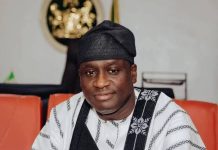
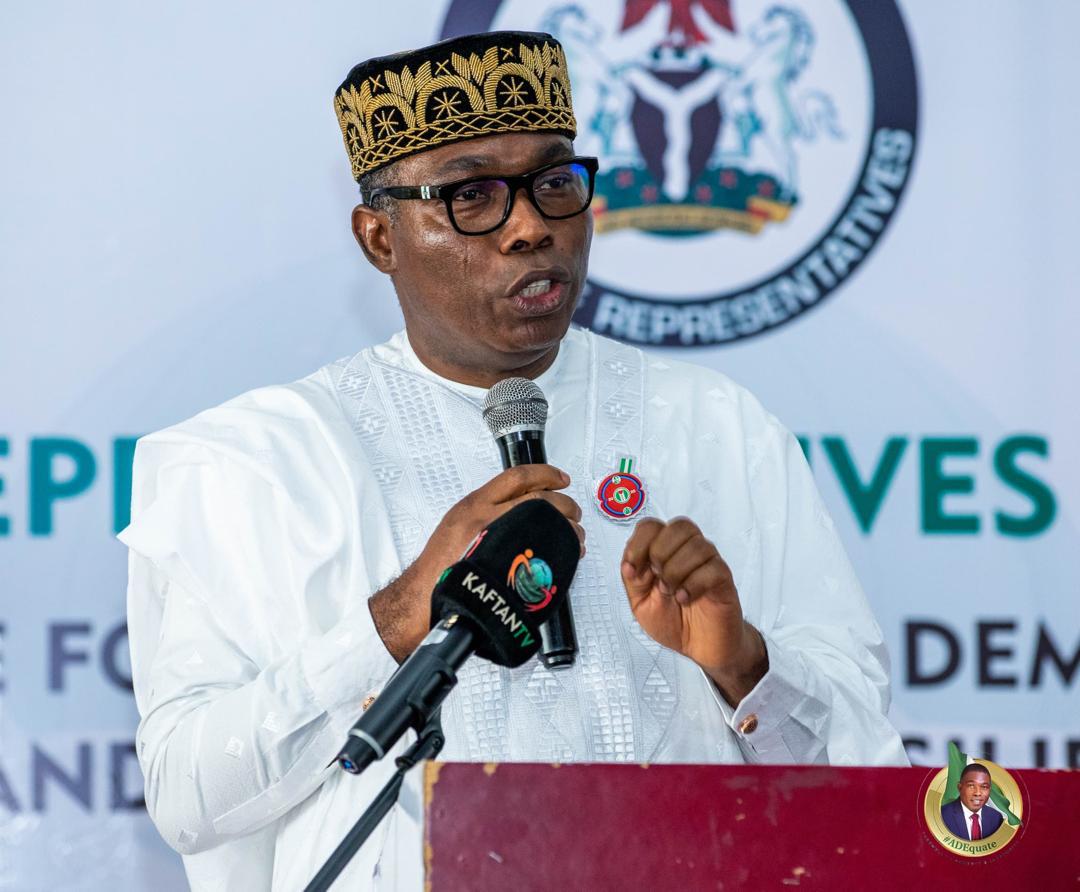
Prince Adewole Adebayo, the Social Democratic Party’s (SDP) presidential candidate for the 2027 general election, unveiled a comprehensive socio-economic recovery agenda for Nigeria over the weekend. He promised significant reforms in the areas of employment, healthcare, education, infrastructure, and industrial development.
At the SDP national convention in Bauchi, Adebayo emerged as the party’s consensus presidential candidate. He declared that if elected, his administration would pursue what he called a “people-centered government” with the goals of lowering poverty, regaining public trust, and rebuilding the country’s productive capacity.
Shortly after his election, the SDP standard-bearer addressed party delegates and supporters, announcing that his government will launch over 500 programs aimed at addressing issues such as unemployment, insecurity, inadequate healthcare, deteriorating infrastructure, and general economic suffering.
He said that reducing poverty would be a top focus for an SDP government.
“The mandate you have given me today will be used to articulate over 500 programs that will reduce poverty in Nigeria to two percent in the first eighteen months of our administration,” he said.
Additionally, Adebayo pledged to lower unemployment to 4% in two years by implementing a national jobs and public works program that will involve millions of Nigerians in profitable economic sectors.
According to him, the initiative would concentrate on small businesses, manufacturing, agriculture, infrastructure development, and industrial recovery nationwide.
Regarding education, the SDP candidate emphasized that education should continue until graduates are employable and promised free and obligatory education from basic to tertiary levels.
“Until you find employment, our schooling will continue. “You haven’t graduated until you have a job,” he stated.
He continued by saying that the planned education and employment initiatives would cooperate to give Nigerian adolescents a smooth transition from school to the workforce.
Through a system connected to the National Identification Number (NIN), Adebayo pledged that everyone will have access to reasonably priced healthcare services.
He said that under the SDP healthcare plan, every Nigerian will be eligible for four free medical exams each year.
“Your NIN will also become your health insurance number,” he stated, adding that a significant portion of his administration’s health policy would be focused on preventive care.
Ajaokuta Steel Company, refineries, paper mills, and textile plants are just a few of the public businesses and industries that the SDP candidate announced plans to revitalize nationwide.
He claimed that the rebirth of regional industry would boost economic expansion, provide employment, and lessen reliance on imports.
Adebayo also pledged to expand industry throughout the federation’s states, including the creation and revitalization of manufacturing, textile, cement, and carpentry hubs that might boost regional economies and raise living standards.
He criticized the way the current administration handled the economy, claiming that the savings from subsidies had not significantly improved the lives of regular Nigerians.
He claimed that bad economic management, inconsistent policy, and corruption had made the country’s problems worse.
The SDP presidential candidate also emphasized the necessity of more powerful state governments, autonomous legislatures, and efficient local government management, contending that successful subnational institutions were necessary for the eradication of poverty and grassroots development.
In advance of the 2027 elections, he insisted that the SDP was providing Nigerians with a practical alternative centered on welfare, accountability, and national progress.