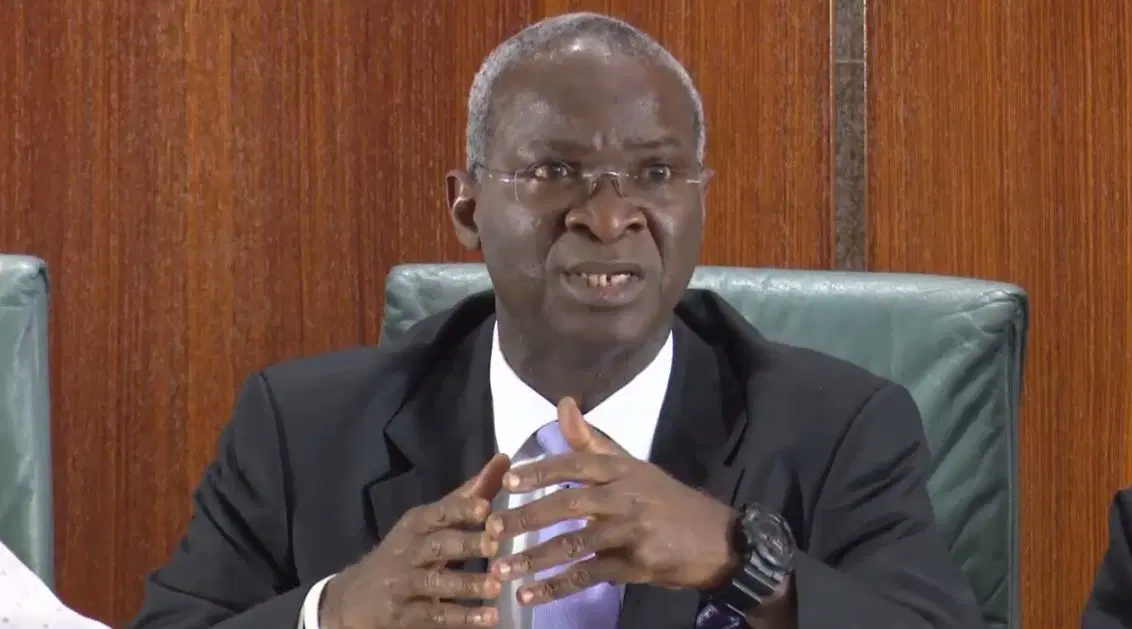
Former Lagos State Governor, Babatunde Fashola, has urged Nigerians to stop treating elections as a perfect exercise, saying the country should pay more attention to strengthening democratic institutions and improving the electoral processes.
Fashola, a former Minister of Works, Housing and Power, said elections, especially in a large federation such as Nigeria, are complex exercises involving logistics that make perfection difficult to attain.
Fashola spoke on Friday at The Platform, a public policy forum in Lagos as part of activities to mark Democracy Day, it was reported.
He said that while elections were critical to democracy, citizens and political actors needed to understand the challenges of conducting nationwide polls.
“Elections are an imperfect event because it requires a big logistical operation across a federation,” Fashola said.
The former governor said presidential elections involve thousands of polling units across the country to conduct the same process simultaneously, often with different local conditions.
Such a huge operation may have mistakes or shortcomings, he said, adding the challenge should be how to improve the system rather than weaken the public confidence in elections.
The reality of a presidential election is that all the polling units across the nation have to be doing the same thing at the same time. “The question then is how we assign blame when things go wrong, especially when the Chairman of the Independent National Electoral Commission cannot be everywhere at the same time,” he said.
Fashola said Nigerians should be fair in their assessment of electoral problems and should not blame the leadership of the electoral body for every operational failure.
Fashola said electoral challenges are not peculiar to Nigeria, and that even older democracies have flaws in their electoral systems.
“Mature democracies understand that elections may not always be perfect, but work to improve their institutions and processes over time,” he said.
“They accept these imperfections in other jurisdictions, and they aspire to improve but they also accept the results,” he said.
The former minister said Nigeria should also learn the discipline of strengthening its democratic system without constantly delegitimising outcomes of elections.
Losers Should Take Opposition Role
Fashola also expressed concern over what he described as “widening” refusal by some political actors to accept election results after losing.
Such behavior, he warned, could hinder democratic development and undermine the role of the opposition in national development.
“It seems to me that unwillingness to accept the outcome of an election perhaps blinds the unsuccessful participants from seeking and taking up the role of opposition for the development of society,” he said.
Democracy, he said, doesn’t end when the ballots are counted.
They have a big role to play in holding the government accountable, providing alternative policies and contributing to the progress of society, he said.
Fashola also urged Nigerians to widen their understanding of democracy beyond elections and political contests.
“The country has got to start asking itself the hard questions about the kind of democratic system it wants to build and sustain,” he said.
“If we are going to talk of democracy outside of elections, my question is: What sort of democracy do we want?” he said.
Democratic maturity should not only be assessed by the conduct of elections but also by the strength of institutions, respect for the rule of law, accountability in governance and the conduct of political actors after elections, the ex-governor said.
Fashola insisted that democracy can only grow when institutions are protected, strengthened and allowed to perform their roles without being undermined by political interests.
Citizens, leaders and political parties must continue to support systems that promote accountability, fairness and stability, he said.
His remarks were made as part of broader discussions at The Platform concerning the state of democracy, governance, accountability in Nigeria, and the duties of both leaders and citizens in keeping democratic institutions alive.
“Elections are still a key pillar of democracy, but the real test of democratic progress is when institutions and citizens can sustain democratic values long after the ballots have been counted”, Fashola added.