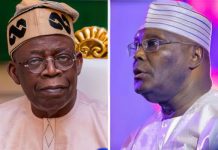
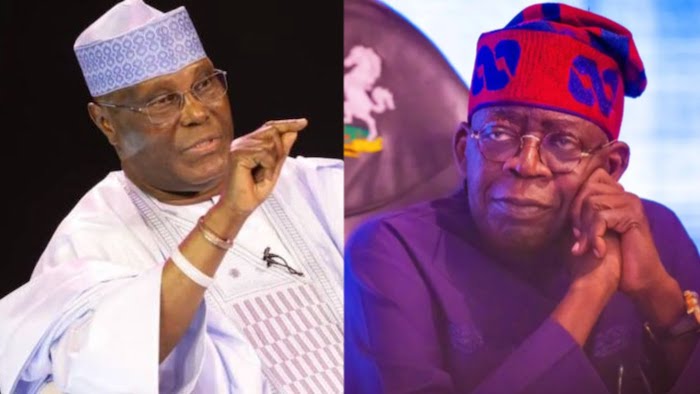
Atiku Abubakar, a former vice president and presidential candidate for the African Democratic Congress (ADC), has denounced Federal Unity Colleges’ fee increases and the reported approval of a uniform examination fee of ₦50,000 for candidates from the National Examinations Council (NECO) and West African Examinations Council (WAEC) starting in 2027.
The increases, according to Atiku, are harsh, economically insensitive, and at odds with the Federal Government’s obligation to provide education to all Nigerian children.
The former vice president claimed in a statement released on Sunday by his Senior Special Assistant on Public Communication, Phrank Shaibu, that families already facing unemployment, stagnant incomes, rising food and transportation costs, electricity tariffs, and inflation were being further burdened financially by the federal government.
He cautioned that the actions would worsen Nigeria’s educational crisis by keeping more kids out of school.
“A government that genuinely cares about its citizens’ future does not put up financial obstacles in the way of children’s education.” They are eliminated,” Atiku remarked.
“Education is the foundation upon which prosperous nations are built, and it is the birthright of every Nigerian child, not a privilege reserved for the wealthy.”
The strategy, according to Atiku, was especially concerning because Nigeria already had one of the highest rates of out-of-school children in the world.
He contended that rather than enacting laws that could result in more students being excluded, a government confronting such a problem need to make significant investments in getting kids back into the classroom.
He declared, “Nigeria already bears the painful distinction of having one of the largest populations of out-of-school children in the world.”
“The number of Nigerian children and youth who are already not in school ranges from 10.5 million to roughly 15 million, depending on the methodology and age group measured.”
Children from low-income and middle-class households, whose parents were already having difficulty providing for their basic necessities, would be disproportionately impacted by the fee increases, Atiku continued.
Every additional expense placed on education, in his opinion, might deprive another child of the chance to learn and better their future.
The ADC presidential candidate cautioned that restricting access to education would have repercussions outside of educational institutions.
According to him, children who are denied an education may be more susceptible to poverty, unemployment, child labor, drug misuse, criminal exploitation, and instability.
Read Also: Policy Without Politics Launches with Bold, Non-Partisan Conversations on Policy, Governance and Africa’s Economic Future
According to Atiku, “every child who is priced out of education today becomes the victim of unemployment, poverty, child labor, criminal exploitation, drug abuse, or insecurity tomorrow.”
“Nations prosper when education is more accessible, not when it is more expensive.”
He explained that the projected ₦50,000 WAEC and NECO fee could be an impediment to university education for academically qualified but impoverished pupils.
He claims that many pupils from low-income families might not be able to compete for admission to universities because their families could not afford the required exams.
Additionally, Atiku denounced what he called insufficient funding for Nigeria’s higher education institutions.
He claimed that public institutions lacked the lecture halls, labs, dorms, libraries, and other facilities required to handle the volume of applicants each year.
Despite over two million applicants, the former vice president asserted that only 500,000 to 700,000 students might be admitted annually to Nigerian universities.
He contended that students from low-income families were subjected to a double penalty when university spots were restricted and exam costs were raised.
According to Atiku, “the outcome is a cruel double punishment: first, millions of qualified young Nigerians cannot secure admission due to insufficient spaces; second, many will now be priced out of even competing for those limited spaces.”
“That is the methodical denial of opportunities and the progressive exclusion of the children of the impoverished from the promise of higher education; it is not educational reform.”
Atiku also questioned the Federal Government’s portrayal of the Nigerian Education Loan Fund as a significant accomplishment given the rising expense of secondary education.
He claimed that a youngster who had already been denied secondary school or who was unable to pay for WAEC and NECO fees would not benefit from a university loan.
“A child who has already been priced out of secondary education or cannot afford the qualifying exam required to secure admission finds little comfort in a university loan,” he stated.
“A government cannot legitimately claim to be increasing access to higher education while erecting financial barriers that keep millions of young Nigerians from ever entering a university.”
Atiku argued that improved infrastructure, increased capacity in postsecondary institutions, and affordability at the elementary and secondary levels should be the first steps in real education reform.
The government should make sure that no youngster is prevented from attending school due to poverty, he continued.
“Before investing in loans, a government that genuinely believes in education invests in classrooms,” he declared.
Atiku requested that President Bola Tinubu immediately undo the proposed ₦50,000 exam fee and the increases in Federal Unity College fees.
In order to create sustainable ways of funding public education, he also encouraged the Federal Government to call an urgent meeting with education stakeholders.
The former vice president advocated for more funding for schools, hiring qualified educators, upgrading educational facilities, and increasing tertiary institutions’ admissions capacity.
He claimed that policies that rendered education unaffordable will be reversed by an ADC-led government, restoring education as a public good.