🌿 Ruzu Non-Alcoholic Herbal Bitters
Ruzu Non-Alcoholic Herbal Bitters is a natural health supplement specially formulated to:
- ✅ Promote general wellness
- ✅ Detoxify the body
- ✅ Support the treatment of various ailments
Made from a powerful blend of 100% organic and medicinal herbs, Ruzu is completely alcohol-free, making it ideal for:
- 👪 All age groups
- 🌱 Health-conscious individuals
- 🌿 Anyone seeking non-alcoholic herbal remedies
Whether you're looking to boost your vitality, cleanse your system, or support healing the natural way, Ruzu Bitters offers a trusted herbal solution.
I want to ask Nigerians one simple question and I want us to actually answer it together. WHERE DOES OUR MONEY GO?
Every kobo of oil revenue, every customs duty, every company tax, every regulatory fee, every court fine, all the money you collectively earn as a country. The money that is supposed to pay for our roads, schools, hospitals and police.
Most Nigerians don’t know this, so let me start with something that may shock you: Nigeria has a special bank account. It is called the FEDERATION ACCOUNT. Section 162 of the 1999 Constitution created it. All the kobo of revenue the federal government collects on behalf of Nigeria is supposed to go into that one account. It is then distributed to the federal government, the 36 states and the 774 local governments according to a distribution formula.
That’s the law. That is what the Constitution really means.
In 2025 alone, ₦14.94 TRILLION of federation revenue was “deducted” before it even got to the Federation Account, according to the World Bank’s Nigeria Development Update. That’s 39% — nearly two-fifths — of Nigeria’s earnings, spent before any state or LGA saw a single kobo.
NNPCL, Nigeria’s largest revenue earner, was expected to remit N1.1 trillion into the Federation Account in 2024. It canceled ₦600 billion. Where is the N500bn?
There is also an ongoing FAAC investigation on allegations of an under-remittance of $42.37 BILLION by NNPCL between 2011 and 2017. That is about ₦12.91 trillion at today’s exchange rate. To put that in perspective, that’s more than our entire federal budget for 2024. One company. For 6+ years. And remember, these are the leakages we know about.
MEANWHILE WE ARE SWIMMING IN DEBT
Nigeria’s total public debt was ₦159.27 TRILLION at the end of 2025 (Debt Management Office, February 2026). In 2023, 78 percent of the federal government’s revenue was used to pay debt service. In 2024 it consumed 69%. The IMF and World Bank recommend countries keep debt service to 30-40% of revenue. We are nearly twice that benchmark. For every ₦1 the federal government made last year, nearly 70 kobo was spent on loan repayments. That leaves 30 kobo for everything else: hospitals, schools, roads, police, military, civil service salaries, infrastructure, security—for 220 million Nigerians.
And for what are we borrowing? We are borrowing to fund services that our OWN revenues, if they actually reach the Federation Account, should fund. Let that be. We borrow money at interest to replace money we have already earned but have never properly collected.
That’s why fuel is expensive. That’s why the school fees were doubled. That is why your salary buys less every month. That’s why hospitals don’t have drugs. This is why universities are always on strike . Not abstract corruption. This is an account of the constitution that has been broken for 25 years.
The Federation Account was created in 1999 pursuant to Section 162 of the Constitution. But the Constitution didn’t say:
* Who is to guard the account?* The time allowed for remitting money after collection
* Who audits the account ?
* What if you rob it?
* If the records are available for public inspection
For twenty-five years these questions have been silent, and in their silence all kinds of administrative tricks have flourished. They deduct “management fees” before remitting. The NNPCL keeps “costs” prior to payment in. Some agencies open sub-accounts without authorization. Some take the money and do not send it back. The 2023 House of Representatives investigation found that N8.7 trillion passed through the Treasury Single Account but agencies had proliferated unauthorised parallel accounts the whole time.
In 2024 the Minister of Finance HERSELF admitted that the federal government could not fully see its own balance sheet until August of that year. Read it again. In 2024 the people running the country could not see all the money the country had.
I know someone’s going to ask this in the comments, so I’m just gonna get it out of the way now.
The Treasury Single Account was introduced by Dr. Okonjo-Iweala as the Finance Minister in 2015. It was a well-intentioned reform — to consolidate government accounts and cut down leakage. And for a couple of years it helped to reduce the number of MDA bank accounts.
But here’s the rub: The TSA is NOT in the Constitution. It was an executive memo. A round . Any President can undo it tomorrow. And worse, it covers Federal Government cash management — it does NOT solve the constitutional problem of revenues belonging to states and LGAs being deducted before arriving at the Federation Account. TSA focused on symptoms. It didn’t cure the disease. So ₦14.94 trillion still disappeared in 2025 — a decade after the TSA was introduced.
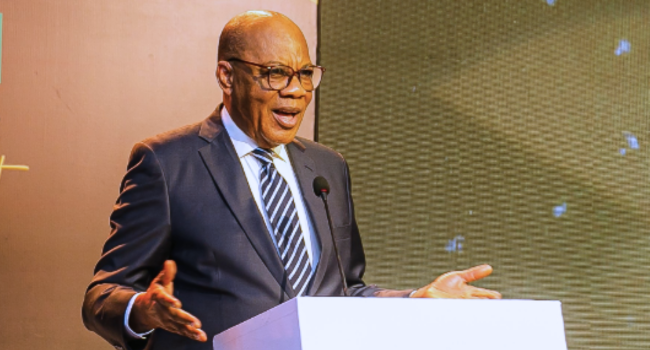
Dr Olisa Agbakoba (SAN) released a policy paper this month titled “Where Is Our Money? Nigeria’s Federation Account Crisis and the Case for Reform.” I read it. You should read it as well.
Honestly, the fix they propose is so simple it’s almost insulting we haven’t done it already.
Let us know your thoughts in the comment down below. Tag your senator. Tag your governor. Tell one person who does not know.
#whereismymoney #section162
Source: Dr Olisa Agbakoba Legal Policy Paper, April 2026 – “Where Is Our Money? Nigeria’s Federation Account Crisis & The Case For Reform.